Indigenous flower farming is gaining momentum in South Africa, with rising demand from both local and international buyers. More than a niche, the sector is opening new income streams for farmers while contributing to biodiversity conservation.
Western Cape farmer Roland Trout has long championed indigenous flowers as a way to diversify beyond traditional crops. He believes these species not only access premium export markets but also thrive in local ecosystems, making them a smart and sustainable farming choice.
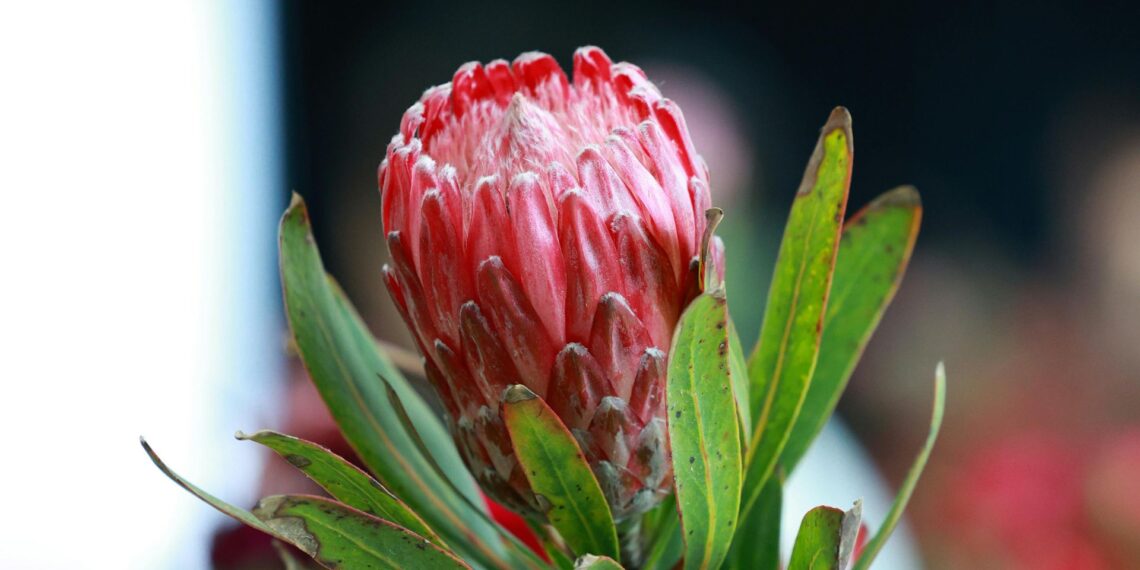
Indigenous flowers are species native to South Africa, such as proteas, fynbos, watsonia, agapanthus, gerbera, and chasmanthe. Unlike many exotics, they are better suited to local conditions.
“They often require less water and fewer chemical inputs, and they’ve got a unique aesthetic appeal. Eco-conscious consumers also prefer locally adapted species because they know it’s sustainable,” Trout says.
With climate change fuelling demand for drought-tolerant crops, indigenous flowers are proving resilient and profitable.
Related stories
- Jaftha Flower Farm: From forced removals to flourishing fields
- Flower power: Farming couple turns fynbos into global business
- A guide to sustainable dry bean farming
- Intercropping of indigenous veggies ideal for small-scale farmers
Market opportunities
While non-indigenous flowers are mainly grown under cover in the northern provinces, indigenous varieties such as proteas dominate in the Western Cape. According to the department of trade, industry and competition, South Africa is Africa’s third-largest exporter of cut flowers, with exports exceeding R1.7 billion in 2021.
Proteas, pincushions, and foliage form the bulk of these exports, much of it from the Cape Floristic Region — one of the most biodiverse areas on earth.
Events such as weddings and celebrations are also fuelling strong local demand. Internationally, buyers in Europe, Japan, and the United States prize South African blooms for their uniqueness, quality, and sustainability.
Farmers who manage their operations well can see healthy margins. “For proteas, a farmer can expect over R100 000 per hectare annually if they apply good practices. Export quality stems can earn anything from three rand to ten rand per stem, sometimes even more,” Trout notes.

Getting started
Choosing the right species is the first step. “The best way to determine which indigenous flower species are suitable for your region is to consult local extension offices or researchers at universities. Sanbi, the South African National Biodiversity Institute, is also a very good resource.”
Trout advises farmers to start small with trial plots. Seeds and seedlings should be sourced from trusted nurseries such as Kirstenbosch or Seed SA. Harvesting wild flowers without the proper certification is discouraged.
Preparing land and soil
“Site selection is very important. You need soils that are well-drained and areas that get good sun exposure. Soil testing is essential, and amendments should be made where necessary.
“Proteas, for example, are sensitive to high phosphorus and generally prefer slightly acidic soils,” Trout explains.
He recommends clearing invasive species, mulching to conserve moisture, and contour planting to manage rainfall.
Challenges and pest management
The main risks are root rot and fungal diseases in poorly drained soils, as well as pests like aphids, thrips, mites, and scale insects. Trout stresses an integrated approach: proper drainage, airflow, resistant varieties, and biological controls where possible.

Harvest and post-harvest care
Harvest flowers in the cool of the morning or late afternoon, using clean tools and cutting at the right maturity.
Post-harvest handling is key. “Immediately after cutting, place the flowers in clean, cool water with hydration solutions. Storage should be between 8 and 10 degrees, depending on the species. And with proteas, you must avoid ethylene exposure,” Trout advises.
Building market access
Marketing is as critical as production. “You must understand the market, know which species fetch premium prices, and build direct relationships with florists and retailers,” Trout says.
Smarter marketing and lean input costs translate into stronger margins.
Several organisations support growers entering the indigenous flower market:
- Sanbi: Biodiversity and plant expertise.
- Cape Flora South Africa: Export support for proteas and fynbos.
- AgriSETA: Skills training.
- The Flower Valley Conservation Trust: Sustainable harvesting guidance.
READ NEXT: A guide to sustainable dry bean farming