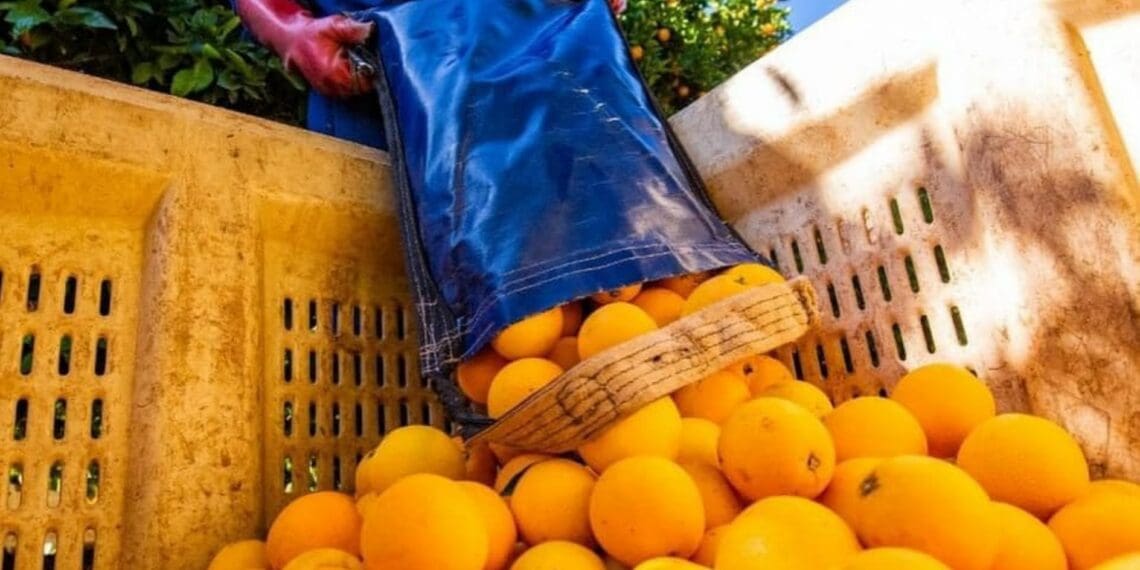
The Citrus Growers Association’s (CGA) investment in transforming black citrus growers has taken shape as it has created over 70 permanent jobs and hundreds of seasonal jobs across the country.
According to the association, over the past three years, just over R161.3 million has been approved with R78.9 million disbursed to support black growers’ citrus operations.
Reshaping the citrus industry
In 2019, the CGA launched a R3207 million economic transformation of black citrus growers in partnerships with several stakeholders such as Jobs Fund, Land Bank, department of agriculture, AgriSETA, LIMA Rural Development Foundation and First National Bank.
A beneficiary of the programme from Addo in Eastern Cape, Buyiswa Ndyenga from Sikhula Sonke Enterprise, said the funding assisted a great deal on their five farms.
“The money came at the right time, the price of everything went up and citrus farmers were struggling. But the money helped us plant new orchards and erect a nine-kilometre fence to stop the stealing of fruit,” Ndyenga said.
Another beneficiary, Nonkwanele Mzamo from Luthando near Kirkwood in the Eastern Cape, said a lot of work still lay ahead despite receiving the funding.
“I am passionate about creating jobs. Because of the fund, it is easier to create jobs, and that feels good. Now we need to sustain these jobs,” he said.
Working together for the greater good
Chief executive officer of CGA Justin Chadwick said the programme was launched following the CGA’s application to the Jobs Fund for a project that would make funding and technical support available to black citrus growers for orchard establishment, expansion, and rehabilitation.
“The Jobs Fund committed R118 million to the project, with the Land Bank agreeing to contribute an additional R116 million in loan funding.
“The CGA contributed R24 million, while the department of agriculture and AgriSETA pledged R34 million and R12 million respectively. The LIMA Rural Development Foundation was engaged as project manager and FNB was appointed the commercial-funding partner following a tender process,” he said.
What the funding entails
According to Chadwick, the programme is unique when compared to other transformation programmes, when looking at how the funding was structured.
“Beneficiaries have received 36% of their funding as a pure grant, which has helped reduce their debt levels and assisted them in being able to make repayments.
“The remaining 64% has been structured as a blended loan at lower than prime interest rates. Another major focus area has been the skills development of beneficiaries to make them self-reliant,” he added.
Qualifying criteria
Chadwick said to qualify for funding, growers must have a minimum of 60% black ownership as defined by the B-BBEE Act of 2013.
“Most importantly, applicants also needed to demonstrate that they would create permanent and seasonal job opportunities with the development funding.
“While the programme was launched in 2020, the Covid-19 pandemic impacted its roll-out, as well as several new challenges faced by the local citrus industry over the past three years, which has threatened the sustainability and profitability of farming operations,” he explained.
What the future holds
Chadwick said with transformation being one of the industry’s key priorities over the next 10 years, a target for black citrus growers’ contribution towards the overall 260 million vision has also been set, namely 50 million cartons annually.
“We believe the programme will contribute towards achieving this goal by assisting and supporting growers to expand their operations and export their produce to key markets across the world.
“The deployment of funds under the programme is expected to continue until March 2024, which will be followed by a monitoring period that will take place for another two years,” he said.
ALSO READ:Women’s Day: Join us at our Soul To Soil brunch
Sign up for Mzansi Today: Your daily take on the news and happenings from the agriculture value chain.