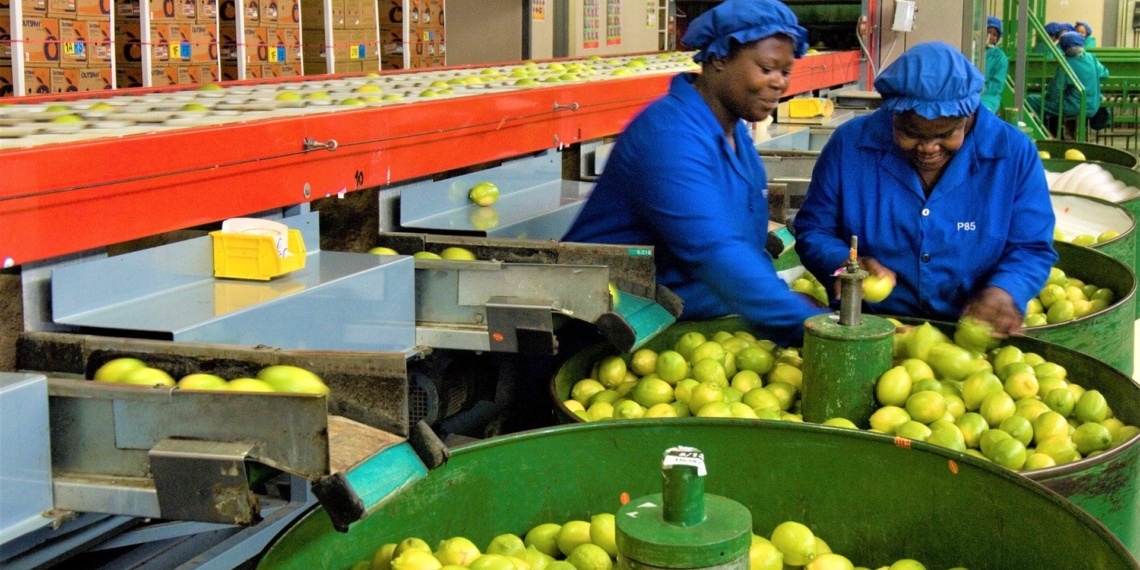
Yesterday a draft resolution was voted on by EU member states’ standing committee on plant, animal, food and feed representatives which seeks to enforce a mandatory requirement that all oranges from countries in Africa as well as Israel be subjected to cold treatment for a minimum 16 days at a temperature between 0 and -1oC.
However, the draft amendment to EU regulations could seriously damage the future of South African citrus imports. experts reckon. The measure is intended to mitigate the risk to European producers of false codling moth (FCM) infestations in Africa and Israel.
In a letter to standing committee representatives, South Africa said it respectfully urged members to oppose the draft amendment.
Deon Joubert, the South African citrus industry’s special envoy to the EU, pointed out that this new requirement will have a deleterious impact on the more than 100 year citrus trade between Europe and South Africa. South African exports are “the most important source of citrus for the EU during the European summer, with a value of over EUR 1 billion,” he said.
“In particular, it will prevent the import of all organic and non-chemically treated oranges, as well as several important cultivars that do not tolerate this temperature. This will cause important gaps in the availability of excellent quality oranges to EU consumers through the European summer, which has relied on this supply [over] the past decades,” Joubert added.
The produce that enjoys the biggest demand from EU consumers – organic and non-chemically treated – will be completely unavailable, Joubert cautioned. This, at a time of particularly strong EU demand, as consumers appreciate the benefits of vitamin C for their immune system and general health.
‘It makes no sense’
According to the Citrus Growers Association the proposed new requirement is not justified on plant health grounds. Furthermore, cold treatment was already part of the South African risk management system for FCM.
“Different cold treatment (time-temperature) components are applied based on the objective risk assessment in the systems approach that results from diligent and comprehensive weekly monitoring of any FCM presence during pre-harvest citrus orchards in South Africa,” Joubert said.
Also, the FCM risk from South Africa to the EU has not increased since FCM was declared an EU quarantine pest three years ago.
There is simply no good reason to effectively ban the import of some orange cultivars, of organic oranges and of non-chemically treated oranges from South Africa when this measure is not scientifically justified and other equally effective measures are available and indeed already applied, the association believes.
South Africa has successfully traded citrus fruit with the EU for over 100 years. South African growers are extremely well aware of the importance of protecting production from pests and fully recognise the right of European growers to be afforded such protection, the association emphasised.
South African growers spend an estimated R3.4 billion annually to ensure the highest levels of compliance with EU plant health regulations on FCM and citrus black spot (CBS). This major investment is what enables the operation of what has been described by EU officials as probably the most sophisticated world risk management system on plant health.
“It thus makes no sense to undermine it all with an unnecessary and disproportionate one-size-fits-all mandatory cold treatment requirement, which nullifies the progressive, environmentally friendly and sustainable risk management system on FCM which South Africa manages and maintains.
“We respectfully urge you to oppose this draft amendment of Implementing Regulation (EU) 2019/2072 and call on you to ask the European Commission to commission more proportionate, effective and, above all, readily available alternatives, following further consultation with South Africa,” Joubert concluded.
ALSO READ: SA soft citrus season ends on a high
Sign up for Mzansi Today: Your daily take on the news and happenings from the agriculture value chain.