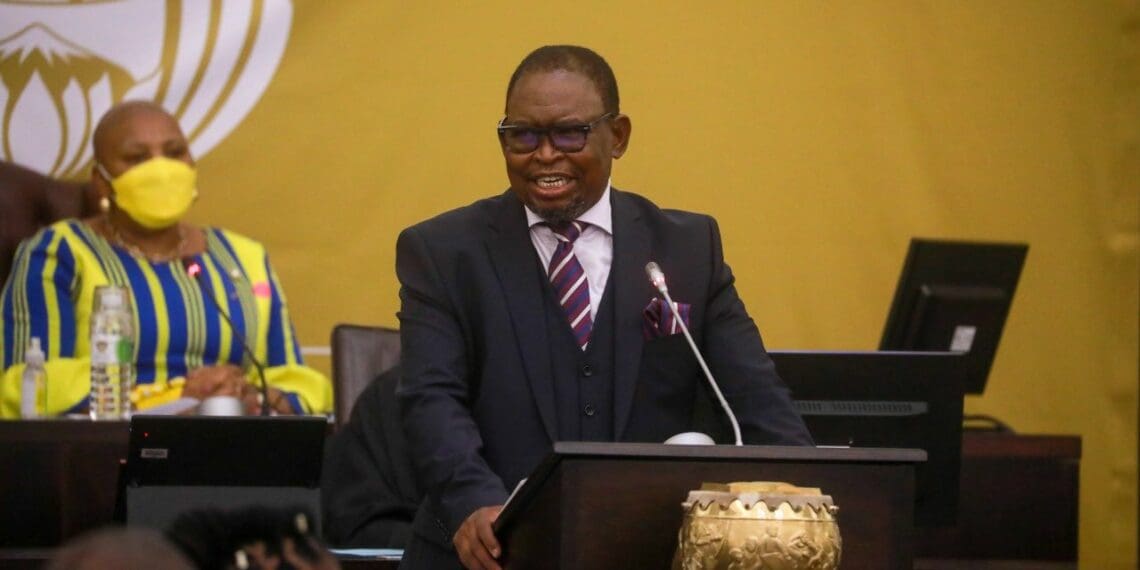
The agriculture sector has given finance minister Enoch Godongwana a thumbs up after he vowed to accelerate infrastructure investment in his maiden budget speech.
Godongwana said the National Treasury has set aside R 17.5 billion for infrastructure projects in the country. The results of a recently completed review of the Public-Private Partnerships (PPPs) framework would also be implemented.
“We aim to create a centre of excellence for PPPs and other blended finance projects. This will be established with direct treasury oversight. It will be a direct interface with private financial institutions for investments in critical government infrastructure programmes,” said the minister.
The South African National Roads Agency (SANRAL) will get an additional R9.9 billion for maintaining the non-toll road network.
Moreover, Godongwana approved funding for several water projects. This includes a R2.1 billion allocation for raising the Clanwilliam dam while the Lepelle Water Board was allocated R1.4 billion for the Olifantspoort and Ebenezer plants; and the Umgeni Water Board got R813 million for the Lower uMkhomazi water supply scheme
Godongwana also announced that the project to modernise six border posts, including Beitbridge, was at an advanced stage of preparation.
Speaking on the frail Land Bank, the finance minister said that the 2022-2023 contingency reserve had finally been increased by R5 billion. This provides for an amount to be paid in the new financial year. The allocation, however, was already approved in the previous budget for the Land Bank.
On climate change
The minister furthermore said government remains committed to the fight against climate change and that the carbon tax rate will increase from R134 to R144, effective from 1 January 2022.
“As required by legislation, the carbon fuel levy will increase by 1c to 9c per litre for petrol, and 10c per litre for diesel, from 6 April 2022. The first phase of the carbon tax, with substantial allowances and electricity price neutrality, will be extended to 31 December 2025,” he said.
Meanwhile, on climate change Godongwana pointed out that there was a need for the structure of the economy to adapt to the needs of addressing climate change.
“As we reduce emissions, communities must not be left behind as production shifts to greener solutions.
“There are opportunities to access international finance to help pay for this just transition. The National Treasury is working with the new head of the presidential climate finance task team on accessing these resources,” he pointed out.
Carbon tax is said to be the main mechanism to ensure Mzansi lowers its greenhouse emissions.
As required by legislation, the carbon fuel levy will increase by 1c to 9c per litre for petrol, and 10c per litre for diesel, from 6 April 2022. The first phase of the carbon tax, with substantial allowances and electricity price neutrality, will be extended to 31 December 2025.
However, in line with our commitments at COP26, the carbon tax rate will be progressively increased every year, Godongwana said.
ALSO READ: Farmworkers picket for wealth tax in SA
Excise duties
Godongwana said instead of easing the burden of taxes he intends to introduce a new tax on vaping products of at least R2.90 per milliliter from 1 January 2023.
A blow to the alcohol industry the Minister said a new tax will also be introduced on beer powders.
The excise tax will increase as follow:
Excise duties on alcohol and tobacco will increase by between 4.5 and 6.5 percent.
The increases mean that from today:
- a 340ml can of beer or cider will cost 11c.
- a 750ml bottle of wine will be 17c more expensive;
- a bottle of sparkling wine will cost an additional 76c;
- a bottle of spirits will be R4.83 more expensive;
- packet of cigarettes will cost an additional R1.03;
- 25 grams of piped tobacco will cost an extra 37c; and
- a 23 gram cigar will be R6.77 more expensive.
Fuel levies
Talking about fuel levies, the minister said in 2021 the inland petrol price breached R20 per litre. The higher prices have put pressure on the cost of transport, food and other goods and services.
He said to provide some relief to households, no increases will be made to the general fuel levy on petrol and diesel for 2022/23.
“This will provide tax relief of R3.5 billion to South Africans. There will also be no increase in the Road Accident Fund levy. Minister Mantashe and I have agreed that a review of all aspects of the fuel price is needed. Our teams have already begun to engage on this critical work,” said the minister.
Sign up for Mzansi Today: Your daily take on the news and happenings from the agriculture value chain.