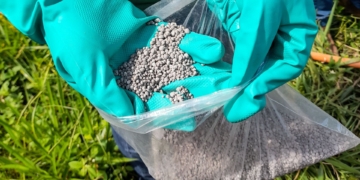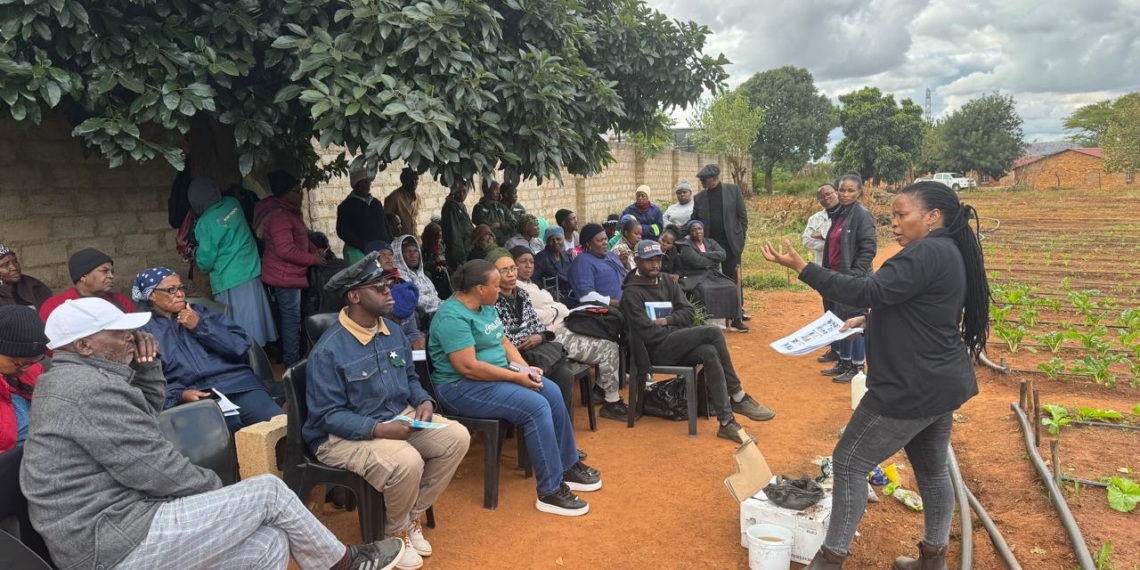
High lab fees shouldn’t stop smallholders from knowing their soil. ARC-NRE researchers recently met with Mamelodi farmers to demonstrate simple, field-based soil testing techniques using basic tools like water bottles and spades.
Climate change, lack of appropriate agricultural technology and infrastructure, resource scarcity, degradation of ecosystem services and biodiversity, shortage of farming skills, lack of market access, poor access to inputs and credit schemes are the main constraints facing small-scale agricultural production in South Africa.
Droughts, long dry spells and extreme climatic events often worsen the situation, sometimes resulting in complete crop failures and thereby perpetuating poverty in farming communities (Matlou et al., 2016).
The recent news about the El Niño wave spreading across the world in 2026 is going to have adverse effects, especially on resource-poor farmers (WMO, 2026). Addressing these challenges requires more than scientific innovation. It requires collaboration among farmers, local communities, research institutions, government, extension services, and other stakeholders to facilitate the exchange of knowledge and promote locally appropriate solutions.
Overcoming climate and input hurdles in SA agriculture
The Agricultural Research Council-Natural Resources and Engineering (ARC-NRE) is committed to addressing some of these challenges by advancing sustainable soil management practices that restore and improve soil health and promote resilient food systems in various communities across the country.
One approach to achieving this is through awareness and knowledge-sharing activities focused on soil health assessment through participatory approaches. Community information-sharing sessions were conducted with farmers and local stakeholders in Mamelodi, Pretoria, between March and May 2026.
Through practical field demonstrations, farmers were taught how to assess various indicators of soil health. Soil health is defined as the ability or capacity of the soil to sustain the productivity, diversity, and environmental services of terrestrial ecosystems (FAO, 2020). It is assessed using three measurable indicators (physical, biological and chemical), which were used to evaluate how well a soil functions.
Related stories
- Unlocking soil potential: Insights into soil sampling
- Healthy soil: The power of soil aggregates and microbes
- Weekend Podcast: Healthy soil leads to healthy crops
- ‘Our power, our planet’: Farmers innovate to protect soil and water

Examples of physical indicators include soil colour, texture, structure, compaction, porosity, aggregate stability and infiltration rate. Biological indicators include the living components of the soil such as microbes, enzymes and earthworms. Soil pH, micro- and macro-nutrients, organic matter and carbon and cation exchange capacity (CEC) are all examples of chemical indicators.
While awareness of soil health is increasing, it is important for farmers to have a good understanding of what soil health entails, how it is measured or assessed, and how to manage it for optimal and sustainable delivery of the ecosystem services that soils provide.
Hands-on soil testing: Saving costs without a laboratory
Researchers and extension practitioners demonstrated to farmers how to determine soil texture and assess soil structure in the field without taking soil samples to the laboratory. Simple tools such as spades, water bottles, buckets, corrugated sheets, a measuring container, an infiltration ring and a ruler were used during the assessment.
For many smallholder farmers, the cost of laboratory soil analysis can be a significant expense or constraint. Hands-on soil health assessments helped reduce laboratory fees, transport costs, and sample-processing expenses. With these skills, farmers became active participants in assessing and managing their own soils rather than relying entirely on external experts.

It was observed that hands-on assessment enabled farmers to share indigenous knowledge and experiment with various soil health indicators such as soil colour, structure, texture, compaction and water infiltration through direct observation.
Several farmers indicated that they intend to repeat field assessments throughout the growing season to monitor changes in soil conditions over time. This demonstrates that farmers have become active contributors to research, knowledge generation and application rather than passive recipients of information.
Farmer-learner exchange: Inspiring the next generation
Knowledge about soil health often remains confined to research institutions, agricultural organisations, or experienced farmers, leaving many youth disconnected from one of the world’s most valuable natural resources.
One of the most promising ways to build resilient farming systems is through farmer–learner knowledge exchange. At the end of each information-sharing session, farmers were encouraged to share information gained from the sessions with other farmers and school learners in communities. Some of the farmers visited local schools to demonstrate practical farming and soil management techniques, thus creating opportunities for a two-way knowledge exchange between learners and farmers. Schools are ideal places to introduce youth to soil health and sustainable agriculture.


A school garden was a perfect tool and a strategy to provide hands-on learning experience. Soil health education became more meaningful when learners experienced it firsthand. As a result, farmers demonstrated how to determine soil texture, collect soil samples and make compost for the school garden.
Participatory soil health information-sharing sessions allowed farmers to share indigenous and scientific knowledge, exchange ideas with learners, promote sustainable land management practices, strengthen community relationships, and inspire future generations to pursue careers in agriculture.
- Written by M. Matlou, N. Masekwana, L. Lötter, E. Mohloding, MS Mahlobogwane, and B. Lehobye, who are from the Agricultural Research Council-Natural Resources and Engineering (ARC-NRE).
READ NEXT: Beyond maize: Why neglected crops are SA’s climate-smart future