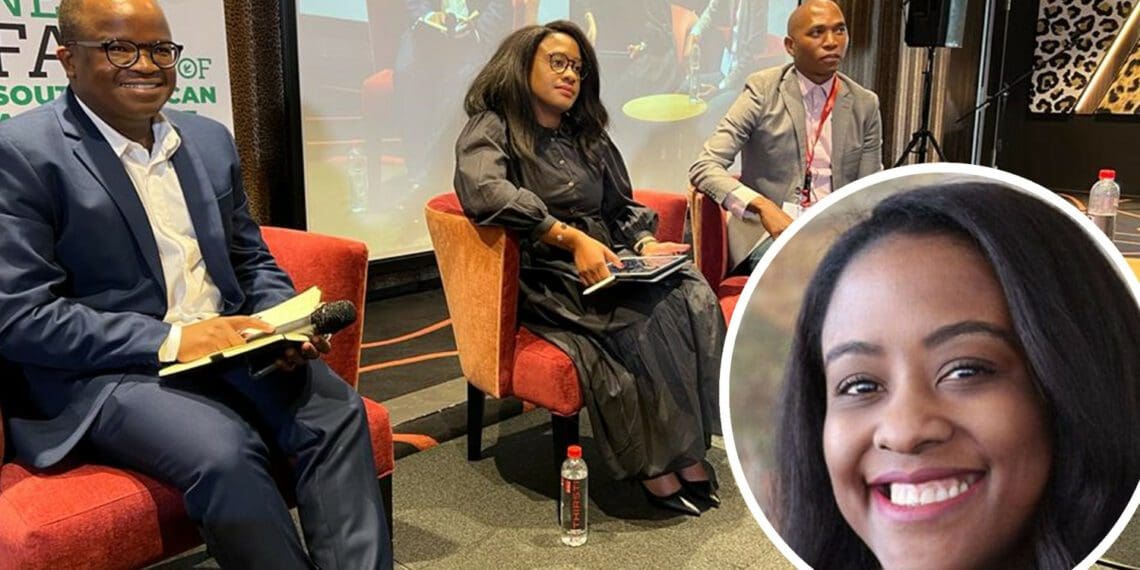
The Land Bank is currently working on a new blended finance programme with a specific focus on developing farmers. This was revealed by Land Bank chairman Thabi Nkosi on the second day of the Mzansi Young Farmers Indaba.
The new model, she said, is developed in partnership with the department of agriculture, land reform and rural development and expected to be released within the next few weeks. While she was not able to divulge too many of the details, she explained that it will attempt to address some of the issues that developing farmers in the country face.
“In this programme, we are going to be quite targeted. We are targeting specific commodities that have been set as priority commodities in accordance with the [Agricultural and Agro-processing] Master Plan.”
Nkosi added that the Land Bank has, in the past, not necessarily fulfilled its mandate around farmer development, and that its current book shows a small number of emerging farmers. The new blended model is meant to address that issue.
“We are targeting developing farmers. We are targeting farmers that have significant scale for growth, and we are saying that we want to change our funding model.”
‘Stop entertaining mediocrity’
Nkosi’s statement was only one of several poignant moments this morning (Friday, 16 September 2022).
In an earlier panel discussion on transformation, Agri SA executive director Christo van der Rheede said that African countries need to stop being “their own worst enemy” and find common pockets of excellence that will capture the imagination of the world.
He suggested South Africa and the Southern African Trade Union find unique commodities that will set them apart from the competition across the globe, and mentioned the wildlife and game meat sector as one of the sectors with great potential.
“We must stop focusing on political mobilisation and start focusing on economic mobilisation. We must stop entertaining mediocrity. The world has no sympathy for [us]. We must channel our energy towards what will put Africa at the forefront of capturing the world’s imagination,” he told the audience.

‘Level the playing field’
Ntuthu Motshegoa, Afasa women’s desk leader, agreed with fellow panellists that much still needs to be done to speed up transformation and to ensure that previously disadvantaged farmers become bigger players in the agri sector.
But she advocates for a more level playing field, and believes exploring what this playing field should like, should happen within communities themselves. “There should be a common vision of what we want to achieve,” she said and added that dialogues around this should not be imposed on them from the top down.
‘Learn from family farms’
Another panellist on transformation, Nico van der Merwe, suggested that the generational knowledge of family-owned commercial farms could help solve the skills transfer problem in the country – which he believes to be the crux of transformation success going forward.
He is the co-founder and managing director of Naturesmart Foods and is convinced that family-owned agribusinesses hold valuable insights into how farms can be successful and profitable across generations.
He believes that many commercial farms are more open to sharing their knowledge than one might think, and that this could solve a critical challenge.
Agri subjects in schools
AgriSETA CEO Dr Innocent Sirovha is worried that less than 20% of graduates from all agricultural colleges in South Africa is currently employed.
He believes the curriculum that each college follows needs to be investigated for quality but emphasised that – more importantly – there is a need to start exposing children to agricultural subjects in school already.
ALSO READ: Why purpose is the x-factor in successful farming
Sign up for Mzansi Today: Your daily take on the news and happenings from the agriculture value chain.