
Wednesday, November 25, 2026
SUBSCRIBE
22 GLOBAL MEDIA AWARDS
Food For Mzansi
  • News
  • Changemakers
  • Lifestyle
  • Farmer’s Inside Track
  • Food for Thought
No Result
View All Result
  • News
  • Changemakers
  • Lifestyle
  • Farmer’s Inside Track
  • Food for Thought
No Result
View All Result
Food For Mzansi
No Result
View All Result
in News

Livestock for Livelihoods expands to boost emerging NC farmers

Nordex Energy South Africa’s Livestock for Livelihoods initiative enters a new phase, boosting market access, wool value-chain opportunities, and water infrastructure for emerging farmers in Noupoort and Middelburg

by Staff Reporter
4th July 2026
Add FFM on Google
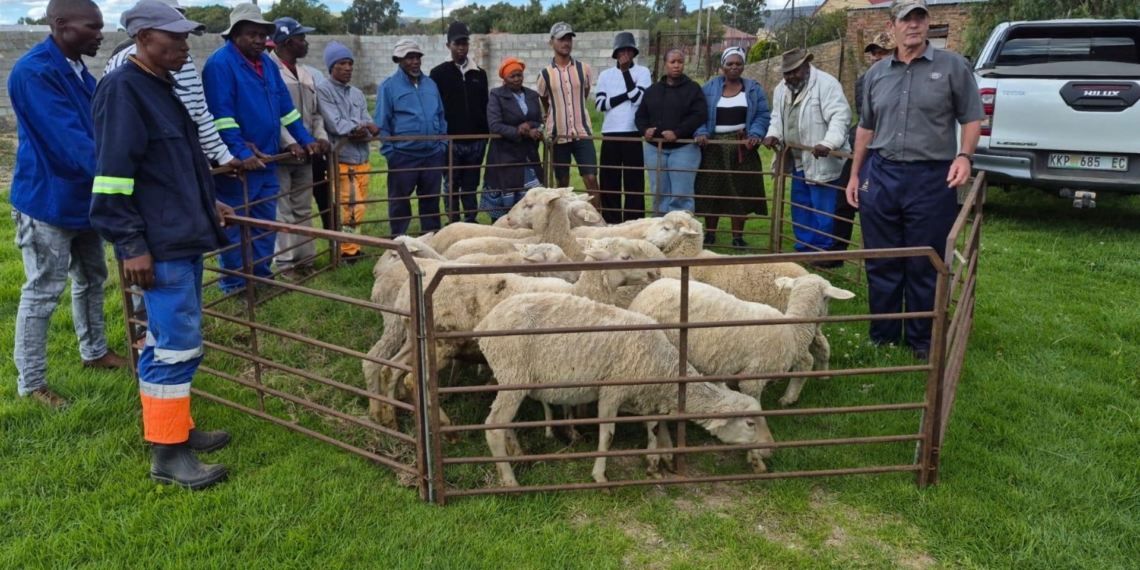
Livestock development initiative in the Umsobomvu Local Municipality of the Northern Cape, that is being supported by local wind farm operations. Photo: Supplied/Food For Mzansi

Livestock development initiative in the Umsobomvu Local Municipality of the Northern Cape, that is being supported by local wind farm operations. Photo: Supplied/Food For Mzansi

Share on FacebookShare on TwitterShare on WhatsApp

Two years into its launch, the Livestock for Livelihoods initiative in Noupoort, Northern Cape, is entering a strategic new phase that prioritises value-chain development and improved market access for emerging farmers in the Umsobomvu Local Municipality. 

Implemented as Nordex Energy South Africa’s (NESA) economic development contribution linked to the Koruson 2 construction project, the programme was established in late 2024. The aim was to initially improve income-generating opportunities through livestock ownership, supporting participating farmers to strengthen livestock management practices and to diversify value derived from their animals. 

Robert Timmers, managing director of Nordex Energy South Africa, said livestock for livelihoods was moving from foundational farmlevel interventions to unlocking sustainable market value for farmers.

“Strengthening governance and market access, especially in the wool to textile chain, is critical to creating longterm income opportunities, particularly for women and youth,” he said.

Addressing water and municipal challenges

The early implementation of the programme revealed a major constraint: insufficient water infrastructure on municipality approved commonage land. Farmers were keeping their livestock at their homes to secure water access, which created management and compliance challenges.


Related stories
  • EC pig farm slashes mortality with J-Bay Wind Farm support
  • Jeffreys Bay Wind Farm powers Siyavuma Piggery to new heights
  • BFAP forum: Collaboration, traceability key to SA livestock future
  • Don’t wait for failure: Spot herbicide resistance early

To address this, the programme supported the installation of boreholes on the commonage land, improving water access and enabling livestock management practices that align with municipal bylaws.

Meanwhile, Lynn Munsamy, transformation manager at NESA, said they were already seeing practical, visible changes with farmers relocating stock to the commonage.

“They have started shearing activities and making initial wool sales. This shows the value of pairing infrastructure with targeted training and market linkages,” Munsamy said.

Supporting women in agriculture

The programme currently supports 24 farmers in Noupoort with roughly one-third of the cohort women. A key focus of the new phase is enabling meaningful local participation in the wool value chain and linked textile opportunities with an emphasis on expanding income for female participants. 

In addition, NESA is now building on Noupoort’s agricultural foundations by exploring expansion into neighbouring Middelburg. Early engagements and a hydrogeological study will shape planned interventions scheduled for June to September 2026.

Preliminary findings indicate up to 30 farmers could participate, with implementation adapted to the conditions of three commonage areas: Midros, Lusaka and KwaNonzame.

“This initiative continues Nordex’s long-standing commitment to actively contributing to the local communities where we operate.

“The support and partnership of these communities are fundamental to our success, and we remain committed to contributing to their long-term development,” Timmers said.

READ NEXT: Land Bank urges greater youth participation in agriculture

Red stylized leaves resembling flames enclosed in a rounded, irregular red border on a white background.

Sign-up for the latest agricultural news delivered straight to your inbox every day with Mzansi Today!

Add FFM on Google Follow FFM on Google News

Staff Reporter

Researched and written by our team of writers and editors.

Tags: Agriculture and rural developmentLivestock farmersNorthern Capewool industry
This week’s agri events: 23 – 27 November
News

This week’s agri events: 23 – 27 November

by Tiisetso Manoko
23rd November 2026

Agricultural events taking place soon include the ARC Beef Performance Awards and RAP Agricultural Empowerment & Partnership Summit. Early-bird tickets...

Read moreDetails

When to plant fodder radish for better livestock feed in droughts

22nd November 2026
Neat rows of young crops cover a sloping green field beneath lush, forested hills and a dramatic, overcast sky.

Private partnerships unlock millions for land reform beneficiaries

21st November 2026
Rooibos industry targets global growth while protecting local roots

African markets offer fresh growth opportunities for SA rooibos

21st November 2026
A woman wearing a straw hat, glasses, and gardening gloves stands in a large field of leafy green crops under a blue sky.

Supplying Joburg Market: Phumla Qwabe grows her next chapter

20th November 2026

Agri Western Cape slams 15% agricultural water cut

South Africa’s job crisis: Why the agricultural sector is bleeding

Six hard-earned lessons from black-owned wine brands

Working with nature: How soil health builds resilient farms

Festive demand vs. El Niño: What’s driving SA’s livestock market?

Join Food For Mzansi's WhatsApp channel for the latest updates!

JOIN NOW!
Next Post

More than dirt: Seven ways to reverse land degradation

THE NEW FACE OF SOUTH AFRICAN AGRICULTURE

With 21 global awards in the first six years of its existence, Food For Mzansi is much more than an agriculture publication. It is a movement, unashamedly saluting the unsung heroes of South African agriculture. We believe in the power of agriculture to promote nation building and social cohesion by telling stories that are often overlooked by broader society.

Veg prices crash ahead of festive season, squeezing SA farmers

Working with nature: How soil health builds resilient farms

Enza Zaden field days prove crop performance from farm to market

South Africa’s job crisis: Why the agricultural sector is bleeding

Boshof Solar Power backs three-year emerging farmer programme

Why seasonal rainfall averages don’t guarantee maize yields

  • Awards & Global Impact
  • Our Story
  • Contact Us
  • Cookie Policy
  • Privacy Policy
  • Copyright

Contact us
Office: +27 21 879 1824
News: info@foodformzansi.co.za
Advertising: sales@foodformzansi.co.za

Contact us
Office: +27 21 879 1824
News: info@foodformzansi.co.za
Advertising: sales@foodformzansi.co.za

  • Awards & Global Impact
  • Our Story
  • Contact Us
  • Cookie Policy
  • Privacy Policy
  • Copyright

Chat Options

About this assistant

This feature generates automated answers summarised from Food For Mzansi articles. By using it, you are interacting with an AI system (provided by Google), not a human. AI can make mistakes. Please refer to the source articles for verification and citation purposes.

Our staff do not check or moderate Lerato’s answers in advance, but may review some later. Our journalists continue to write and edit all the articles Lerato uses as sources.

To estimate unique and returning web users, we store a random browser ID in this browser. WhatsApp users are counted by phone number. The same person using both channels may be counted twice.

I'm Lerato, your AI assistant!
No Result
View All Result
  • News
  • Changemakers
  • Lifestyle
  • Farmer’s Inside Track
  • Food for Thought

Copyright © 2026 Food for Mzansi