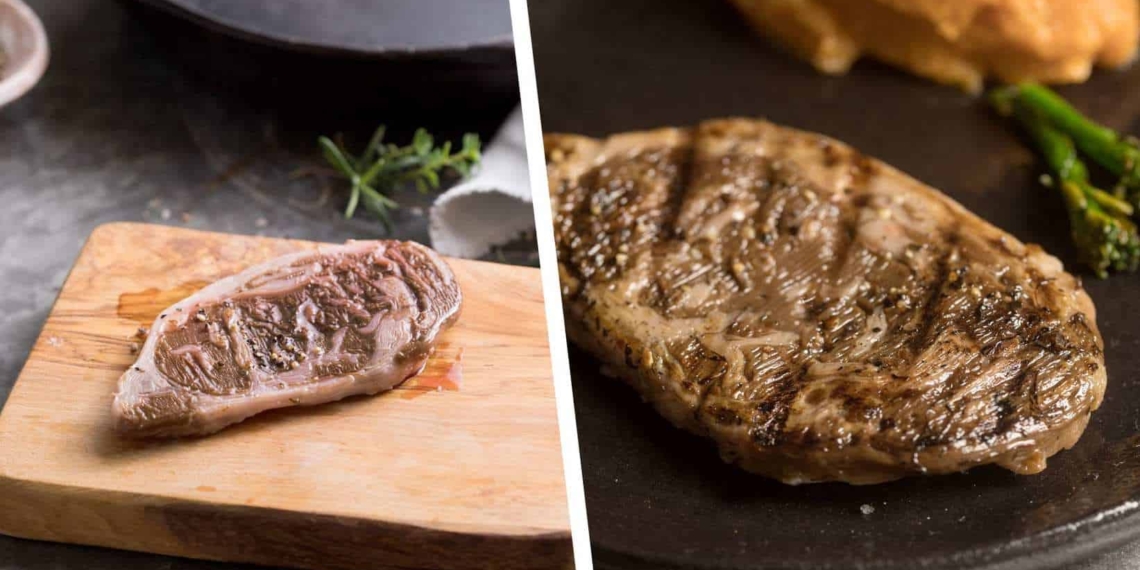

A cut of rib-eye steak, straight from the lab and into your frying pan? Yes, it’s possible. Israeli researchers have achieved the cultivation of the world’s first slaughter-free rib-eye using three-dimensional bio-printing and bovine cells.
We raised our brows too, but it seems cultured meats may soon become an idea we must simply make peace with on a global scale. However, the local red meat industry wonders if it bodes well for local consumers.

Rehovot-based food-tech company Aleph Farms recently announced its breakthrough with research partners in the faculty of biomedical engineering at the Israel Institute of Technology.
Multiple incentives for producing cultured meat exists. Aleph Farms is working to grow beef steaks from non-genetically engineered cells, isolated from a cow.
It says this will use a fraction of the resources required for raising an entire animal for meat, without antibiotics and without the use of fetal bovine serum. This is a product used in research laboratories to promote growth.

In a media release, Didier Toubia, co-founder and CEO of Aleph Farms, says, “This breakthrough reflects an artistic expression of the scientific expertise of our team.”
Co-founder and chief scientific advisor professor Shulamit Levenberg says, “With the realisation of this milestone, we have broken the barriers to introducing new levels of variety into the cultivated meat cuts we can now produce. As we look into the future of 3D bio-printing, the opportunities are endless.”
Can we afford it?
Levenberg further explains that “the cultivated rib-eye incorporates muscle and fat similar to its slaughtered counterpart. It boasts the same organoleptic attributes of a delicious, tender, juicy rib-eye steak you’d buy from the butcher.”
But can we afford the fancy lab meat?
While the South African red meat industry may not be directly impacted yet, general manager of the Red Meat Abattoir Association, Gerhard Neethling, believes lab-cultivated meat would be considered a luxury here.
LISTEN: Chase Purdy on cell-based meat developments
Just last month, programme director of the Pietermaritzburg Economic Justice and Dignity (PMEJD), Mervyn Abrahams, told Food For Mzansi that the standard food basket consisting of maize, sugar beans, samp and potatoes costs the average household R4 051,20. This makes it too expensive for the millions of minimum wage families earning R3 321,60 per month.

“We (already) have to think about how we are going to produce enough affordable red meat. (Cultivated meat) is not a replacement.
“For some people it might be, but it’s a way of living that 96% of our country just cannot afford and cannot even think about. Where are we going with it?” Neethling questions.
Aleph Farms now has the ability to produce any type of steak and plans to expand its portfolio of meat products.
“We recognise some consumers will crave thicker and fattier cuts of meat. This accomplishment represents our commitment to meeting our consumers’ unique preferences and taste buds, and we will continue to progressively diversify our offerings,” says Toubia.
“Additional meat designs will drive a larger impact in the mid and long term. This milestone marks a major leap in fulfilling our vision of leading a global food system transition toward a more sustainable, equitable and secure world,” he adds.
Technology here to stay
Meat grown in laboratories from the cells of animals raises complex technical, social, and ethical questions, says CEO of the Red Meat Producer’s Organisation (RPO), Gerhard Schutte. However, in a few years, cultured meats is a reality we need to make peace with, he believes.

“That type of technology does exist and will be more advanced in the future. It’s a free-market system, I don’t think we can stand in the way of a free market as long as the consumer knows exactly what he or she is getting,” says Schutte.
Schutte believes, “There will always be a place for the red meat industry in terms of big and small production, the future will tell us which direction the consumer will buy.”
Chief executive of the SA Feedlot Association, Dewald Olivier, says the industry may not yet be affected by the development, but that does not mean they will sit back and watch idly. Innovative efforts should be made to safeguard and protect global agriculture as it is.

“We should protect what we have and find ways of ensuring that we keep abreast of technology, not be complacent. If Covid taught us anything, it is to never discard alternatives ideas,” says Olivier.
“We should not lose sight of the development of alternative protein sources in the world. However, the red meat industry should rather position itself to be effective and sustainable, reinventing itself on a continual basis and not mudslinging.
“I believe that the trend set by these scientists is irreversible. Trying to break them down would be foolish. However, it would prove wise to understand their product and their target market,” he says.
Responding to an email query by Food For Mzansi, Olivier adds, “I looked at the images that accompanied the article you sent me. As a meat eater, I can tell you the rib-eye presented there did not appeal to any of my senses. I would most certainly not order that rib-eye in any restaurant or buy it at my local butcher.”