Wednesday, February 18, 2026
SUBSCRIBE
21 GLOBAL MEDIA AWARDS
Food For Mzansi
  • News
  • Changemakers
  • Lifestyle
  • Farmer’s Inside Track
  • Food for Thought
No Result
View All Result
  • News
  • Changemakers
  • Lifestyle
  • Farmer’s Inside Track
  • Food for Thought
No Result
View All Result
Food For Mzansi
No Result
View All Result
in News

Meat is safe to eat despite FMD outbreak, assure experts

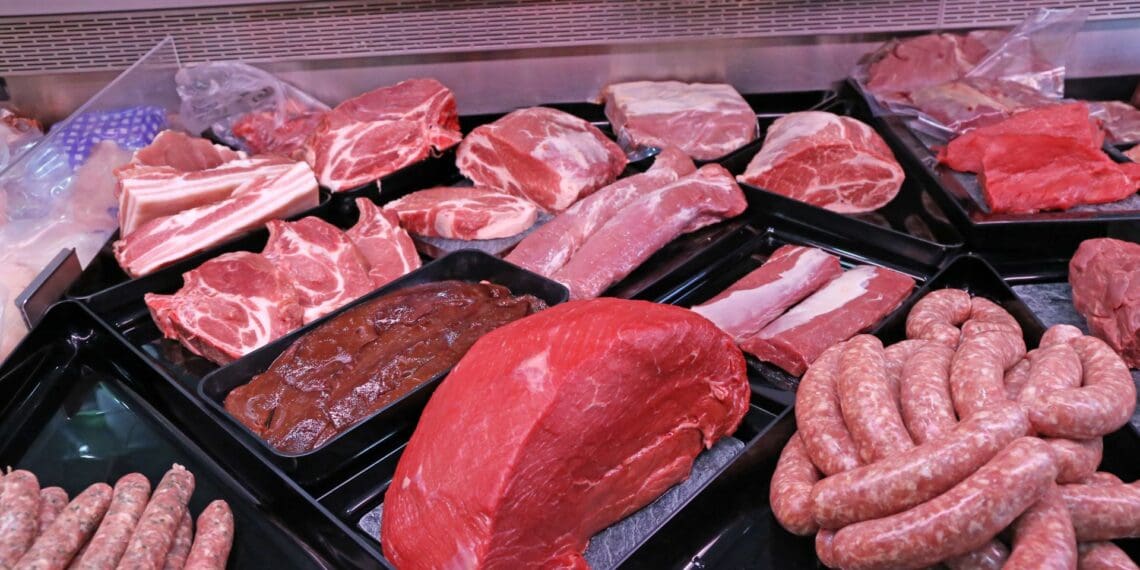
Despite ongoing foot-and-mouth disease outbreaks, the Red Meat Producers Organisation assures South Africans that eating meat remains safe because it cannot spread to humans. Strict biosecurity, regulated slaughter practices, and the urgent rollout of vaccines remain critical

by Tiisetso Manoko
18th February 2026
Red Meat Industry Services (RMIS) advocates for methods that can revolutionise red meat production, ensuring sustainable resource use and nourishing nations. Photo: Supplied/Food For Mzansi

The red meat industry has stated that it is safe to eat red meat amid the FMD crisis. Photo: Supplied/Food For Mzansi

Share on FacebookShare on TwitterShare on WhatsApp

The red meat industry has assured meat lovers and consumers as a whole that it is safe to eat meat, even in the peak of the foot-and-mouth disease (FMD) outbreak currently causing havoc in the country.

Chief executive officer of the Red Meat Producers Organisation, Dr Frikkie Maré, said FMD is not a zoonosis (an infectious disease that jumps from an animal to humans), so the meat remains safe for human consumption. 

“The reason animals are quarantined while they have the virus and do not get slaughtered while positive is to prevent the spread of the disease to other animals. 

“Since it is a highly contagious virus, it can be spread if infected products are discarded in a way that allows other cloven-hoofed animals to come into contact with them. The chances of it spreading that way are very slim, but it does exist,” he explained.

Safe slaughtering practices

According to Maré, in principle, farmers should not slaughter “sick” animals. “Not only due to FMD, but any animal that is unhealthy at the time of slaughter does not sound appetising for consumers. To ensure healthy animals are slaughtered to deliver the best possible product, a number of checks and balances are in place.

“The first is that the owner of the animals, whether a farmer or a feedlot, must submit a health declaration with the animals when they are sent for slaughter.  They have to confirm the animal’s health status and declare that all withdrawal periods for any medications administered to the animal were adhered to.”


Related stories
  • Ramaphosa pledges 28m FMD vaccines, 10 000 extension officers
  • FMD crisis: Protecting SA’s livestock from viral disaster
  • ARC rolls out first locally produced FMD vaccine amid industry tensions
  • SA agricultural exports surge but face logistical strain

Maré said biosecurity is not only about FMD, but about all animal diseases. 

“I do think the FMD situation made producers more aware of the biosecurity measures they already had in place and what is still needed. Future outbreaks of any disease can only be prevented by robust biosecurity measures and rapid action to contain them as soon as possible,” he said.

Vaccination is crucial

Meanwhile, Dr Boitumelo Semete-Makokotlela, chief executive officer of the South African Regulatory Health Product Authority (SAHPRA), said the health of the country’s livestock is critical to food security, economic stability, and the livelihoods of our farmers.

“By granting Section 21 authorisation for the importation of FMD vaccines, SAHPRA is ensuring that veterinarians and farmers have timely access to safe, effective, and scientifically approved tools to protect animals against this highly contagious and devastating disease.

“Section 21 of the Medicines and Related Substances Act provides a mechanism for the controlled importation of medicines and vaccines not yet registered in South Africa, under strict regulatory oversight,” Makokotlela said.

In his State of the Nation Address, President Cyril Ramaphosa said the government is working around the clock to ensure that vaccines reach farmers as soon as possible.

“FMD spreads rapidly through direct contact with infected animals, contaminated equipment, vehicles, clothing, feed, and even via wildlife carriers. Outbreaks can lead to movement restrictions, quarantines, trade limitations, and increased compliance costs for farmers.

“Loss of South Africa’s FMD-free status can trigger immediate export bans on livestock and related products, affecting foreign revenue losses,” he stated.

Dr Bothle Modisane, chief director for animal health at the national department of agriculture, assured the farming community that every vaccine authorised for use in the country undergoes careful evaluation for safety, efficacy, especially against locally circulating strains and quality. Modisane added that they are optimistic that the disease will be contained.

“Our collaboration with SAHPRA reflects the importance of partnerships in safeguarding animal health,” Modisane said.

READ NEXT: High-quality seeds, high stakes for smallholder farmers

Sign-up for the latest agricultural news delivered straight to your inbox every day with Mzansi Today!

Tiisetso Manoko

Tiisetso Manoko is a seasoned journalist with vast experience in community media. He possesses diploma in media studies majoring in journalism, certificate in civic leadership. He loves news from all angles with particular interest in local government, agriculture and politics. He is a staunch Mamelodi Sundowns Football club supporter.

Tags: Animal BiosecurityFMDFood safetyInform meRed Meat Producers Organization (RPO)Vaccination

Related Posts

Financial literacy: A gateway for farmers who dream big

Expert urges farmers to leverage ‘good debt’ for growth

18th February 2026
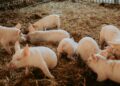
South African pork prices are on the rise again as ASF and FMD outbreaks reduce pig numbers in key provinces. Photo: Pexels

Pork prices rise as disease outbreaks tighten supply

17th February 2026

Sugar crisis as Tongaat Hulett files for provisional liquidation

High-quality seeds, high stakes for smallholder farmers
This week’s agri events: 16 – 20 February

Small-scale fishers battle DFFE over linefish quota cuts

Harvesting love: How farming couples balance business & romance

The abalone crisis: Why SA’s coastal war never ends

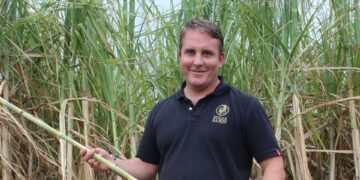
Third-generation farmer Brad O’Neill transforms his family’s sugarcane legacy at Seafield farm into Sugar Baron Craft Distillery in KwaZulu-Natal. Photo: Supplied/ Food For Mzansi
Inspiration

Cane to craft: Brad O’Neil blends legacy and innovation in sugar

by Lisakanya Venna
16th February 2026

When Brad O’Neill returned home after his father’s passing, he didn’t just take over a sugarcane farm; he reimagined it....

Read moreDetails
South Africa’s seed landscape is at a crossroads. While formal systems offer high yields, informal networks preserve vital biodiversity. Photo: Pexels

High-quality seeds, high stakes for smallholder farmers
16th February 2026
Participants get practical, hands-on training in pig production this week, covering everything from breeding and feeding to housing, hygiene, and farm management. Photo: Supplied/Food For Mzansi

This week’s agri events: 16 – 20 February

16th February 2026
Try Felicia Malebe’s fluffy sorghum pancakes and discover how innovation can turn a simple, nutritious meal into something beautiful and satisfying. Photos: Supplied/Food For Mzansi

Bringing sorghum back: How Malebe is reviving indigenous grains

15th February 2026
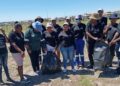
Youth from Standerton’s NYS and aRe Bapaleng programmes celebrate after clearing dumping sites, building parks, and tending community gardens. Photo: Seriti Institute

Standerton proves partnerships can power rural transformation

14th February 2026

How to set up grazing camps and cut feed costs

Breaking new ground: Msibi trades marketing for mixed farming

Ending child stunting: Why the first 1 000 days start at home

Small-scale fishers battle DFFE over linefish quota cuts

This week’s agri events: 16 – 20 February

Join Food For Mzansi's WhatsApp channel for the latest updates!

JOIN NOW!
Next Post
Debbie Theunissen transformed Bovenvlei Farm into a successful pomegranate export business through careful planning, technology, water management, and the support of her husband and co-director. Photo: Gareth Davies/Food For Mzansi

Pomegranate pioneer: Debbie Theunissen’s rise in fruit farming

THE NEW FACE OF SOUTH AFRICAN AGRICULTURE

With 21 global awards in the first six years of its existence, Food For Mzansi is much more than an agriculture publication. It is a movement, unashamedly saluting the unsung heroes of South African agriculture. We believe in the power of agriculture to promote nation building and social cohesion by telling stories that are often overlooked by broader society.

Traditional medicinal plants offer hope for men’s health

Pomegranate pioneer: Debbie Theunissen’s rise in fruit farming

Meat is safe to eat despite FMD outbreak, assure experts

Expert urges farmers to leverage ‘good debt’ for growth

How to set up grazing camps and cut feed costs

CGA CEO marks first year with renewed drive for citrus growth

  • Awards & Global Impact
  • Our Story
  • Contact Us
  • Cookie Policy
  • Privacy Policy
  • Copyright

Contact us
Office: +27 21 879 1824
News: info@foodformzansi.co.za
Advertising: sales@foodformzansi.co.za

Contact us
Office: +27 21 879 1824
News: info@foodformzansi.co.za
Advertising: sales@foodformzansi.co.za

  • Awards & Global Impact
  • Our Story
  • Contact Us
  • Cookie Policy
  • Privacy Policy
  • Copyright
No Result
View All Result
  • News
  • Changemakers
  • Lifestyle
  • Farmer’s Inside Track
  • Food for Thought

Copyright © 2024 Food for Mzansi

This website uses cookies. By continuing to use this website you are giving consent to cookies being used. Visit our Privacy and Cookie Policy.