Friday, September 4, 2026
SUBSCRIBE
22 GLOBAL MEDIA AWARDS
Food For Mzansi
  • News
  • Changemakers
  • Lifestyle
  • Farmer’s Inside Track
  • Food for Thought
No Result
View All Result
  • News
  • Changemakers
  • Lifestyle
  • Farmer’s Inside Track
  • Food for Thought
No Result
View All Result
Food For Mzansi
No Result
View All Result
in News

Medicinal plants conference highlights healing & profit potential

African medicinal plants hold immense potential for economic development and health solutions. At the Somped conference, experts shared insights on turning plant research into marketable products – from tackling cancer to building a brand

by Vateka Halile
30th August 2025
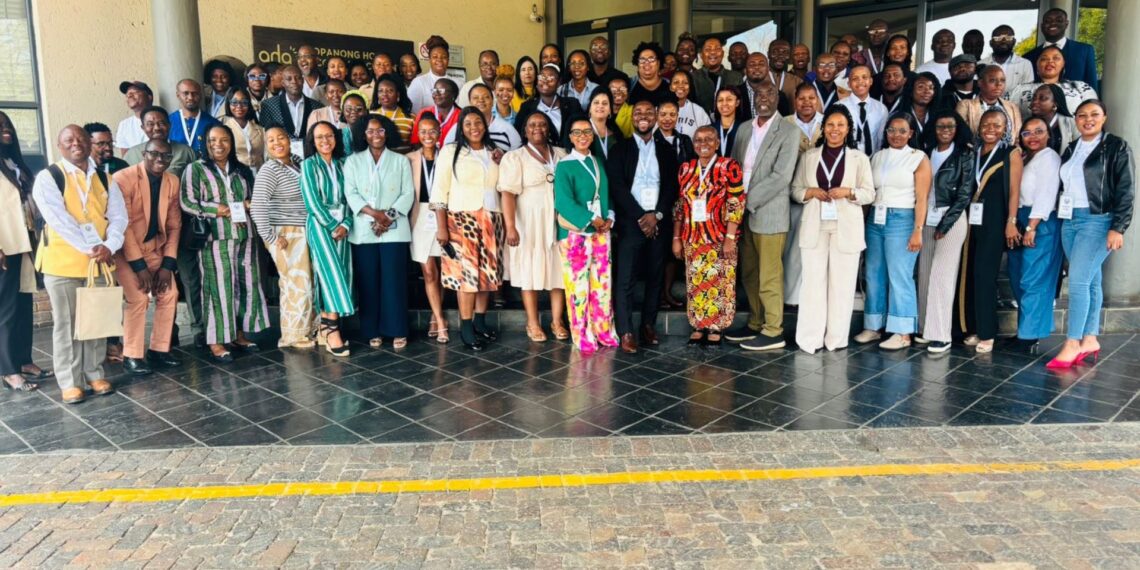
A group of scientists, researchers, traditional healers, and local and international delegates attended Somped 2025 in Benoni, Johannesburg.
Photo: Supplied/Food For Mzansi

A group of scientists, researchers, traditional healers, and local and international delegates attended Somped 2025 in Benoni, Johannesburg. Photo: Supplied/Food For Mzansi

Share on FacebookShare on TwitterShare on WhatsApp

From roots and leaves to lab results and market shelves – medicinal plants were in the limelight at the 9th International Conference of the Society for Medicinal Plants and Economic Development (Somped) in Gauteng. Global experts gathered to share how these plants are grown, researched, and turned into products, stressing both their healing power and their untapped economic promise.

Professor Olukemi Odukoya from the University of Lagos, a herbal research expert, educator, and president of Somped, and a survivor of three different cancers, emphasised that researchers and scientists need to do more research on developing medicine for cancer using our plants, as we have the potential to do so.

Building a medicinal brand

“Over the past nine years, our society has grown exponentially, and our conferences have become a beacon of knowledge-sharing, collaboration, and innovation,” Odukoya said.

Meanwhile, the plenary speaker, Professor David Katerere, research platform chair of pharmaceutical and biotechnology advancement at Tshwane University of Technology, highlighted the process of moving from bench to market. 

“Somped specifically tailors its research towards the economic development of the people of Africa to address global issues, especially on phytomedicine and climate change,” he said.

From left to right: Professors David Katerere and Olukemi Odukoya at Somped 2025 in Benoni, Johannesburg. Photo: Vateka Halile/Food For Mzansi

Katerere noted that through his experience in product development, he has learned that there is a market for affordable products and that you cannot compete with big companies. He added, “Learning is on the streets.”

He emphasised that to build a brand through medicinal science, one needs to consider revenue models, different revenue streams, learn from practical experience, understand regulations, find local partners, and practice the art of selling. 

“Don’t price yourself out of the market,” Katere advised.


Related stories
  • In pictures: Indigenous medicinal plants take root in CT townships
  • Growing cannabis for Mzansi’s evolving medicinal market
  • Cultivating the future: Tips for growing medicinal cannabis
  • Sibongile’s plant passion: Healing crops and feeding Mzansi

The rising demand for medicinal plants

Asanda Sokombela from the University of Limpopo presented a study on the influence of different coloured plastic mulch on soil chemical properties and soil enzyme activity under moringa oleifera.

She said there is a growing demand for medicinal plants; however, this could impact the environment. “Constant and frequent harvesting affects the population of these plant species,” Sokombela said.

Meanwhile, Professor Namrita Lall from the University of Pretoria, a leading scholar in the field of phytomedicine, gave insight into African traditional medicine, modern drugs and future opportunities.

She mentioned that some drugs containing African botanicals include:

  • Hemoxin/Niprisa, derived from a polyherbal of Piper guineense, a plant commonly found in West Africa. It works by clocking the breakdown of blood clots.
  • Curasite, a gel used in ulcer treatment and for wound healing, is made from a hydrogel containing three plant botanicals: Centella asiatica, Echinacea purpurea, and Sambucus nigra. This is common throughout tropical Africa.
Academics and organisers gathered for Somped 2025 in Benoni, Johannesburg. Photo: Vateka Halile/Food For Mzansi

Among many others, she mentioned Cape aloe (Xanthorrhoeaceae), noting that it is traditionally used as a laxative in Africa and Europe. 

“It is thought to have antioxidant, anti-inflammatory, antimicrobial, and anti-cancer properties,” she said.

Lall also noted that a forex gel is used in the cosmetic industry as it is reported to contain over 130 medicinal agents known to possess varying biological activities.

She also explained that Artemisia herba-alba is well-used in traditional medicine to treat a variety of ailments, such as hypertension, diabetes, bronchitis, and diarrhoea.

READ NEXT: Lomati Sawmill sale secures jobs and growth in Mpumalanga

Sign-up for the latest agricultural news delivered straight to your inbox every day with Mzansi Today!

Vateka Halile

Vateka Halile grew up in rural areas of Cofimvaba in the Eastern Cape. She was raised in a traditional family setting and found writing to be a source of comfort and escape. Vateka participated in an online citizen journalism course through Food For Mzansi, and her passion for health and medicine-related stories was born. Her dedication to community work and love for social justice and solidarity spaces is evident in her quality time with the community when she isn't working.

Tags: Consumer interestInform memedicinal plants
Sick spuds: No need to panic as SA’s potatoes are banned in Zim
News

Potato turning point ahead as onions double in price year-on-year

by Raylentia Simmons
1st September 2026

South African fresh produce markets face major shifts as onion prices surge 104% year-on-year to R121.93 per 10kg bag. Agricultural...

Read moreDetails
Early calf care: Key growth targets every cattle farmer must track

Early calf care: Key growth targets every cattle farmer must track

1st September 2026

How to align your farming cycles with long-term financial success

1st September 2026
Strategic support sparks record-breaking growth at WC grape farm

Strategic support sparks record-breaking growth at WC grape farm

1st September 2026
Beyond finance: Making women-led farms bankable

Beyond finance: Making women-led farms bankable

31st August 2026

Potato turning point ahead as onions double in price year-on-year

Mamelodi farmers learn how to test soil with just a bottle and spade

QueenAgri’s reign: How Fellistus Sekgale scaled from scratch

Early calf care: Key growth targets every cattle farmer must track

This week’s agri events: 31 August – 03 September

Join Food For Mzansi's WhatsApp channel for the latest updates!

JOIN NOW!
Next Post
‘One woman, one hectare’: Farm women demand land rights

‘One woman, one hectare’: Farm women demand land rights

THE NEW FACE OF SOUTH AFRICAN AGRICULTURE

With 21 global awards in the first six years of its existence, Food For Mzansi is much more than an agriculture publication. It is a movement, unashamedly saluting the unsung heroes of South African agriculture. We believe in the power of agriculture to promote nation building and social cohesion by telling stories that are often overlooked by broader society.

Foot-and-mouth crisis hits SA dairy industry with R1-billion loss

Tough times, hardy cattle: Why Mzansi farmers are choosing Nguni

Dragon fruit thrives in KZN valley despite tough national season

Government hikes sugar import price, but industry warns of gap

Chicken is booming, but the real money is in the supply chain

How Tebogo beat post-harvest losses with smart agro-processing

  • Awards & Global Impact
  • Our Story
  • Contact Us
  • Cookie Policy
  • Privacy Policy
  • Copyright

Contact us
Office: +27 21 879 1824
News: info@foodformzansi.co.za
Advertising: sales@foodformzansi.co.za

Contact us
Office: +27 21 879 1824
News: info@foodformzansi.co.za
Advertising: sales@foodformzansi.co.za

  • Awards & Global Impact
  • Our Story
  • Contact Us
  • Cookie Policy
  • Privacy Policy
  • Copyright

Chat Options

I'm Lerato, your AI assistant!
No Result
View All Result
  • News
  • Changemakers
  • Lifestyle
  • Farmer’s Inside Track
  • Food for Thought

Copyright © 2024 Food for Mzansi

This website uses cookies. By continuing to use this website you are giving consent to cookies being used. Visit our Privacy and Cookie Policy.