Mogase Kgatjepe’s passion for livestock runs deep. His journey as a livestock breeder began long before he ever set foot on a farm, as both his father and grandfather were respected cattle breeders of their generation.
Born in the village of Nobody near Polokwane, Limpopo, Kgatjepe was raised under the watchful eye of his grandmother. He often sat with her, absorbed in the stories of the two men he never met.
“When I grew up, I was told that my grandfather on my father’s side was a good breeder,” Kgatjepe says. “Even though I didn’t get to meet these two gentlemen, I was able to see their production, as some of the livestock they had was still there when I grew up.”
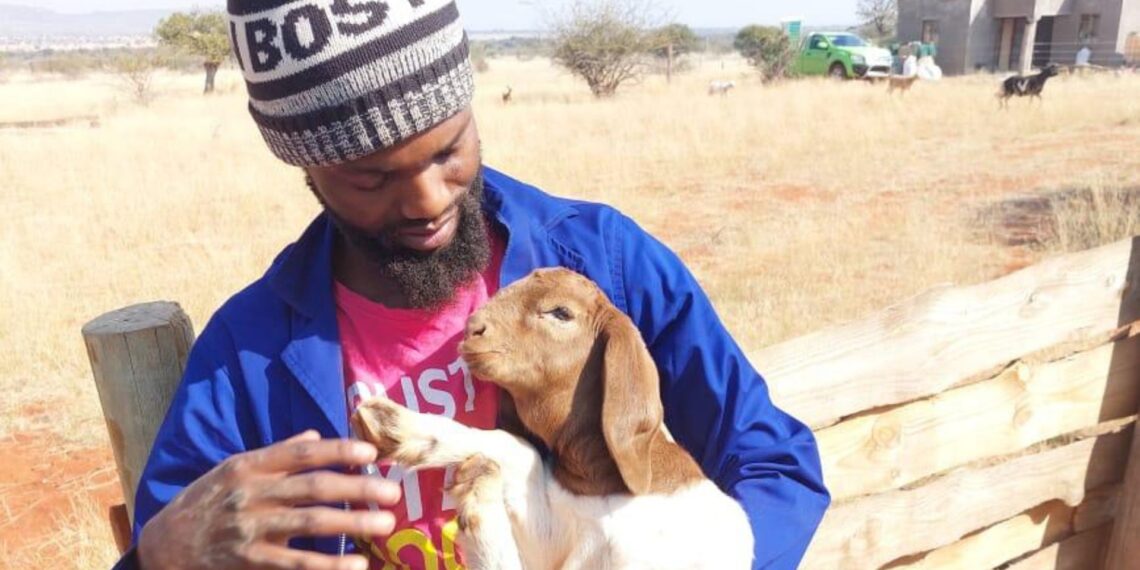
Today, in Mohlaletse, a village in the Sekhukhune district where his family home is, Kgatjepe has earned his reputation as a breeder of goats and cattle.
Breeding Boran cattle and Boer goats
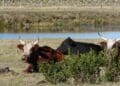
Kgatjepe’s farm is home to Dorpers, Boer goats, Savannah goats, and Boran cattle, each breed chosen with specific local market needs in mind. His main customers are from the surrounding community, who buy livestock for events like weddings, funerals, and cultural ceremonies.

“People always buy cattle from us to slaughter, even goats for traditional purposes,” he explains. Breeds like the Savannah, in particular, have a special role in traditional practices.
In addition to meeting local demands, Kgatjepe has tapped into the auction market, connecting with other farmers and reaching a wider clientele with his livestock.
Related stories
- Tsholofelo quits lab job and sells car to pursue farming dream
- Flower power: Farming couple turns fynbos into global business
- Pascal’s pride: Farm innovates with sustainable practices
Lessons learned on climate and disease
Like many new-era farmers, Kgatjepe encountered early challenges, especially in managing the impact of the environment on livestock health. “I acquired livestock from areas that are not similar in terms of climate to my area,” he recalls. “When the climates of the two areas are not the same, the sicknesses are also not the same.”
Heartwater disease, a tick-borne illness common in Limpopo’s warmer climate, devastated his livestock, leading to the loss of dozens of animals. “I lost about 15 Dorpers, 8 Dorper sheep, and around 20 Boer goats,” he says.
Determined to address this, he attended agricultural training, sought advice from seasoned farmers, and learned the importance of sourcing livestock from regions with similar climates to reduce disease risk.

Reflecting on his journey, Kgatjepe shares the importance of planning and informed decision-making, a lesson learned through trial and error.
“Lack of planning was one of my challenges because sometimes you get a little bit of money and then you just buy something without doing a proper investigation,” he admits.
Business planning workshops broadened his understanding, helping him refine his approach to farming and market strategy.
Becoming a top meat producer in Limpopo
Kgatjepe has ambitious goals for his farming business. “I want to be the biggest meat producer in Limpopo,” he says, noting that he is among the youngest farmers focused on large-stock livestock breeding in his area.
While he recognises the time-intensive nature of breeding, he is methodically building his reputation as a top breeder of Boran cattle and Boer goats, aiming to make a lasting impact in Limpopo and beyond.
For those considering a similar path, Kgatjepe offers practical advice: “Never, ever, ever do anything without planning. Always know what you are getting into, do proper research, and get somebody who’s successfully farming as a mentor.”
Mistakes in agriculture, he warns, are costly but avoidable with the right preparation.
READ NEXT: Zabion’s master plan: Diversify to thrive and reach the top
Get Stories of Change: Inspirational stories from the people that feed Mzansi.