If you drive deep into the rolling green hills of the Eastern Cape, past Flagstaff and Lusikisiki, the tar eventually gives way to gravel, and the gravel eventually gives way to something quieter. This is Mpondoland.
It is beautiful in a way that resists description, but it is also economically bruised. Fields are rich, yet opportunity is thin. Young people leave. Infrastructure arrives slowly, if at all.
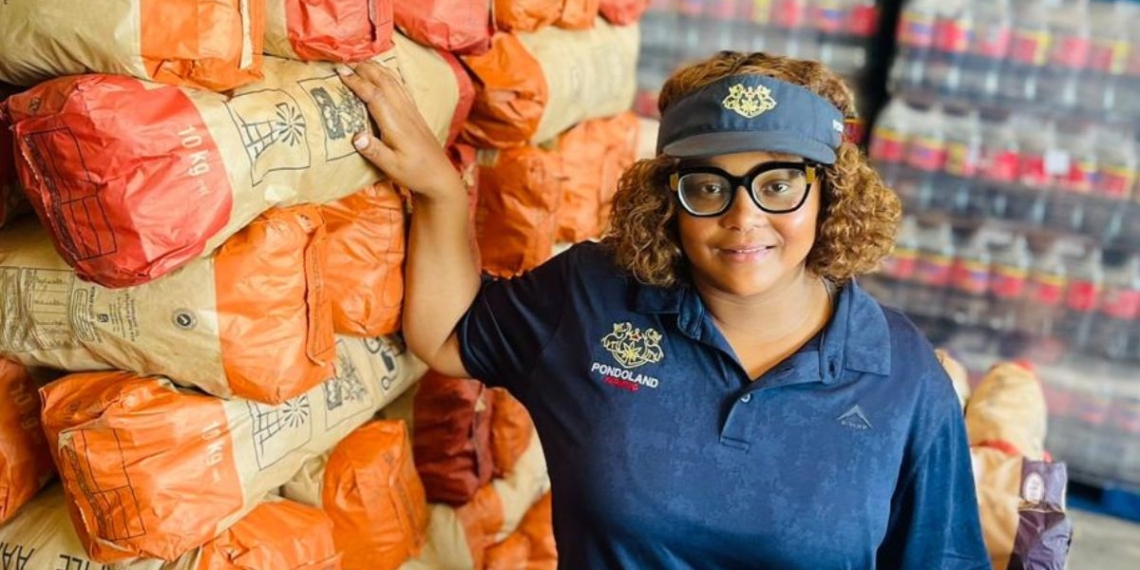
It is here, in this uneven landscape between abundance and neglect, that Nomachule Sigcau has chosen to build something that looks less like a farm and more like a working hypothesis.
She calls it soil-to-pharmacy. But on the ground, it is simpler than that. It is land, science, and stubborn consistency.
Sigcau is a graduate of Nelson Mandela University, trained in analytical chemistry, where nothing is left to chance. Every result must be reproducible. Every error must be traceable. That mindset carried her into the pharmaceutical sector, where she worked with companies like Aspen Pharmacare and Adcock Ingram, places where failure is not an option because the stakes are human health.
But the real shift in her story did not happen in a lab or a corporate office. It happened when she began asking a different question. Not how to improve supply chains, but why South Africa is so dependent on supply chains it does not control.
A return to Mpondoland with a different lens
Mpondoland is not a blank slate. It is a place with history, land struggles, and deep agricultural knowledge passed down through generations. But like much of rural South Africa, it has also been shaped by underinvestment in infrastructure and limited access to formal value chains.
Sigcau returned to this land with something most development projects lack. Not sentiment. Systems thinking.
She co-founded Zanokhanyo Health Care Solutions in 2012, naming it in honour of her mother-in-law, the late Stella Sigcau, a prominent South African politician and a princess of the Qawukeni Royal House of the AmaMpondo nation. The company grew in the structured world of medical devices and supply systems, eventually securing international OEM agreements across Sub-Saharan Africa.
Related stories
- 100 ha of hope: Aphiwe revives family farming legacy in Engcobo
- Big dreams on his ‘Tiny Farm’: Setjhaba’s 300-hectare success
- Agri economist Vuyisani planted a seed and changed his future
- Betty Nkoana’s gardens bring hope to struggling families
But even success in that space revealed a hard truth. South Africa consumes far more medical products than it produces. The inputs are imported. The value is extracted elsewhere.
When Covid-19 hit, that reality became impossible to ignore.
When global systems broke, local systems mattered
During the pandemic, supply chains collapsed in real time. PPE shortages, delayed shipments, and global panic exposed how fragile the system actually was.
Inside her company, Sigcau did not react with improvisation. She relied on structure. Her “Triple-S” model tracked stock in the warehouse, stock in transit, and stock in production. It was not flashy. It was methodical. And it worked.
While others scrambled, her operations stayed steady.
But the bigger lesson was not about resilience in a crisis. It was about dependence in normal times.
The pivot from procurement to production
After the pandemic, Sigcau came back to a persistent problem. South Africa was still importing the majority of its medical raw materials. Even when local manufacturing was proposed, global partners were not always willing to transfer capability.
That is when she shifted her attention back to land.
In Mpondoland, she has access to roughly 200 hectares of family and privately held land. That alone changes the economics of entry. Most rural farmers start in debt. She started with space.
But she did not romanticise farming. She treated it like chemistry.
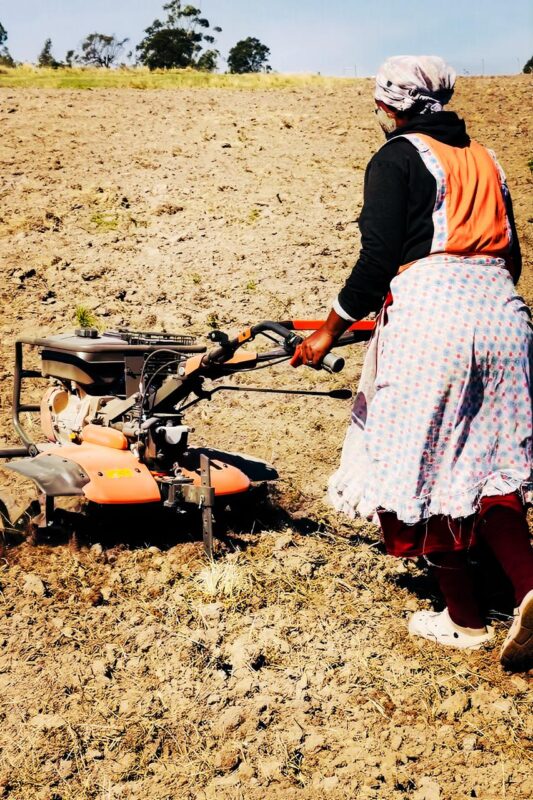
Through the KwaZulu-Natal Agriculture Development Agency, she first learned the fundamentals. Soil science. Crop cycles. Irrigation systems. Not theory in isolation, but the mechanics of production.
Only then did she plant.
Nandi Farm: slow expansion, deliberate growth
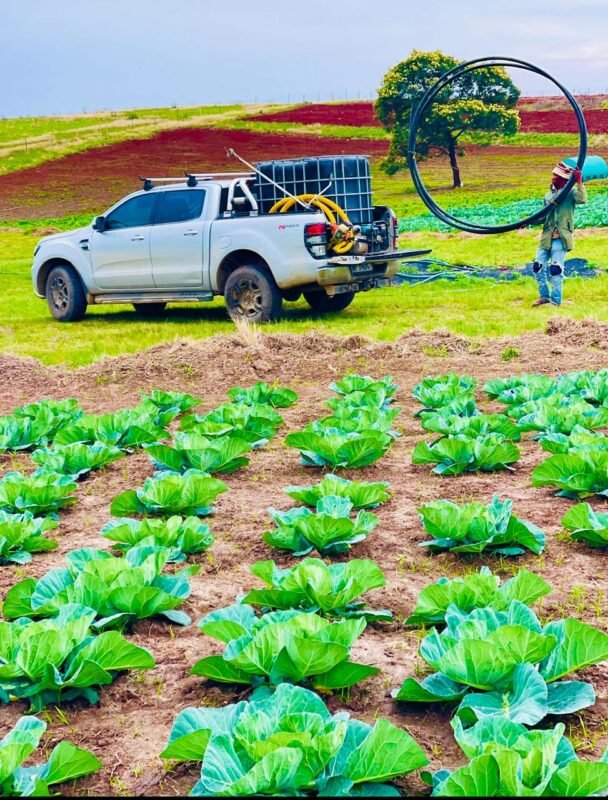
The Nandi Farm Initiative began in 2022 with something almost modest. A 0.5-hectare garden, tested in partnership with SA Harvest. The goal was not scale. It was proof. Could the soil support consistent production?
When the answer came back yes, expansion followed, but not aggressively. Slowly. Intentionally.
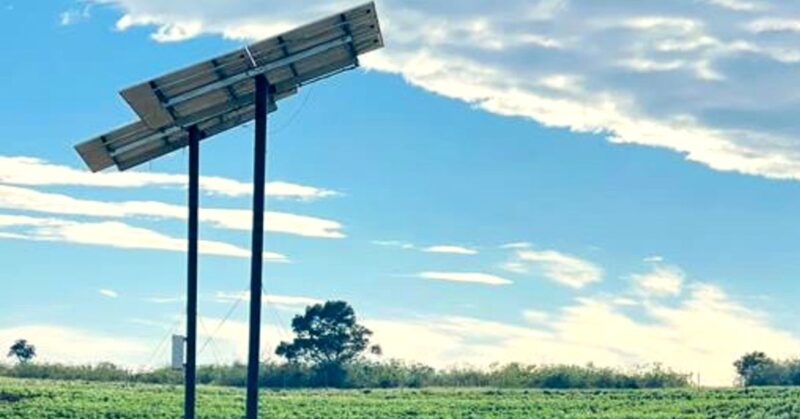
Manual irrigation gave way to structured systems. Five hectares became productive and fenced. Then came support from the Eastern Cape Development Corporation, which helped scale operations to 16 hectares of irrigated land.
A 4-hectare potato pilot is now one of the clearest signs that the model is working. Not as theory. As supply.
Retail conversations are no longer speculative. They are active.

A farm that functions like a classroom
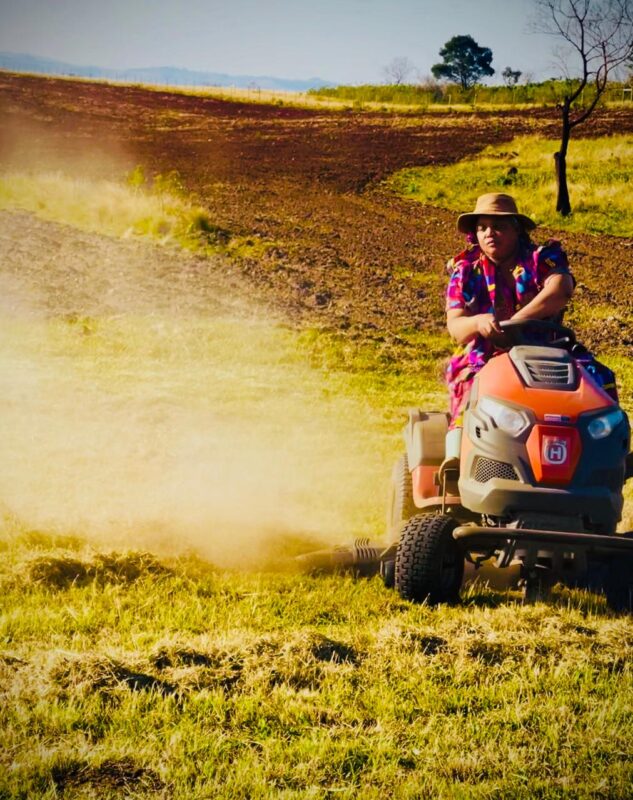
Spend time on the farm, and you quickly realise this is not just about production. It is also about training.
Sigcau describes it as a live laboratory. That phrase could sound abstract, but on the ground, it is practical. People are learning by doing. Ten graduates have already completed crop production training on-site.
This has now been formalised through the Princess Stella Sigcau Skills Development Initiative, led by her husband, Prince Leslie Sigcau.
In nearby communities like Lusikisiki and Port St Johns, where youth unemployment is not an abstract statistic but a daily reality, the aim is to shift agriculture from “last option” work to technical, structured employment.
Sigcau is trying to change that perception by changing what people actually see happening in the soil.
That is not easy. In many rural homes, farming is still associated with survival, not ambition.
What industrialisation looks like when it starts in the soil
There is a habit in policy circles of talking about industrialisation as something that happens in cities. Factories. Logistics hubs. Export zones.
Sigcau’s model starts in a different place. It starts with soil testing. With irrigation layouts. With crop selection linked to market demand. With the idea that rural land can be part of a medical value chain, not just a food chain.
She is also exploring partnerships with universities to study how certain crops can be processed into medical and industrial inputs. It is early work, but it reflects a bigger shift. Agriculture is no longer being treated as separate from science. It is becoming part of it.
August 2026: a different kind of farm day
In August 2026, Nandi Farm will host a gathering in Mpondoland. On paper, it is a farm day. In reality, it is a checkpoint.
The focus will not only be on yields or hectares. It will be the people who made those numbers possible. Workers, trainees, supervisors. The people who are usually invisible in agricultural reporting but central to agricultural reality.
The intention is to show progress without exaggeration. What has worked. What has not. What still needs fixing.
A call from the edge of the map
There is a tendency to speak about rural development in abstract terms. Strategy documents. Frameworks. Policy language that rarely reaches the soil.
Sigcau’s work is grounded in something less polished. She is asking for consistency over announcements. For long-term thinking over short funding cycles. For an investment that understands rural areas not as projects, but as systems.
With support from the Ingquza Hill Local Municipality, agricultural development bodies, seed partners, and provincial institutions, the model is slowly taking shape.
But she is clear about one thing. This only works if it is sustained.


What is really being tested here
At one level, this is a farm. At another, it is a supply chain experiment. At another, it is an education model. At another still, it is a question about sovereignty.
Can a rural area that has historically been excluded from industrial systems become part of building them?
Sigcau is not claiming she has the answer. She is building the conditions to test it.
And in Mpondoland, where land has always held both memory and possibility, that might be the most honest place to start.
READ NEXT: Simemo Nkosi grows family farm into diversified enterprise