South Africa’s Limpopo province borders Zimbabwe, Botswana and Mozambique. It is one of the poorest provinces in the country. This is due to a combination of historical underdevelopment, a high unemployment rate, heavy reliance on government grants and a rural-based economy with limited industrial diversification.
It’s an interesting place for a geographer like me. My work brings together the themes of traditional ecological knowledge, environmental geography, conservation and society. My research looks at sustainable environmental outcomes by recognising the role of local culture, sacred sites and community practices in managing natural resources in southern Africa.
In two recent studies, I explored how local communities in Limpopo are commercialising the harvesting of local insects to manage extreme poverty.
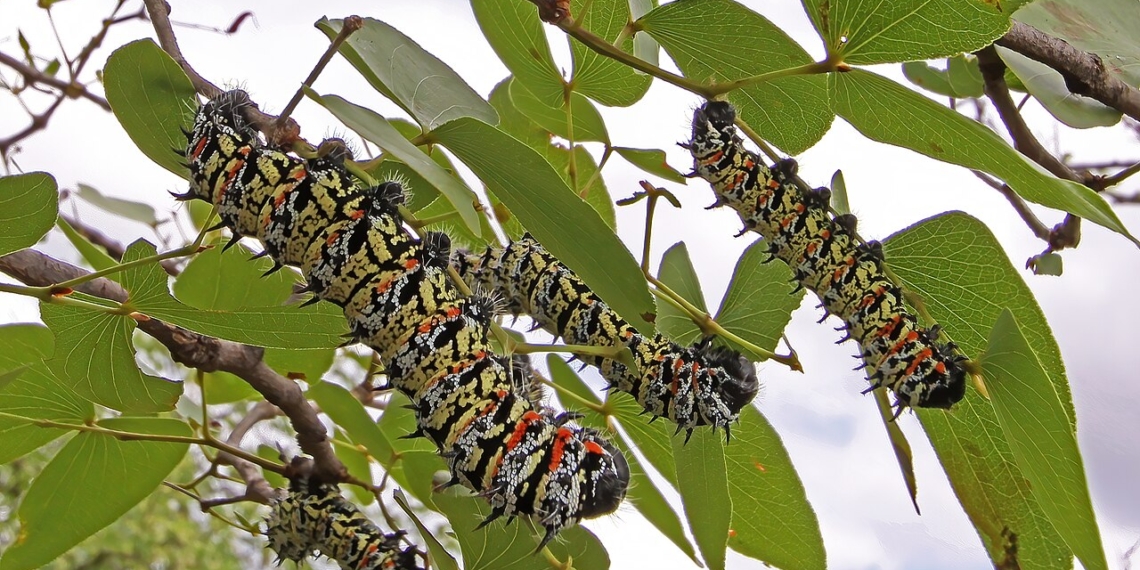
In one, I explored the process involved in the commercialisation of mopane worms. Mopane worms (Gonimbrasia belina) are a nutritious, high-protein seasonal delicacy for many communities in Limpopo.
In a similar study, I turned to the harvesting and commercialisation of termite alates in Limpopo.
These resources are important for food security and poverty relief. Mopane worms and alate termites offer both high-quality nutrition and substantial income-generating opportunities for rural households. Both foods are traded in local and regional, formal and informal markets.
This enterprise is largely driven by unemployment, economic hardship, and the need for cash income in rural areas.
My research shows clearly that these resources play an important part in rural households and it’s important to manage them sustainably. One way of ensuring this happens is to tap into local knowledge.
As a separate study I did shows, traditional knowledge can help manage scarce resources by integrating customary rules, taboos and seasonal monitoring to prevent over-exploitation.
Related stories
- Agripreneur 101: Mopani queen shares her top business tips
- This mopani stew is a lip-smacking treasure
- Termites to tomatoes: Boima’s bold innovations take off
Mopane harvesting and trade
The mopane worm study took place in June and July 2023 in Muyexe and Nsavulani villages, Mopani District, Limpopo. The area is dominated by mopane woodlands, trees which are the main food of mopane worms (caterpillars). These villages have not benefited from development in the past and people depend heavily on natural resources for survival.
The processing of mopane worms (from harvesting to a marketable commodity) involves a series of traditional, manual steps to ensure quality. They are degutted (squeezing the caterpillar to remove stomach contents or frass), washed, boiled and dried to allow them to be stored for long periods. They are then graded and sold at home or in towns.

I chose 161 households in Muyexe village and 82 households in Nsavulani village as respondents, and interviewed villagers using a questionnaire. The questions covered:
- The socio-economic profile of respondents
- The availability and procurement, processing, marketing, trading and livelihood benefits of mopane worms.
The study found that most of the harvesters in Muyexe (69%) and Nsavulani (59%) villages were women. Almost all processed the worms at home. They collected the worms for both household consumption and trade. Those who traded worms reported making between R1,000 (US$54) and R3,000 (US$163) per season. There are two mopane seasons in Limpopo: November to January and April to May.
The study found that 55% of households in Muyexe village and 70% in Nsavulani village derived income only from mopane worm sales. (Individuals were under 60 and didn’t qualify for a social grant, or administered grants for children, nor for themselves.) Although the income earned from the sale of mopane worms is seasonal, communities appreciate it. Commercialising mopane worms contributed significantly to rural livelihoods. It is a crucial source of food security and cash income. This helps alleviate poverty and improves the lives and livelihoods of those involved in the business.
Termite harvesting and trade
In a similar study, I turned to the harvesting and commercialisation of termite alates in Limpopo. I interviewed 71 respondents in Thohoyandou and Sibasa towns (who came mainly from villages), as well as Mukula and Tshidzivhe villages, and found that these insects were harvested to eat at home and to sell.

Women of all ages were more involved than men in this enterprise, making up 75% of the respondents. Almost half had secondary education, and 23% had tertiary education; 63% were self-employed. The majority lived below the upper bound poverty line of R1,558 (about US$95) per person per month. About 31% of the traders indicated that over the selling season (October to December), alates contributed up to 100% of the income in their households.
Management for the future
While commercialisation puts pressure on resources, traditional rules and local management protect the trees. In the study on traditional ecological knowledge, I found that the communities imposed rules that:
- prohibited cutting of green branches
- restricted harvesting during specific seasons to allow for maturity
- prohibited tree damage during the mopane worm harvest.
Traditional ecological knowledge regulated the timing of harvest, protected host tree health, and ensured long-term livelihood security for local communities.
This shows that integrating local traditional ecological knowledge into harvesting practices is crucial for managing these resources sustainably.
Management strategies should be integrated into local and regional planning efforts. Efforts should also be made to communicate these strategies to relevant authorities to foster cooperation and raise awareness about the importance of mopane trees for all user groups.
To ensure the sustainable future of this woodland species, I recommend that the government work with traditional leaders and communities to support and enforce existing traditional practices.
- This article was first published by The Conversation.
READ NEXT: Sorghum: Forgotten grain rises as climate-smart crop choice