Thursday, February 5, 2026
SUBSCRIBE
21 GLOBAL MEDIA AWARDS
Food For Mzansi
  • News
  • Changemakers
  • Lifestyle
  • Farmer’s Inside Track
  • Food for Thought
No Result
View All Result
  • News
  • Changemakers
  • Lifestyle
  • Farmer’s Inside Track
  • Food for Thought
No Result
View All Result
Food For Mzansi
No Result
View All Result
in News

Mixed reactions as national minimum wage increases to R30.23

South Africa’s national minimum wage will rise to R30.23 per hour from 1 March. While the government says the increase will protect vulnerable workers, agricultural leaders warn it could burden farmers already facing biosecurity threats, rising costs, and a fragile post-drought recovery

by Tiisetso Manoko
5th February 2026
ICYMI: Declare your wages electronically ASAP!

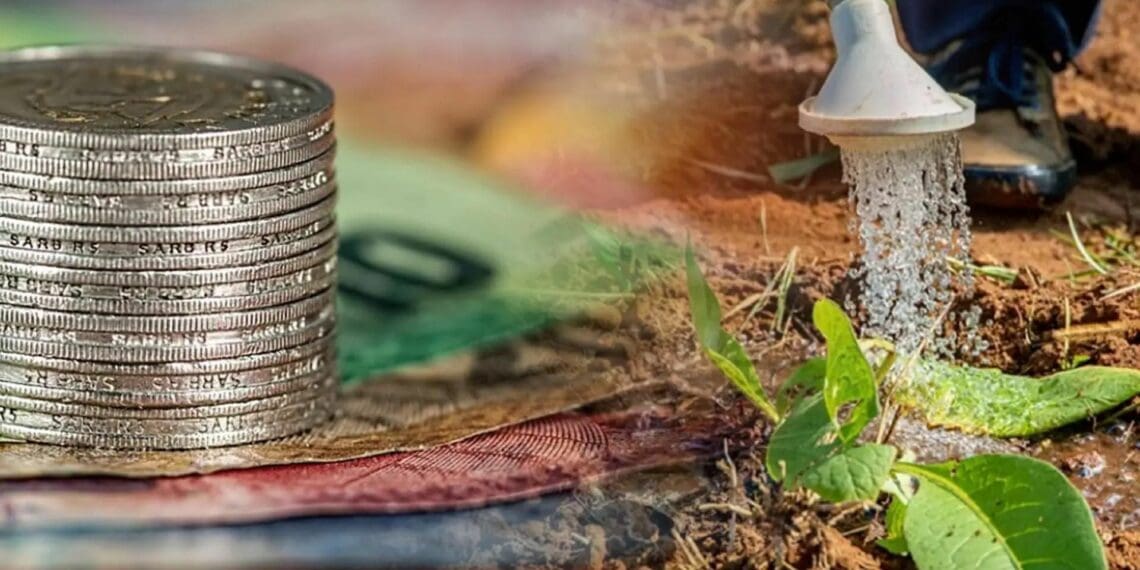
South Africa’s minimum wage rises to R30.23 per hour from March 2026. Government hails it as progress, but farmers warn of job losses and rising pressures. Photo: Food For Mzansi

Share on FacebookShare on TwitterShare on WhatsApp

The government has increased the national minimum wage from R28.79 per hour to R30.23 per hour, effective from 01 March 2026. The increase has been met with mixed reactions in the agriculture sector.

Employment and labour minister Nomakhosazana Meth said the R1.44 upward move will benefit all workers, including vulnerable farmworkers and domestic workers.

“The 1st of March 2026 is the date on which this amendment shall become binding. The national minimum wage is the floor which an employer is legally obligated to remunerate employees for work done. No employee shall be paid below the national minimum wage,” she said.

Do or die for employers

The national minimum wage is enforced by the labour department and Commission for Conciliation Mediation and Arbitration (CCMA). Meth said any violations of the act are subject to fines enforced by the inspectorate.

Meanwhile, AgriSA said the announcement came at a time of uncertainty for South African agriculture, as the sector is experiencing real and measurable economic losses arising from the ongoing foot-and-mouth disease (FMD) outbreak and biosecurity challenges.

Chief executive officer of Agri SA, Johann Kotzé, said the timing of the adjustment would put additional pressure on a sector already under strain.

“Agriculture is emerging from consecutive years of contraction caused by drought, climate volatility, and animal disease outbreaks. While parts of the sector are showing recovery in 2025, this recovery remains fragile and uneven. Labour-intensive subsectors, emerging farmers, and export-oriented value chains are particularly exposed.


Related stories
  • Minimum wage hike: Striking a balance for farmers and workers
  • Minimum wage ‘not enough’ say farmworkers
  • Cutting post-harvest losses key to combat food insecurity
  • Rare dwarf Nguni calf at Vergelegen steals hearts

“AgriSA has consistently emphasised that wage policy must be sector-responsive and implementation-aware, particularly in periods of systemic risk such as the current FMD crisis,” he said.

Kotzé said while the organisation engaged constructively throughout the national minimum wage review process, it remains concerned that above-inflation adjustments implemented during a period of animal health emergency may place additional strain on jobs, farm viability, and rural economies.

Could lead to job losses

“AgriSA calls for parallel action by the relevant state authorities to stabilise the agricultural operating environment, including strengthened animal health and biosecurity systems, accelerated resolution of export market restrictions, improved port and logistics performance, and relief from administered input costs, such as electricity.

“Without these interventions, wage adjustments alone risk weakening employment sustainability, accelerating unemployment rather than improving worker welfare,” he said.

In its 2026 outlook report, AgriSA stated that it supports decent work conditions and fair wages, but emphasised that wage-setting must reflect economic capacity, productivity, and sectoral realities.

“Agriculture remains a critical source of rural employment, yet it is highly sensitive to cost shocks. Labour is a major cost component, especially in horticulture and export-oriented value chains.

“Evidence from AgriSA surveys indicates that previous minimum wage increases have contributed to job losses, reduced working hours and accelerated mechanisation,” AgriSA said.

A poultry farmer from Warrenton in the Northern Cape, Nqobile Khumalo, said it is possible to pay farmworkers the minimum wage; however, it would depend on the scale of the operations.

“It is possible for an emerging farmer like myself, however, what will be great is that the value chain will be able to absorb these changes. Government must come to the party and create much-needed projects or opportunities that we can also play into so that we can be able to pay a decent wage.

“Without market access, there is no business, without business, there is no income, without income, there are no salaries, so the entire value chain must complement each other,” she said.

READ NEXT: ARC rolls out first locally produced FMD vaccine amid industry tensions

Sign-up for the latest agricultural news delivered straight to your inbox every day with Mzansi Today!


Tiisetso Manoko

Tiisetso Manoko is a seasoned journalist with vast experience in community media. He possesses diploma in media studies majoring in journalism, certificate in civic leadership. He loves news from all angles with particular interest in local government, agriculture and politics. He is a staunch Mamelodi Sundowns Football club supporter.

Tags: Agri SAdepartment of employment and labourFarmworkersInform menational minimum wage

Related Posts

The Information Regulator’s enforcement notice against the JSE could mark a turning point for South Africa’s grain and oilseed markets. Photo: Pexels

Grain industry eyes increased transparency after pivotal JSE ruling

5th February 2026
A cloven-hoofed animal showing signs of foot-and-mouth disease, highlighting the urgent need for effective vaccination and disease control in South Africa’s livestock industry. Photo: Wikimedia Commons

ARC rolls out first locally produced FMD vaccine amid industry tensions
4th February 2026

Steenhuisen quits DA leadership, pledges to end FMD

Cutting post-harvest losses key to combat food insecurity

Celebrate excellence: Entries open for SA Dairy Championships

Steenhuisen to quit DA top job: What lies ahead for agriculture?

Rare dwarf Nguni calf at Vergelegen steals hearts

Land reform and rural safety top AgriSA’s 2026 agenda

Agri-Expo invites producers to enter the 2026 South African Dairy Championships. Products are evaluated by an independent panel of experts. Photo: Agri-Expo
News

Celebrate excellence: Entries open for SA Dairy Championships

by Staff Reporter
4th February 2026

The 193rd South African Dairy Championships are here! With entries closing on 23 February 2026, Agri-Expo invites producers of all...

Read moreDetails
In South Africa’s high-risk farming environment, farm insurance is no longer optional. Lunga Njara highlights how the right cover helps farmers manage climate risk and protect long-term business sustainability. Photo: Pexels

How to choose the right farm insurance to protect your business

3rd February 2026
Agriculture minister John Steenhuisen will step down as DA leader, leaving uncertainty over the future of the agriculture portfolio. Photo: Supplied/Food For Mzansi

Steenhuisen to quit DA top job: What lies ahead for agriculture?

3rd February 2026
Dr Frikkie Maré is the CEO of the Red Meat Producers Organisation (RPO). Photo: Gareth Davies/Food For Mzansi

An FMD-free future: Pipe dream or reality?

3rd February 2026
The rare dwarf calf born at Vergelegen in Somerset West. Photo: Vergelegen Wine Estate

Rare dwarf Nguni calf at Vergelegen steals hearts

3rd February 2026

Tru-Cape partners with Harvard on premium apple strategy

An FMD-free future: Pipe dream or reality?

Land reform and rural safety top AgriSA’s 2026 agenda

Grain industry eyes increased transparency after pivotal JSE ruling

Steenhuisen to quit DA top job: What lies ahead for agriculture?

Join Food For Mzansi's WhatsApp channel for the latest updates!

JOIN NOW!
Next Post
Juanita Pardesi, Seriti Institute CEO, is forging lasting partnerships for sustainable livelihoods, food security, and climate resilience. Photo: Gareth Davies/Food For Mzansi

Seriti Institute connects partners for lasting community change

THE NEW FACE OF SOUTH AFRICAN AGRICULTURE

With 21 global awards in the first six years of its existence, Food For Mzansi is much more than an agriculture publication. It is a movement, unashamedly saluting the unsung heroes of South African agriculture. We believe in the power of agriculture to promote nation building and social cohesion by telling stories that are often overlooked by broader society.

Hardship forged Sihle’s passion for animal health

Seriti Institute connects partners for lasting community change

Mixed reactions as national minimum wage increases to R30.23

Grain industry eyes increased transparency after pivotal JSE ruling

ARC rolls out first locally produced FMD vaccine amid industry tensions
Steenhuisen quits DA leadership, pledges to end FMD

  • Awards & Global Impact
  • Our Story
  • Contact Us
  • Cookie Policy
  • Privacy Policy
  • Copyright

Contact us
Office: +27 21 879 1824
News: info@foodformzansi.co.za
Advertising: sales@foodformzansi.co.za

Contact us
Office: +27 21 879 1824
News: info@foodformzansi.co.za
Advertising: sales@foodformzansi.co.za

  • Awards & Global Impact
  • Our Story
  • Contact Us
  • Cookie Policy
  • Privacy Policy
  • Copyright
No Result
View All Result
  • News
  • Changemakers
  • Lifestyle
  • Farmer’s Inside Track
  • Food for Thought

Copyright © 2024 Food for Mzansi

This website uses cookies. By continuing to use this website you are giving consent to cookies being used. Visit our Privacy and Cookie Policy.