Friday, September 25, 2026
SUBSCRIBE
22 GLOBAL MEDIA AWARDS
Food For Mzansi
  • News
  • Changemakers
  • Lifestyle
  • Farmer’s Inside Track
  • Food for Thought
No Result
View All Result
  • News
  • Changemakers
  • Lifestyle
  • Farmer’s Inside Track
  • Food for Thought
No Result
View All Result
Food For Mzansi
No Result
View All Result
in News

Pet owners urged to vaccinate their pets against rabies

by Sinesipho Tom
11th September 2020
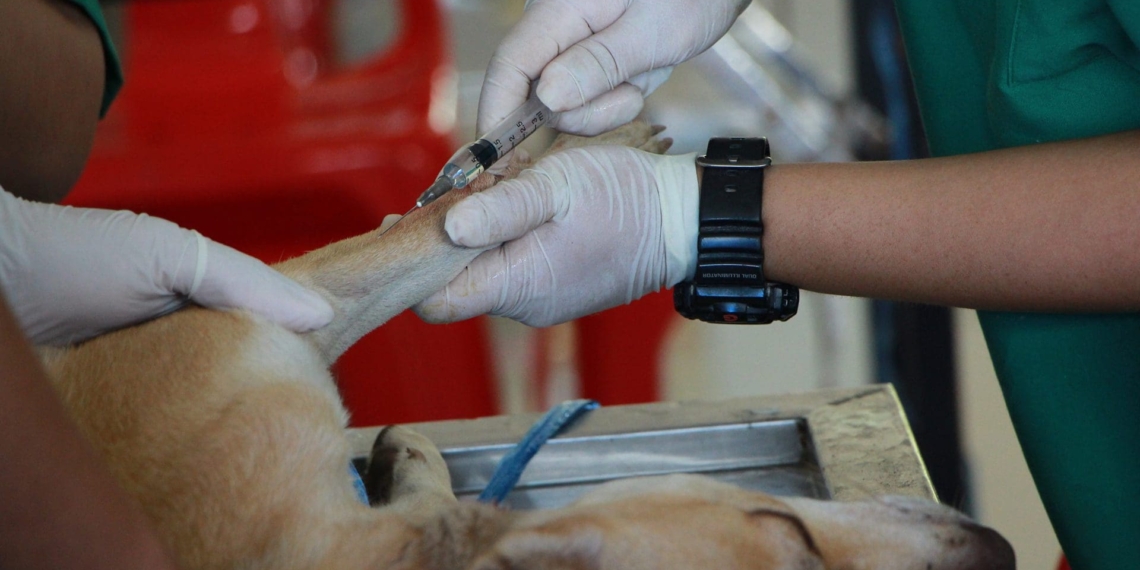
Rabies is a contagious viral disease that causes damage to the brain and the spinal cord and is uniformly fatal, affecting both animals and humans. Photo: Supplied

Rabies is a contagious viral disease that causes damage to the brain and the spinal cord and is uniformly fatal, affecting both animals and humans. Photo: Supplied/Food For Mzansi

Share on FacebookShare on TwitterShare on WhatsApp

As part of World Rabies Awareness Month, the department of agriculture, land reform and rural development urges that all dog and cat owners vaccinate their pets against rabies, a deadly disease for humans and animals alike.

Rabies is a contagious viral disease that causes damage to the brain and the spinal cord and is uniformly fatal. It affects both animals and humans and is caused by the rabies virus.

According to Dr Mpho Maja director of animal health, rabies is known to be zoonotic, which means that the disease can be transmitted from animals to humans. The virus is transmitted through the animal’s saliva, usually when it bites.

READ MORE: FMD restrictions lifted in 9 former Limpopo hotspots

“If you get saliva through biting or if a rabid animal licks an area where the skin has been scratched or has a wound, you’ll then get transmission through that. It kills once animals and people start showing signs of the disease,” she says.

Dr Mpho Maja, director of animal health. Photo: Supplied

Maja adds that rabid animals tend to behave strangely, often aggressively. They also experience muscle paralysis, produce lots of saliva and experience difficulty in swallowing. She says wild animals may even lose fear of humans and become strangely tame. Cows and sheep with rabies may appear to have something stuck in their throat.

There is no treatment available for human or animal rabies and so far, there have been few reported recoveries, says Maja.

“There have been two or three global recoveries in a lifetime. There is still research work going into that, but it kills almost 100% once you start showing clinical signs, but once again it is also 100% preventable. If we were to vaccinate our pets and make sure that we improve the immunity of our pets, we can prevent the spread of rabies.”

Rabies cases have been reported all over the country sporadically, however rabies is relatively more common in domestic dogs in KwaZulu-Natal, Eastern Cape, Mpumalanga, Free State and Limpopo. In addition to dogs, many other animals can transmit rabies. In South Africa, these most importantly include cats, livestock, yellow mongoose, black-backed jackal and bat-eared  fox.

According to Maja there is a vaccine for livestock. “We vaccinate animals and mainly pets, but we don’t vaccinate livestock generally, unless there is an acute outbreak in livestock in the area. There is a vaccine for people, but because of the scarcity and expense it is only reserved for high risk professions like vets, so you would not find it freely available for yourself,” she says.

The high-risk professions also include game rangers and the Society for the Prevention of Cruelty to Animals (SPCA) workers.

Since prevention is better than cure the Maja says the World Organisation for Animal Health (OIE) collaborated with the World Veterinary Association to dedicate September as a global rabies awareness month and World Rabies Day on the 28th of September – this way the entire world raises awareness on the prevention of rabies in September.

READ MORE: China downplays G4 threat: ‘Humans not easily infected’
Sinesipho Tom

Sinesipho Tom is an audience engagement journalist at Food for Mzansi. Before joining the team, she worked in financial and business news at Media24. She has an appetite for news reporting and has written articles for Business Insider, Fin24 and Parent 24. If you could describe Sinesipho in a sentence you would say that she is a small-town girl with big, big dreams.

Tags: Animal healthDepartment of AgricultureDr Mpho Maja Director of Animal HealthEastern CapeFree StateKwaZulu-NatalLand Reform and Rural DevelopmentLimpopoLivestockMpumalanga
Food for Thought

How Africa’s poultry feed crisis could hatch youth enterprises

by Ishmael Sunga
23rd September 2026

High poultry feed costs aren’t just a challenge; they are a massive commercial opportunity for Africa’s youth. Sacau CEO Ishmael...

Read moreDetails

How SA farmers can protect profits amid surging input costs

23rd September 2026

Hortgro’s new CEO sets sights on logistics, markets, and resilience

23rd September 2026
WC marks 100 years of excellence at Langgewens Research Farm

WC marks 100 years of excellence at Langgewens Research Farm

23rd September 2026
African swine fever: Biosecurity rules every pig farmer must follow

African swine fever: Biosecurity rules every pig farmer must follow

22nd September 2026

Landrace seeds can safeguard SA’s harvests during El Niño

How SA farmers can protect profits amid surging input costs

Orange prices plunge 60% amid huge supply surge in SA

SA Olive Awards celebrate world-class quality and industry heroes

WC marks 100 years of excellence at Langgewens Research Farm

Join Food For Mzansi's WhatsApp channel for the latest updates!

JOIN NOW!
Next Post
Salomè Scholtz, cattle farmer in Stella near Vryburg/Mahikeng in North West. Photo: Supplied

Listen: 'Unfortunately people think farming is a man’s job...'

THE NEW FACE OF SOUTH AFRICAN AGRICULTURE

With 21 global awards in the first six years of its existence, Food For Mzansi is much more than an agriculture publication. It is a movement, unashamedly saluting the unsung heroes of South African agriculture. We believe in the power of agriculture to promote nation building and social cohesion by telling stories that are often overlooked by broader society.

KZN’s Sakhile Zondo grows family roots with Legacy Farm

Sign up now: Equip your farm team for safer crop protection

Choosing local sugar is critical to keeping SA’s heritage alive

How local farmers power SA’s iconic heritage beverage brands

Last-minute tickets now available for SA Future of Food Conference

Grandmother’s lessons inspire Irene Dioka’s indigenous food brand

  • Awards & Global Impact
  • Our Story
  • Contact Us
  • Cookie Policy
  • Privacy Policy
  • Copyright

Contact us
Office: +27 21 879 1824
News: info@foodformzansi.co.za
Advertising: sales@foodformzansi.co.za

Contact us
Office: +27 21 879 1824
News: info@foodformzansi.co.za
Advertising: sales@foodformzansi.co.za

  • Awards & Global Impact
  • Our Story
  • Contact Us
  • Cookie Policy
  • Privacy Policy
  • Copyright

Chat Options

I'm Lerato, your AI assistant!
No Result
View All Result
  • News
  • Changemakers
  • Lifestyle
  • Farmer’s Inside Track
  • Food for Thought

Copyright © 2024 Food for Mzansi

This website uses cookies. By continuing to use this website you are giving consent to cookies being used. Visit our Privacy and Cookie Policy.