With climate volatility, severe weather, and water constraints increasingly threatening production, table grape producers gathered in Franschhoek, Western Cape, this week for the Table Grape Conference 2026 to unpack solutions for an industry facing unprecedented environmental pressures.
Welcoming delegates, Western Cape head of the agriculture department Mohale Sebopetsa acknowledged that the gathering’s timing was crucial for a sector facing systemic environmental threats.
He highlighted that climate change remains one of the greatest risks to agriculture, driving massive damage to infrastructure and severe losses to biological assets.
“Climate change is obviously our new reality, and we’ve got to embrace what it brings to us by becoming extremely adaptable,” Sebopetsa said, emphasising the need for resilience amidst growing uncertainty.
Proactive water and soil management
Across multiple sessions, discussions repeatedly centred on the compounding pressures of climate change, including unpredictable weather, shifting rainfall patterns, and recurring El Niño cycles that leave producers grappling with prolonged dry subsoils and heat stress.
Related stories
- SA table grapes break into the Philippine market
- Export volumes for SA table grapes to exceed previous season
- Record year predicted for Cape table grape industry
- SATI forecasts high-quality table grapes for global markets
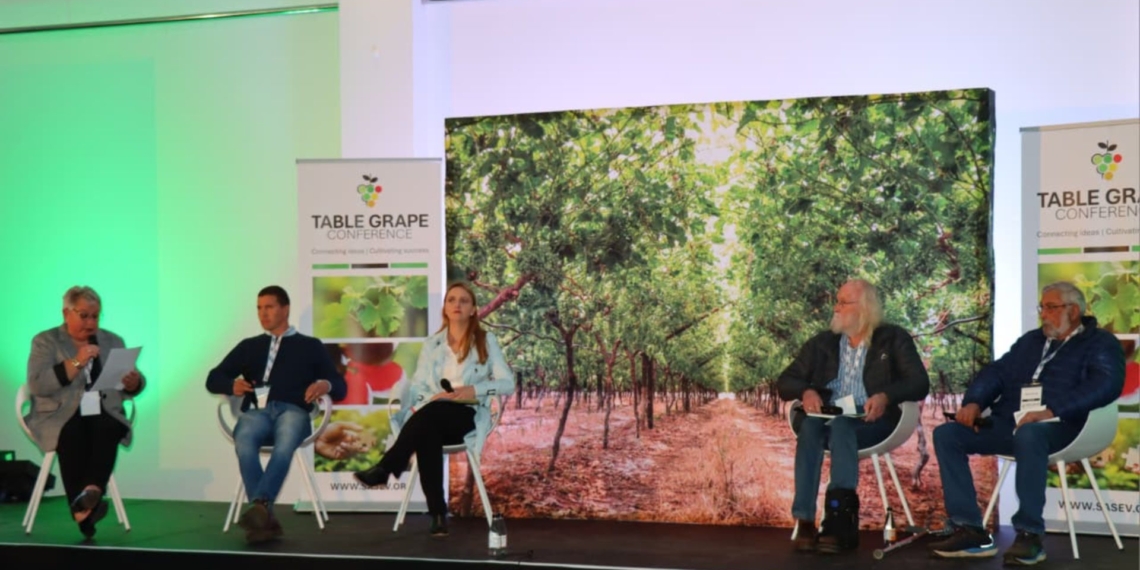
A key panel discussion focused on water management and quality optimisation, featuring insights from industry experts Danie Kritzinger, Gabrielle Redelinghuys, Philip Myburgh, and Andre Roux.
Highlighting the shifting climate baseline, Redelinghuys noted that traditional weather assumptions no longer apply. “What we have considered normal is no longer normal,” she said, pointing to the severe knock-on effects of dry conditions and El Niño cycles.
In response to fluctuating water supplies, Roux reminded delegates that proactive management begins with accurate tracking.
“To measure is to know. I think one of the challenges is that farmers have got so many things to look at every day,” Roux remarked. He added that because water remains a finite resource outside human control, optimal usage of current supplies is non-negotiable.
Focusing on operational execution, Kritzinger stressed the importance of precise allocation per block. “Water budgeting and knowing how much water is applied per block, we should make sure water budget knowledge is better,” Kritzinger explained. He added that producers face a particularly challenging season marked by November and December heat, localised water shortages, and declining water quality.
Long-term strategies needed for drought
Outlining long-term strategies to stay ahead of dry cycles, Myburgh advised producers to adopt a permanent preparedness mindset. He stated that farmers should “expect the drought every year”.
According to Myburgh, effective drought management begins with proper soil preparation, combining sound agricultural practices with careful attention to root system development, which ultimately drives the overall vine productivity.
Throughout the conference, the overriding message to table grape growers was clear: surviving the sector’s new environmental realities requires moving from reactive crisis management to proactive soil, water, and infrastructure adaptation. This remains a daily operational challenge that growers will continue to grapple with for a longer period of time in the current climate outlook.
READ NEXT: Smart irrigation key to getting more value from every bag of fertiliser