Wednesday, February 18, 2026
SUBSCRIBE
21 GLOBAL MEDIA AWARDS
Food For Mzansi
  • News
  • Changemakers
  • Lifestyle
  • Farmer’s Inside Track
  • Food for Thought
No Result
View All Result
  • News
  • Changemakers
  • Lifestyle
  • Farmer’s Inside Track
  • Food for Thought
No Result
View All Result
Food For Mzansi
No Result
View All Result
in Farmer's Inside Track

Pomegranate pioneer: Debbie Theunissen’s rise in fruit farming

Think you need a family history in farming to succeed? Think again. Debbie Theunissen’s path to becoming a top pomegranate producer started in food technology, not the orchard. Discover how this award-winning producer navigated droughts and market demands to establish a successful commercial fruit operation

by Patricia Tembo
18th February 2026
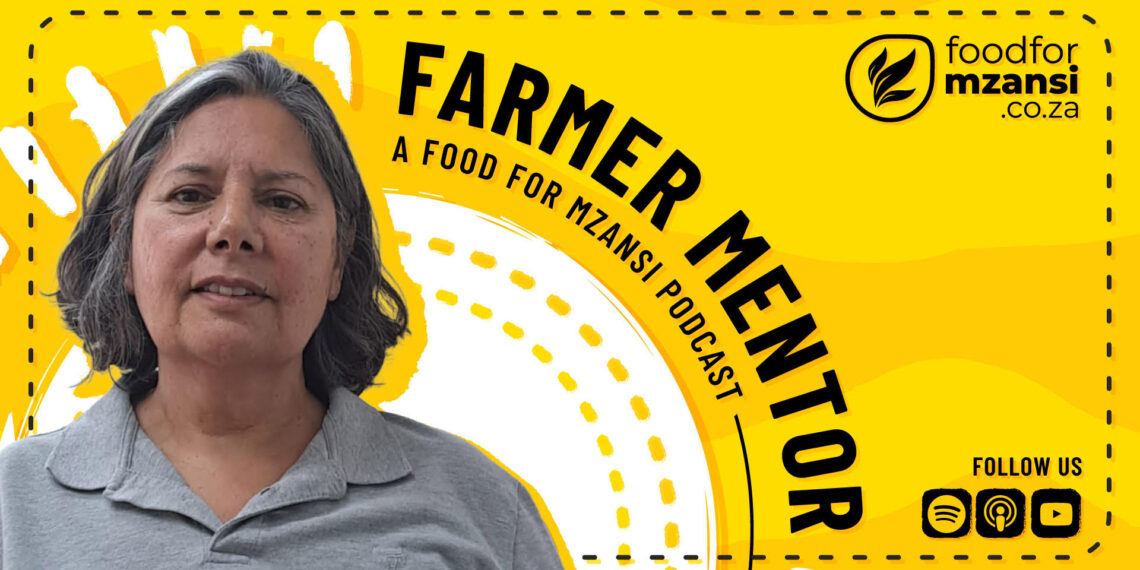
Debbie Theunissen transformed Bovenvlei Farm into a successful pomegranate export business through careful planning, technology, water management, and the support of her husband and co-director. Photo: Gareth Davies/Food For Mzansi

Debbie Theunissen transformed Bovenvlei Farm into a successful pomegranate export business through careful planning, technology, water management, and the support of her husband and co-director. Photo: Gareth Davies/Food For Mzansi

Share on FacebookShare on TwitterShare on WhatsApp

From a background far removed from farming, Debbie Theunissen has built Bovenvlei Farm in the Western Cape into one of South Africa’s leading commercial pomegranate producers. She shares her journey from food technologist to award-winning farmer in this edition of Farmer Mentor.


When Debbie Theunissen entered agriculture, it was not through family inheritance or childhood exposure to farming, but through opportunity, expertise, and long-term vision. Today, as owner and managing director of Bovenvlei Farm, she is recognised as one of South Africa’s leading commercial pomegranate producers. 

Before entering farming, Theunissen explains that she did not grow up in a farming family and entered both food technology and agriculture as a first-generation professional. “I don’t come from a family background of agriculture or food manufacturing at all. It’s something I did as part of my tertiary education.”

She adds that her path reflects the experience of many South Africans, who are doing things for the first time without a family history in the field, and whose parents did not complete high school. She also credits her husband, Andrew, for his support in helping the business grow.

Alongside them, long-time partner and co-director Elrita Venter has remained involved since the farm’s establishment, playing a key role in its development and success.

The turning point came through a water use licence application on a pomegranate farm along the Berg River.

“It started with a request for a water use licence on a particular farm, in exchange for 30% of the production. We were successful with that application in 2015, and a couple of years later, we bought the farm from the owners,” she says. 


Related stories
  • Lerato’s legacy: Black sheep becomes broiler queen
  • Patience pays: Growing a legacy of trees, family, and business
  • Zero-tariff China deal offers lifeline to SA agri exporters
  • SA agricultural exports surge but face logistical strain

Building a commercial pomegranate operation

Bovenvlei Farm spans 152 hectares, with approximately 70 hectares under fruit production. 

“The main crop is pomegranates – about 67 hectares – and then a couple of hectares of passion fruit, which we are looking to expand in the future,” she says. The farm operates across the full production chain, from orchard management to packing and export coordination. 

The pomegranate orchards were planted between 2011 and 2015, with trees taking eight to ten years to reach full maturity. The farm mainly grows the Wonderful variety, which is widely used in South Africa for its longer shelf life and export suitability, after earlier trials with sweeter varieties proved unsuitable for overseas shipping.

Theunissen explains that yield typically begins around the third or fourth year and gradually increases as the trees mature. “The orchards weren’t all planted in one year, some trees were producing more than others, and every year there was an increase in production,” she says. 

However, the early years still required financial resilience. “Fruit farming is a long-term, costly exercise. It can be very profitable, but you need to be able to fund it until it reaches that stage,” Theunissen says. 

Personal financial planning played a key role. “We started later in life and had investments and savings we could free up to cover operating shortfalls. We also had to look for finance.” 

Water licensing and infrastructure investment

Water access played a key role in the farm’s early success, supported by a departmental allocation aimed at promoting agricultural transformation. However, increasing scarcity and shifting water policies have made supply more difficult.

The 2018 Western Cape drought underscored this vulnerability, when expected yield gains turned into a significant decline. In response, the farm invested in infrastructure, building a dam to store winter water for summer irrigation.

Technology plays a central role in water and soil management at Bovenvlei. The farm initially used probes in different blocks to monitor soil moisture, with manual checks to confirm the readings. Today, the system is fully integrated, providing real-time graphical insights into soil moisture levels, while data-driven assessments guide fertigation and soil conditioning.

“There are natural risks completely outside your control, and you have to contend with them,” she says.

A niche crop with a global market

Pomegranates are still a niche crop in South Africa, while they are a common and widely consumed fruit in many other countries. The local market is limited, whereas overseas, especially in the northern hemisphere, pomegranates are eaten regularly, similar to apples. Meeting export compliance standards is essential and cannot be overlooked. 

“If you’re farming pomegranates, your eye needs to be on the export market from the start. That means Global Gap, SIZA, and pest protocols must be part of your operating practice. Without export, you don’t have a customer,” she says.

Their hard work paid off, with the Best Commercial Producer award and a finalist spot at the 2025 Young Farmers Awards.

READ NEXT: High-quality seeds, high stakes for smallholder farmers

Sign-up to Farmer's Inside Track for the best farming tips, news and advice to thrive!


Patricia Tembo

Patricia Tembo is motivated by her passion for sustainable agriculture. Registered with the South African Council for Natural Scientific Professions (SACNASP), she uses her academic background in agriculture to provide credibility and technical depth to her journalism. When not in immersed in the world of agriculture, she is engaged in outdoor activities and her creative pursuits.

Tags: Commercialised farmerFruit FarmingInspire mePomegranatesWestern Cape

Related Posts

A well-planned grazing camp system, based on annual field assessments, rotational grazing and careful monitoring of palatable species, can help farmers improve pasture health, reduce feed costs, and support soil conservation throughout the year. Photo: Pexels

How to set up grazing camps and cut feed costs

17th February 2026
Agricultural economist and Land Bank Insurance strategic partnerships manager Lunga Njara explains why farm insurance is a core business tool in South Africa’s high-risk climate. Photo: Pexels

Agricultural insurance: Common mistakes and how to avoid them

10th February 2026

Purpose in pastures: Dale Hutton’s journey to dairy excellence

How to choose the right farm insurance to protect your business

Pneumonia in livestock: Spot the signs before it’s too late

Roots run deep: How Pholisa honours her family’s farm

Protect your herd: Tips for preventing livestock theft

Carbon credits: How to measure, monetise, and manage your risk

South Africa’s seed landscape is at a crossroads. While formal systems offer high yields, informal networks preserve vital biodiversity. Photo: Pexels
News

High-quality seeds, high stakes for smallholder farmers
by Patricia Tembo
16th February 2026

Access to reliable, high-quality seeds is vital for South Africa’s small-scale farmers. Yet, challenges remain: limited access, high costs, and...

Read moreDetails
Participants get practical, hands-on training in pig production this week, covering everything from breeding and feeding to housing, hygiene, and farm management. Photo: Supplied/Food For Mzansi

This week’s agri events: 16 – 20 February

16th February 2026
Try Felicia Malebe’s fluffy sorghum pancakes and discover how innovation can turn a simple, nutritious meal into something beautiful and satisfying. Photos: Supplied/Food For Mzansi

Bringing sorghum back: How Malebe is reviving indigenous grains

15th February 2026
Youth from Standerton’s NYS and aRe Bapaleng programmes celebrate after clearing dumping sites, building parks, and tending community gardens. Photo: Seriti Institute

Standerton proves partnerships can power rural transformation

14th February 2026
Young ECD Champions from aRe Bapaleng empower parents and kids through play-based learning in underserved communities. Photo: Seriti

Ending child stunting: Why the first 1 000 days start at home

14th February 2026

Ending child stunting: Why the first 1 000 days start at home

How to set up grazing camps and cut feed costs

CGA CEO marks first year with renewed drive for citrus growth

Breaking new ground: Msibi trades marketing for mixed farming

Harvesting love: How farming couples balance business & romance

Join Food For Mzansi's WhatsApp channel for the latest updates!

JOIN NOW!

THE NEW FACE OF SOUTH AFRICAN AGRICULTURE

With 21 global awards in the first six years of its existence, Food For Mzansi is much more than an agriculture publication. It is a movement, unashamedly saluting the unsung heroes of South African agriculture. We believe in the power of agriculture to promote nation building and social cohesion by telling stories that are often overlooked by broader society.

Pomegranate pioneer: Debbie Theunissen’s rise in fruit farming

Meat is safe to eat despite FMD outbreak, assure experts

Expert urges farmers to leverage ‘good debt’ for growth

How to set up grazing camps and cut feed costs

CGA CEO marks first year with renewed drive for citrus growth

Pork prices rise as disease outbreaks tighten supply

  • Awards & Global Impact
  • Our Story
  • Contact Us
  • Cookie Policy
  • Privacy Policy
  • Copyright

Contact us
Office: +27 21 879 1824
News: info@foodformzansi.co.za
Advertising: sales@foodformzansi.co.za

Contact us
Office: +27 21 879 1824
News: info@foodformzansi.co.za
Advertising: sales@foodformzansi.co.za

  • Awards & Global Impact
  • Our Story
  • Contact Us
  • Cookie Policy
  • Privacy Policy
  • Copyright
No Result
View All Result
  • News
  • Changemakers
  • Lifestyle
  • Farmer’s Inside Track
  • Food for Thought

Copyright © 2024 Food for Mzansi

This website uses cookies. By continuing to use this website you are giving consent to cookies being used. Visit our Privacy and Cookie Policy.