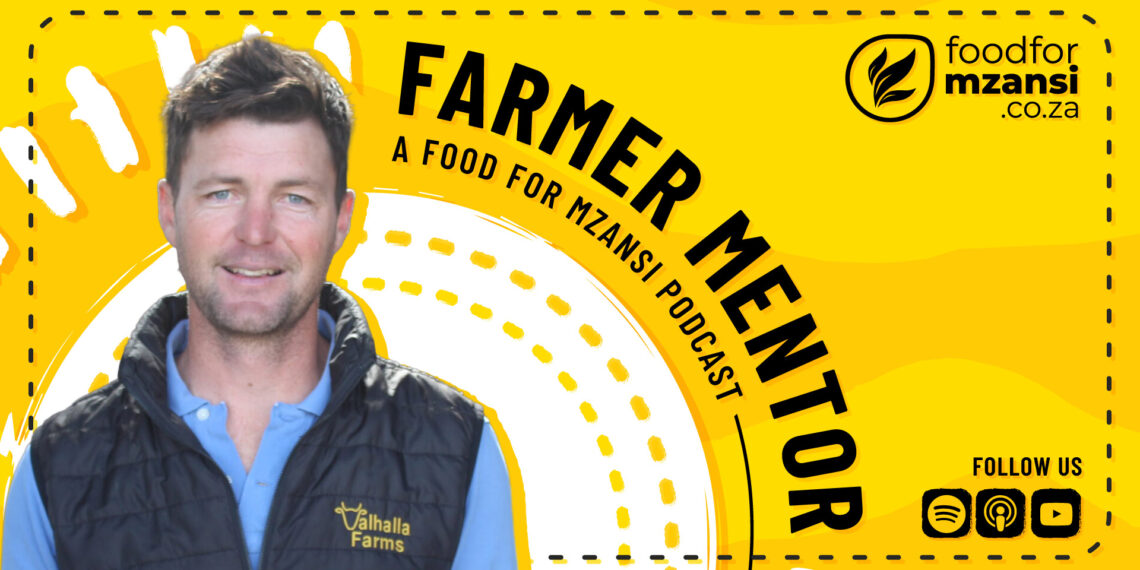
After years in a corporate environment and teaching abroad, Dale Hutton returned to his South African roots to claim the 2025 Toyota SA Kwanalu Young Farmer of the Year title. Discover how he transformed a family legacy into a high-tech, pasture-based powerhouse in this edition of Farmer Mentor.
Dale Hutton’s remarkable journey from environmental consultant to pasture-based dairy farmer is a path defined by dedication to the land and livestock.
Raised on a farm in KwaZulu-Natal, Hutton knew farming meant early mornings, responsibility, and working with animals and people. However, he initially followed another career path.
He initially pursued entomology and botany at Rhodes University, followed by postgraduate studies in biodiversity conservation, working with the Xhosa community in the Eastern Cape and later on corporate environmental projects.
Despite this, he found corporate work unfulfilling. He and his wife then spent several years in South Korea teaching English and travelling, but family changes prompted their return to South Africa.
A two-month road trip across the country reaffirmed their decision, showing them that nothing matched South Africa in terms of opportunity, fulfilment, and the chance to build a meaningful future in agriculture.
Related stories
- Cattleman Carter: Turning tough terrain into opportunity
- Govt steps up FMD fight with mass cattle vaccination plans
- The Beyoncé of cattle: Linda lets her Brahmans do the talking
- Meet the dairy champions driving change in Mzansi
Taking over the family farm
Hutton began working alongside his father, John, gradually assuming responsibility for the family farm. “Now, he’s basically my counsellor, I make most of the decisions, but I consult him on tough ones,” he tells Food For Mzansi.
The farm, based in Creighton, is a pasture-based dairy operation supplying a nearby cheese factory. “Our cows are optimised to convert grass into high-quality milk. We’ve chosen genetics suited to our climate: smaller, more mobile cows that handle heat, wet conditions, and produce milk with high protein and butterfat content.”
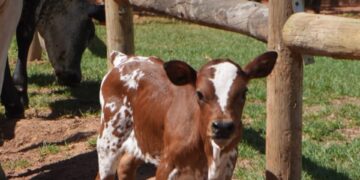
Hutton’s herd is primarily Kiwi cross, a New Zealand-origin cross between Holstein and Jersey. “A mature cow is around 490–500 kg. They’re efficient, lower maintenance, and perfect for our slopes and muddy conditions,” he says.
Running a dairy farm efficiently
The farm spans 280 hectares of irrigated pasture, planted with a diverse mix of ryegrass, hickory, plantain, clover, oats, foxwood, and naturally occurring cocksfoot. Hutton explains, “Each species has a role. Ryegrass for milk production, hickory for deep-root nutrients, clover for nitrogen fixation, oats for early-season feed, and cocksfoot for drought resilience.”
The farm uses a herringbone milking system, with 1 280 cows milked across two 36-point swingovers. Each cow receives a tailored feed ration based on body condition, milk stage, and weight. “We scan every cow, feed her individually, then weigh her on exit. It’s not perfect yet, but it allows us to manage a large herd efficiently.”
To address power outages, the dairy shed operates on solar panels and battery storage, allowing milking to continue twice a day without interruption. Hutton notes that dairy farmers have effectively relied on solar energy from the outset.
“Volatility is the biggest challenge in agriculture. From storms destroying crops to fluctuating milk and feed prices, farmers face constant uncertainty. You can be full of joy in the morning and deeply depressed by the evening. But it builds character and resilience. Panic doesn’t help,” Hutton stresses.
Principles for success
Hutton shares several guiding principles for farmers:
- Prevention is better than cure: Check everything regularly to prevent avoidable losses.
- Measure to manage: Collect data to make informed decisions, from herd growth to feed efficiency.
- Pay attention to tension: Focus on what can be controlled and let go of what cannot.
- Teamwork matters: Everyone on the farm has a role, and Hutton emphasises the importance of motivating the team and involving them in the farm’s progress.
Leaving a legacy
Hutton is committed to sustainable stewardship over expansion. “I want to optimise every square inch of this farm, whether leaving land natural or improving it for production.”
He believes that caring responsibly for the land entrusted to him is essential, noting that his family’s farm has been in operation for six generations and honouring this legacy is central to his vision for the future.
For aspiring dairy farmers, Hutton advises, “Align yourself with a study group or network. Gain experience overseas if possible, then return and work your way up, building skills and assets gradually.”
He emphasises practical knowledge, mentorship, and partnerships as essential to long-term success.
Hutton describes winning the KZN Young Farmer of the Year Award as a humbling experience, highlighting that anyone who takes risks, manages uncertainty, and navigates the challenges of farming deserves recognition, and he expresses deep respect for all those working in agriculture.
READ NEXT: Pneumonia in livestock: Spot the signs before it’s too late