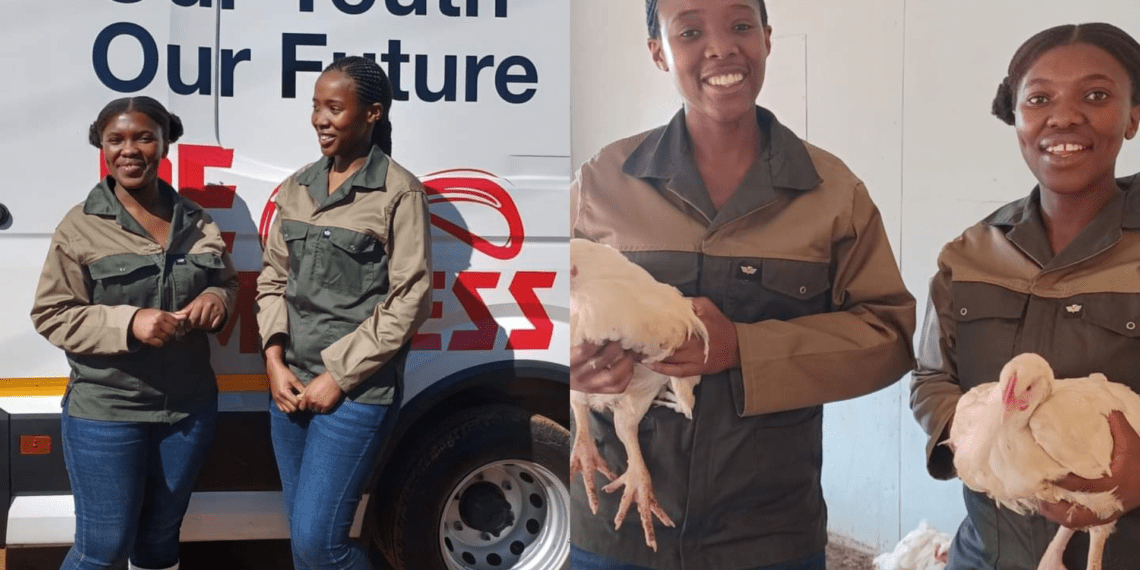
With their meager savings from the R350 Covid-19 relief money from government in their pockets, the Khumalo sisters from Warrenton in the Northern Cape knew they wanted to start their own business. And even though agriculture had never entered their minds, it would become their saving grace.
The 27-year-old Nqobile Khumalo and her sister, Bongiwe (22), saved the R350 grant from government to up to R5 000 as capital to start their poultry business.
A paramedic by profession, Nqobile says a lack of job opportunities and being in a far flung area pushed her and her younger sister to think outside the box, and to start making a living for themselves.
She says their savings was not necessarily to go into agriculture, but they knew they wanted to start a business. It was while attending a farmer’s day at a nearby farm where their interest and love for agriculture kicked in.
New doors open
“Following months of saving and not really having an idea if what we are going to do with our savings, I attended my former classmate Matshediso Parage’s farm day at her farm, where I met many people who encouraged me to get into farming.
“All the attendees at the farm – like Tshepiso Jantjies of Jantjies boerdery/Jantjies Voere, the National Youth Development Agency, the local agricultural sector – coached me to get into farming and supported me,” says Nqobile.
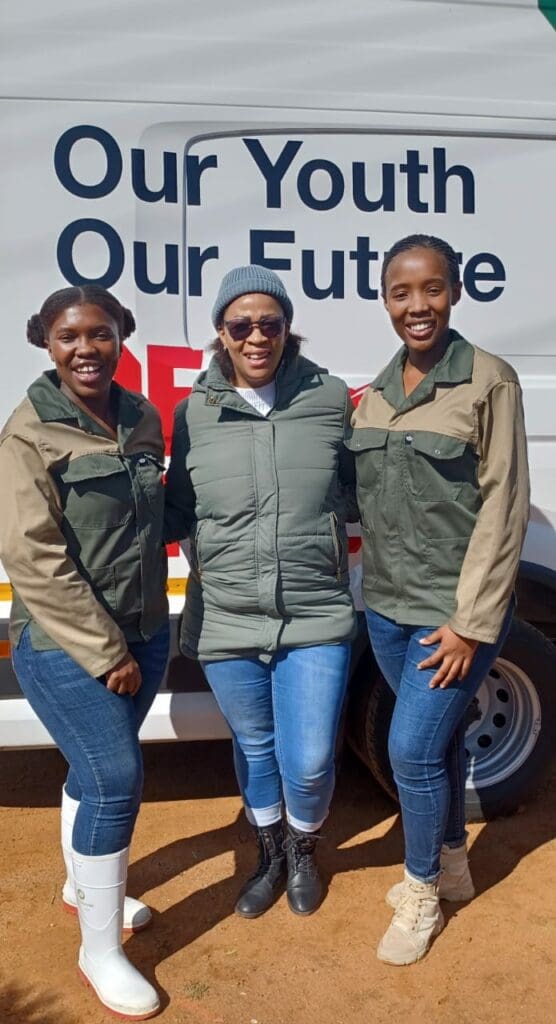
The big task, she explains, was to convince her sister to start a poultry business with no knowledge and with their hard-earned savings. It took much convincing, but her sister finally gave in and the two cashed out their savings to kick start their farming journey in their home backyard.
“We bought about 200 chicks, we were also able to buy four drinkers and feeds for our chicks. We learnt as we went because none of us had experience in farming, but we kept going.
“For heating we used to wake up as early as 02:00 to start a fire. Once the fire had made coals, we would take it inside the shelter where we put the chicks to warm up the area as we could not afford to use electricity,” Nqobile says.
Their first client was Warrenton Chicken Centre on the busy N12 road leading to Kimberley.
Keeping the faith
According to Nqobile, the excitement of getting their returns on investment did not go to their heads. Instead, they started going to the National Youth Development Agency (NYDA) training where they qualified for a R 50 000 grant. This, the Khumalo sisters used to buy bigger machines for their business.
“We extended the shelter and the capacity of our chicks to 600, and we care for them for a period of six weeks. After that we slaughter them, package them then sell to our clients.
“We have now hired four [people] on a part-time basis to help us when it’s slaughter time. It can take up to five days to do all the slaughtering, cleaning it up and packaging for the client.”
Meanwhile, Nqobile says staying far from bigger towns is a challenge as they must travel 20km to go and buy feed in Jan Kempdorp, and a further 80km to buy medicine in Kimberley.
“We have kept the faith and believe that our little savings will take us far. Having people rely on you after six weeks to put food on the table is a heart-warming experience. We never thought we will be here but now the is no turning back.”
Owning their piece of agri space
Nqobile says they have engaged the Magareng local municipality to give them land so that they could increase their capacity further.
“We are crossing our fingers, the municipality has promised to give us at least one hectare of land. For us any piece of land, big or small, we believe we can make a difference. We went from 200 chicks to 600 in the backyard.
“We can also report that we had fewer mortalities and that has kept us moving from day one. We believe we will grow from strength to strength,” she says confidently.
The sisters are also planning to acquire a slaughtering machine which will help them to speed up the slaughtering and cleaning of the chickens to go to clients.
“Being in agri space is something that I will not trade for anything and it has opened my eyes on so many fronts. I believe my sister and I can be the change we want to see in the area we are in.
“Unemployment remains a critical crisis in our area, we just have to keep pushing so that we can be able to create more jobs and leave a legacy for our children and community at large. We are doing our best and believe that many doors will open,” she says.
ALSO READ: Farming professor gears youth for digital opportunities
Get Stories of Change: Inspirational stories from the people that feed Mzansi.