Thursday, January 15, 2026
SUBSCRIBE
21 GLOBAL MEDIA AWARDS
Food For Mzansi
  • News
  • Changemakers
  • Lifestyle
  • Farmer’s Inside Track
  • Food for Thought
No Result
View All Result
  • News
  • Changemakers
  • Lifestyle
  • Farmer’s Inside Track
  • Food for Thought
No Result
View All Result
Food For Mzansi
No Result
View All Result
in Food for Thought

Raisin industry drives inclusive growth with R100m boost

by Kayalethu Sotsha and Bonani Nyhodo
31st December 2024
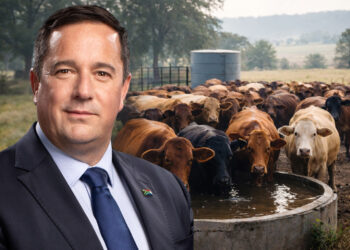
Kayalethu Sotsha and Bonani Nyhodo, agricultural economists at the  National Agricultural Marketing Council (NAMC). Photo: Supplied/Food For Mzansi

Kayalethu Sotsha and Bonani Nyhodo, agricultural economists at the National Agricultural Marketing Council (NAMC). Photo: Supplied/Food For Mzansi

Share on FacebookShare on TwitterShare on WhatsApp

Kayalethu Sotsha and Bonani Nyhodo, agricultural economists at the National Agricultural Marketing Council (NAMC), assert that South Africa’s raisin industry is not just sweet – it’s smart. As the world’s fifth-largest exporter, it’s growing profits and smallholder power.


The raisin industry takes pleasure in producing one of the world’s finest products, with 88% destined for lucrative international markets. South Africa is currently ranked as the fifth-largest exporter of raisins globally.

The industry is devoted to transformation activities that aim to promote previously disadvantaged industry role players, thereby growing in an inclusive manner, as envisioned in the Agriculture and Agro-processing Master Plan (AAMP).

The Smallholder Market Access Tracker (SMAT) was utilised by the National Agricultural Marketing Council (NAMC) in 2021 to gauge smallholder raisin producers’ advancement towards market access. (Report available here).

Among other things, the SMAT indicated that, while market access is not a problem because these farmers’ produce is contracted to processors, smallholder producers believed processors were unfair in how they graded and priced their produce.

The NAMC advised Raisins South Africa to investigate the problem but cautioned that the perceived unfairness could also be due to quality issues.

Raisins South Africa intervened in several ways, including:

  • appointing a grading specialist to allow farmers to lodge complaints regarding the grading process,
  • assisting farmers to obtain the SAGAP certificate in collaboration with the provincial department of agriculture, and
  • conducting training sessions with farmers to interpret market information reports and help them understand how the marketing process of raisins works beyond the delivery of the produce.

Raisin the bar

In contrast to other industries like citrus and poultry (broiler), where the baseline was conducted four to five years ago, the raisin industry is the first to be prepared for the second round of the SMAT, which is currently underway to ascertain the effectiveness of these interventions, among other things.

Over the course of the 2021–2024 levy cycle, the raisin industry received around R56 million in statutory levies and spent over R25 million, exceeding the 20% recommended for transformation.

This is part of the industry’s commitment to transformation. Over R100 million in projects for the next five years were also secured by the industry.

These consist of R20 million in soft loans from the Kgodiso Trust, R47 million in grant funding from the First Rand Empowerment Fund, R34 million in grant funding from Rural Development, and R15 million in grant funding from the Industrial Development Corporation (IDC).

To promote farming and elevate the farmers’ prime exporter status through locally based skills development, the industry also developed the Vine Academy and Model Farm in the Northern Cape (Orange River Valley).

The Academy further conducts research to advise farmers on topics like market information and real-time weather events.


Related stories

  • Raisins industry is striving towards inclusive growth
  • From hustle to harvest: The rise of young farmers in SA

Expanding facilities, expanding opportunities

The industry is further involved in socio-economic development through establishing maize and cotton fields, expanding and improving the raisins’ drying facilities, and providing further support to projects such as the Eksteenskuil Farmers Association.

One of the AAMP’s delivery models, the production scheme, is currently being established.

The industry’s responsiveness and creativity are admirable, as is its determination to ensure more and sustainable farming, which forms the foundation of the Orange River Valley’s economy.

One excellent example that must be upscaled and replicated is the ability to leverage more money from other sources. This also relates to the AAMP, which promotes cooperative agreements between the public and private sectors to jointly plan, fund, conduct, and run projects and services while utilising their respective advantages to advance economic growth and development.

  • Kayalethu Sotsha and Bonani Nyhodo are agricultural economists at the National Agricultural Marketing Council (NAMC). The views and opinions expressed in this article are those of the author and do not necessarily reflect the views or positions of Food For Mzansi.

READ NEXT: Agriculture sector calls for growth and trust from GNU in 2025

Sign up for Mzansi Today: Your daily take on the news and happenings from the agriculture value chain
Kayalethu Sotsha and Bonani Nyhodo

Tags: Commercialising farmerHelp me understandNational Agricultural Marketing Council (NAMC)Raisins SA

Related Posts

John Steenhuisen

A commercial farmer’s dismay: Steenhuisen faces FMD storm

14th January 2026
For Africa to achieve food security, an integrated plan needs to be implemented, says Hamond Motsi. Photo: Pexels

Africa’s food future: Urgent action for a secure 2026

14th January 2026

Reviving indigenous crops in Mngeni: Smallholders grow food and hope

How extension services transform smallholder farming

Blended finance: Closing the gap for Africa’s smallholder farmers

Asia’s appetite fuels new growth for South African citrus

Steenhuisen applauds farmers, workers as heartbeat of the nation

How logistics & packaging industries can cut food waste

Glen Mendi is a research assistant in the economic analysis unit at the Agricultural Research Council. Photo: Gareth Davies
Food for Thought

Reviving indigenous crops in Mngeni: Smallholders grow food and hope

by Staff Reporter
13th January 2026

Glen Mendi of the Agricultural Research Council highlights how smallholder farmers in Mngeni village in the Eastern Cape are building...

Read moreDetails
Livestock theft remains one of the biggest challenges for farmers in SA. Photo: Supplied/Food For Mzansi

Festive stock heists spark alarm across rural SA

13th January 2026
Some of the land in the Overstrand Municipality has been destroyed by wildfires. Photo: Overstrand Municipality

Western Cape fires destroy farmland and livelihoods

12th January 2026
Limpopo

Seeds of love: Limpopo couple’s farming journey takes root

12th January 2026
Olivier Jaubert of MAF RODA SA shares how the Paarl-based operation is boosting efficiency, skills, and exports into Southern Africa. Photo: Supplied/ Food For Mzansi

Paarl plant positions SA as fruit packhouse tech hub

12th January 2026

A commercial farmer’s dismay: Steenhuisen faces FMD storm

Steenhuisen unveils 10-year roadmap to eradicate FMD

Netafim’s precision irrigation helps farmers grow more with less

Meet the EC duo changing the game in livestock care

Africa’s food future: Urgent action for a secure 2026

Join Food For Mzansi's WhatsApp channel for the latest updates!

JOIN NOW!
Next Post
Agricultural education: Tobias Doyer, CEO of Grain SA, discusses the future of agricultural education at the AgriSETA Agri-Edu Symposium, emphasising innovation and skills development to prepare young farmers for a rapidly evolving sector. Photo: Iwan Dirksen/Food For Mzansi

Grain SA CEO calls for overhaul in agricultural education

THE NEW FACE OF SOUTH AFRICAN AGRICULTURE

With 21 global awards in the first six years of its existence, Food For Mzansi is much more than an agriculture publication. It is a movement, unashamedly saluting the unsung heroes of South African agriculture. We believe in the power of agriculture to promote nation building and social cohesion by telling stories that are often overlooked by broader society.

A commercial farmer’s dismay: Steenhuisen faces FMD storm

Steenhuisen unveils 10-year roadmap to eradicate FMD

Netafim’s precision irrigation helps farmers grow more with less

Africa’s food future: Urgent action for a secure 2026

Sugar tax, cheap imports endanger rural livelihoods

SA cheers Agoa renewal amid exporter relief

  • Awards & Global Impact
  • Our Story
  • Contact Us
  • Cookie Policy
  • Privacy Policy
  • Copyright

Contact us
Office: +27 21 879 1824
News: info@foodformzansi.co.za
Advertising: sales@foodformzansi.co.za

Contact us
Office: +27 21 879 1824
News: info@foodformzansi.co.za
Advertising: sales@foodformzansi.co.za

  • Awards & Global Impact
  • Our Story
  • Contact Us
  • Cookie Policy
  • Privacy Policy
  • Copyright
No Result
View All Result
  • News
  • Changemakers
  • Lifestyle
  • Farmer’s Inside Track
  • Food for Thought

Copyright © 2024 Food for Mzansi

This website uses cookies. By continuing to use this website you are giving consent to cookies being used. Visit our Privacy and Cookie Policy.