Tuesday, October 20, 2026
SUBSCRIBE
22 GLOBAL MEDIA AWARDS
Food For Mzansi
  • News
  • Changemakers
  • Lifestyle
  • Farmer’s Inside Track
  • Food for Thought
No Result
View All Result
  • News
  • Changemakers
  • Lifestyle
  • Farmer’s Inside Track
  • Food for Thought
No Result
View All Result
Food For Mzansi
No Result
View All Result
in News

SA’s beef and sheep prices surge as production rises

The SA red meat industry is experiencing a resurgence, with beef and sheep meat production on the rise. Increased slaughter numbers and improved animal health are contributing factors. However, biosecurity and market access remain key challenges

by Duncan Masiwa
2nd January 2025
Good news for SA's red meat industry. Beef production is booming, reaching a new high in 2024, while sheep meat production is also on the rise. Photo: RMIS

Good news for SA's red meat industry. Beef production is booming, reaching a new high in 2024, while sheep meat production is also on the rise. Photo: RMIS

Share on FacebookShare on TwitterShare on WhatsApp

The South African red meat industry is seeing strong growth, with 2024 marking a year of notable growth. The latest industry report suggests prices for beef and sheep meat are expected to keep rising through 2025. Furthermore, beef production numbers are looking slightly better, while sheep meat production numbers are growing at a slower pace. 

The red meat industry witnessed significant growth in 2024, with beef production reaching 777 706 metric tons, thanks to a year-on-year increase in slaughters and higher average slaughter weights. 

According to the Red Meat Industry Services (RMIS) Report, the country’s beef production is expected to plateau in 2025 before climbing to over 792 000 tons in 2026 and surpassing 804 000 tons by 2027 (BFAP, 2024).

As it stands, beef production remains below its 2016 peak but is steadily increasing. In 2016, nearly three million cattle were slaughtered during a drought-driven herd reduction, but this figure decreased to just over 2.5 million by 2022.

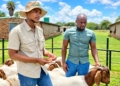
Noko Siboni, a Limpopo-based cattle breeder. Photo: Supplied/Food For Mzansi

Noko Siboni, a Limpopo-based cattle breeder, says thanks to improved genetics, breeding strategies, and management practices, their production for 2024 has improved for the first time in their farming business.

“Last year, we decided to enhance our herd by purchasing stud bulls, which resulted in a 100% birth rate and increased production. This led to enough heifers for breeding. Investment in quality breeds and good infrastructure pays off, as the red meat market has its own specific requirements,” he said.

The Bureau for Food and Agricultural Policy (BFAP) reports that beef production has risen from 700 776 tons in 2022 to an anticipated 777 706 tons in 2024. 

“This growth is driven by higher slaughter numbers and gains in average slaughter weights,” the RMIS report stated. 


Related stories
  • Livestock excellence shines at ARC’s Beef Performers Awards
  • Meat prices drop just in time for festive season

The sheep industry’s steady climb

Sheep meat production, while mirroring beef’s trajectory, faced setbacks during and after the drought period. However, the industry projects that sheep meat production will see modest growth over the next few years, reaching 98.7 thousand tons in 2024, 99.9 thousand tons in 2025, and 100.7 thousand tons in 2026.

This increase in production is partly due to more sheep being slaughtered and fewer live animals being exported, meaning more sheep are available for processing within South Africa. 

The industry is also looking to boost exports of sheep meat, which should help drive further growth in production

Hurdles to SA’s red meat boom

RMIS notes that domestic sheep and beef prices tend to reflect international trends but with a lag. “Domestic prices are slower to respond to international price changes and are generally lower than those of major international competitors,” RMIS highlighted.

Looking ahead, the report anticipates a further rise in beef and sheep meat prices through 2025. To capitalise on this growing export demand, RMIS underscores the importance of maintaining market access and minimising the incidence of animal diseases, such as foot-and-mouth disease (FMD). 

“Maintaining market access will be crucial for South Africa’s red meat industry. Additionally, minimising the incidence of animal diseases will be essential to achieving this goal,” the report stated.

As the industry gears up for 2025, stakeholders are urged to focus on biosecurity measures and strategic partnerships to ensure sustainable growth and competitiveness in the international market.

READ NEXT: Take five! These farmers are changing the agriculture game

Sign up for Mzansi Today: Your daily take on the news and happenings from the agriculture value chain
Duncan Masiwa

DUNCAN MASIWA is the assistant editor at Food For Mzansi, South Africa’s leading digital agriculture news publication. He cut his teeth in community newspapers, writing columns for Helderberg Gazette, a Media24 publication. Today, he leads a team of journalists who strive to set the agricultural news agenda. Besides being a journalist, he is also a television presenter, podcaster and performance poet who has shared stages with leading gospel artists.

Tags: Commercialising farmerInform meRed meat industryRed Meat Industry Services (RMIS)
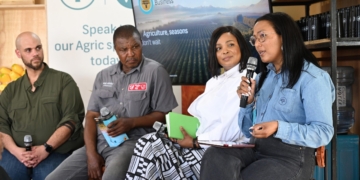
The panellists at FNB Business’s “Farming together” discussion at the Royal Show explored how market access, mentorship, financial discipline and strong commercial relationships can help farmers build sustainable businesses. Featured from the left are Bertram July (FNB’s distribution sales lead), commercial farmer Shakes Shabalala; Sandy Gumede (co-founder of Zulu Girl Wines), and Janis Robson (FNB’s head of development and SME business development). Photo: Food For Mzansi
News

FNB puts relationships at the heart of commercial farming

by Staff Reporter
17th October 2026

From buying a farm with cattle to building a wine brand from scratch, entrepreneurs shared how strong relationships, market access...

Read moreDetails
Agri Skills Transfer students gain hands-on experience at the institution’s Cullinan Farm Training Centre, where agricultural theory meets the realities of commercial production. Photo: Supplied/Food For Mzansi

Build your future in agriculture with Agri Skills Transfer

17th October 2026
Durbanville Hills tastes sweet success at Michelangelo Awards

Promising early conditions predicted for 2027 SA wine harvest

17th October 2026

Reclaiming the kraal: Cultural heritage sparks a farming dream

16th October 2026

How animal welfare and human rights shape food security

16th October 2026

AgriSETA sets the stage for the SAAA’s big night

Reluctant farmer scales EC cabbage enterprise to supply Spar

Fixing SA’s agricultural visa system to protect seasonal harvests

Farmworkers rally against rising evictions and housing insecurity

Patensie claims Agri’s Got Talent crown for second year running

Join Food For Mzansi's WhatsApp channel for the latest updates!

JOIN NOW!
Next Post
Mozambique are not directly targeted, but unrest threatens the agricultural economy. Photo: Supplied/Flickr

Unrest in Mozambique threatens agriculture and regional trade

THE NEW FACE OF SOUTH AFRICAN AGRICULTURE

With 21 global awards in the first six years of its existence, Food For Mzansi is much more than an agriculture publication. It is a movement, unashamedly saluting the unsung heroes of South African agriculture. We believe in the power of agriculture to promote nation building and social cohesion by telling stories that are often overlooked by broader society.

Fixing SA’s agricultural visa system to protect seasonal harvests

SA and Namibia reevaluate livestock trade after FMD outbreak

Agda conference to tackle finance, market access and agri growth

Reluctant farmer scales EC cabbage enterprise to supply Spar

Reality check: What SA agri interns really experience on the farm

This week’s agri events: 19 – 23 October

  • Awards & Global Impact
  • Our Story
  • Contact Us
  • Cookie Policy
  • Privacy Policy
  • Copyright

Contact us
Office: +27 21 879 1824
News: info@foodformzansi.co.za
Advertising: sales@foodformzansi.co.za

Contact us
Office: +27 21 879 1824
News: info@foodformzansi.co.za
Advertising: sales@foodformzansi.co.za

  • Awards & Global Impact
  • Our Story
  • Contact Us
  • Cookie Policy
  • Privacy Policy
  • Copyright

Chat Options

About this assistant

This feature generates automated answers summarised from Food For Mzansi articles. By using it, you are interacting with an AI system (provided by Google), not a human. AI can make mistakes. Please refer to the source articles for verification and citation purposes.

Our staff do not check or moderate Lerato’s answers in advance, but may review some later. Our journalists continue to write and edit all the articles Lerato uses as sources.

To estimate unique and returning web users, we store a random browser ID in this browser. WhatsApp users are counted by phone number. The same person using both channels may be counted twice.

I'm Lerato, your AI assistant!
No Result
View All Result
  • News
  • Changemakers
  • Lifestyle
  • Farmer’s Inside Track
  • Food for Thought

Copyright © 2026 Food for Mzansi