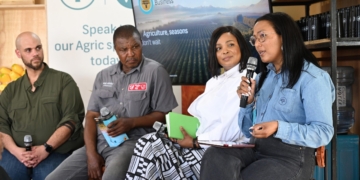
The transformation of household food waste into fresh vegetables has taken centre stage in the Western Cape, where the Shoprite Group has reached a major milestone in its long-running community food garden programme.
The retailer’s network of community food gardens has officially grown to 300 sites, with the Zero Organic Waste to Landfill Project outside Bredasdorp recognised as the landmark garden.
Located at the Cape Agulhas Municipality Materials Recovery Facility, the initiative is a partnership between the Cape Agulhas Municipality and the Zero Waste Association of South Africa (Zwasa). What began in 2021 as a project focused on diverting biodegradable waste from landfill and converting it into nutrient-rich compost has since evolved into a thriving food production system.
By 2024, the project had expanded beyond composting to establish a community food garden that now operates as a circular system, where organic waste, healthy soil and food production are connected in one continuous cycle.
Food waste from approximately 800 local households is collected, sorted and composted on site before being returned to the soil as nutrient-rich compost. The compost is then used to grow vegetables just metres away, with the fresh produce sold locally.
Because the garden is situated close to a large informal settlement, fresh organic vegetables travel only a short distance from soil to table, making nutritious food more accessible to the surrounding community.
The garden is maintained throughout the week by a team of eight people under the guidance of Zwasa farm manager Anine Swart. Around 700 square metres are currently under active cultivation on the five-hectare site.
Beyond producing vegetables, the project also serves as a learning hub. Monthly workshops provide community members with practical farming skills, while future plans include establishing a nursery for seedling production and redesigning planting beds to better protect crops and soil from erosion and increasingly extreme weather conditions.
Related stories
- Food gardens feed learning and hope across Mzansi
- Small-scale food gardens win big in Shoprite’s Act For Change
- Seed libraries, food gardens empower Cape communities
- Parliament finds farm equity scheme failures run nationwide
For Swart, healthy food begins with healthy soil.
“To grow healthy food, you need healthy soil. We take what people throw away from their kitchens and bring it back to the soil as compost. It’s not just about feeding people. It’s about feeding them well. More communities should have access to gardens like this because when people have healthy food, they have a healthier life.”

A long-term investment in food security
For more than a decade, the Shoprite Group has supported community food gardens across South Africa, helping to strengthen food security, create local opportunities and improve access to fresh produce.
The retailer’s support extends beyond funding and includes agricultural training and mentorship, irrigation systems, farming tools and water-harvesting infrastructure. These interventions are designed to increase production while reducing pressure on municipal water supplies.
Sanjeev Raghubir, chief sustainability officer at the Shoprite Group, said reaching 300 community food gardens marks an important milestone in the retailer’s commitment to supporting communities.
“Celebrating the milestone of 300 community food gardens is a meaningful moment for us, and we will continue to invest in communities through this programme.
“The support we provide to each garden is tailored to and shaped by its environment and the needs of the local community it serves. In Bredasdorp, local collaboration and regenerative thinking are helping to turn what was once considered waste into a resource, strengthening food security in a practical and lasting way.”
For the Cape Agulhas Municipality, the project demonstrates how underutilised land can be transformed into productive spaces while simultaneously addressing waste management challenges.
“This project is a practical and inspiring example of how partnerships can turn challenges into something that works for both people and the environment,” said municipal manager Wessel Rabbets.
The Bredasdorp project stands as a practical example of how collaboration between the private sector, local government and community organisations can reduce food waste, regenerate soil, improve food security and create opportunities for local residents.
With 300 community food gardens now established across South Africa, the Shoprite Group says it will continue investing in programmes that strengthen communities through sustainable food production and locally driven solutions.
READ NEXT: Flying solo: FS farmer beats hurdles to scale poultry enterprise