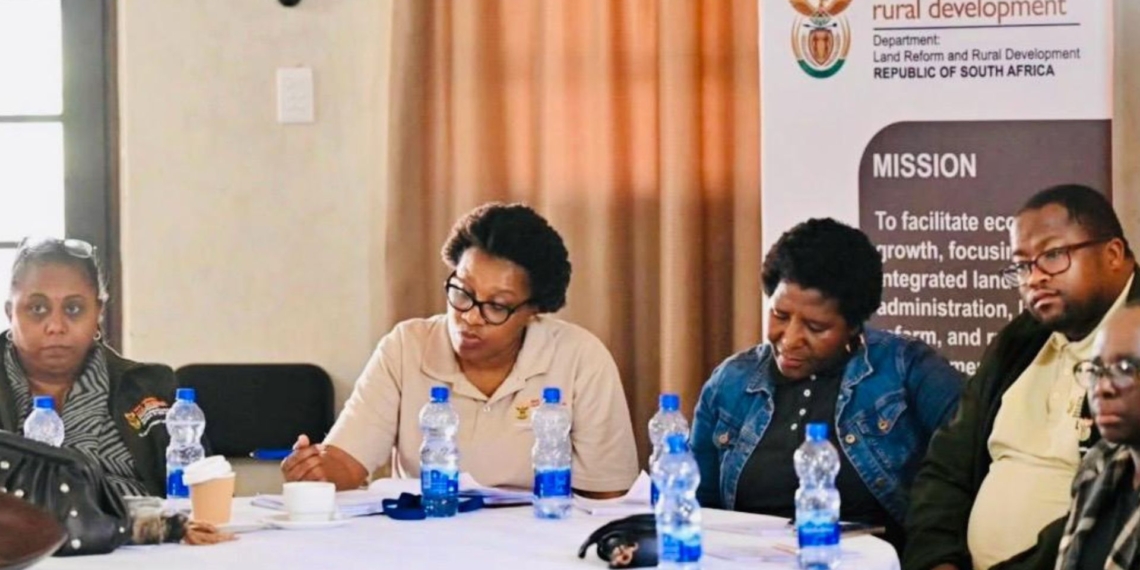
Following its recent investigation into widespread mismanagement and worker exploitation within Western Cape farm equity schemes, the parliamentary portfolio committee on land reform and rural development has extended its scrutiny to the Eastern Cape.
A subsequent four-day oversight mission across the province has revealed that the core issues plaguing these agricultural joint ventures are part of a systemic national failure.
Project failures
In a statement issued by the parliamentary communication services on behalf of the chairperson of the portfolio committee on land reform and rural development, Albert Mncwango says, “While each scheme presented unique circumstances, the committee observed common concerns across all the sites visited.
“Beneficiaries consistently raised concerns regarding limited participation in the management of enterprises in which they hold equity, inadequate access to financial information, uncertainty about dividend payments, weak communication from commercial partners, and inadequate support and oversight from the Department of Land Reform and Rural Development.”
The delegation conducted intensive site visits across Kirkwood, Patensie, Hankey and Humansdorp to engage directly with worker-shareholders, organised agriculture and legal representatives.
The mission serves as a critical update to Parliament’s ongoing consideration of a joint petition submitted by a civil society coalition, which includes the Surplus People Project (SPP), Corruption Watch, the Legal Resources Centre (LRC) and the Support Centre for Land Change (SCLC).
The coalition’s central concern remains unchanged: despite a public investment exceeding R700 million intended to drive agrarian transformation through worker equity ownership in commercial farming enterprises, these schemes have failed to deliver meaningful socio-economic returns.
While the earlier visits to Tulbagh, Clanwilliam, Citrusdal and Ceres exposed severe poverty and immediate labour violations, the Eastern Cape mission has laid bare a deep breakdown in corporate governance and structural accountability.
Related stories
- WC farm equity schemes under fire after worker exploitation claims
- Expropriation Act: Land reform faces its toughest test yet
- Civil groups slam govt for failed farmworker equity schemes
- Compensation Fund warns: Compliance key for farmworker safety
Deepening governance failures
This sense of corporate exploitation and systemic breakdown mirrors the evidence presented to Parliament during the initial stages of the petition hearings, but the Eastern Cape visits have exposed direct administrative manipulation.
During the coalition’s previous submissions to lawmakers, Sipesihle Mguga, an attorney at the LRC, warned that the framework was stalling.
“Farmworkers were promised a stake in the land and a share in its profits. Yet too many remain beneficiaries only on paper.
“Accountability must turn promises into progress. Farmworkers were meant to be partners, not spectators. And until their equity delivers tangible benefits, we cannot speak about success,” Mguga said.
This warning echoes earlier reflections from Patrick Sambo, SCLC executive director, who said that while the FWES model was intended to uplift and improve the lives of farmworkers, the reality on the ground has left most even more impoverished, without any direct benefit.
“The subsidies and investments meant for them ended up enriching the majority shareholders. Tragically, some farmworkers passed away in poverty, having never received a cent from the FWES.
“Government must provide a full and transparent account to both the farmworkers and taxpayers regarding what transpired under these schemes,” Sambo said.
The cross-provincial evidence highlights that many beneficiaries appeared to have differing understandings of the purpose and intended outcomes of the model.
The delegation repeatedly heard allegations that some beneficiaries were asked to sign legal documents without an adequate explanation of their contents, while others claimed they had been excluded from management decisions despite holding equity in the enterprises.
Some beneficiaries further indicated that they had expected the schemes to provide a pathway to ownership of the farms, but had instead been excluded from decision-making processes and, in some instances, evicted from the farms.
Oversight committee members repeatedly pressed department officials to clarify the exact objectives of the programme, its legal governance frameworks, and the parameters of the state’s monitoring responsibilities.
The delegation stated that this longstanding lack of regulatory clarity has directly fostered unrealistic expectations, weak corporate accountability, and ongoing legal disputes.
READ NEXT: Learners swap classrooms for farms and labs to tackle food crisis