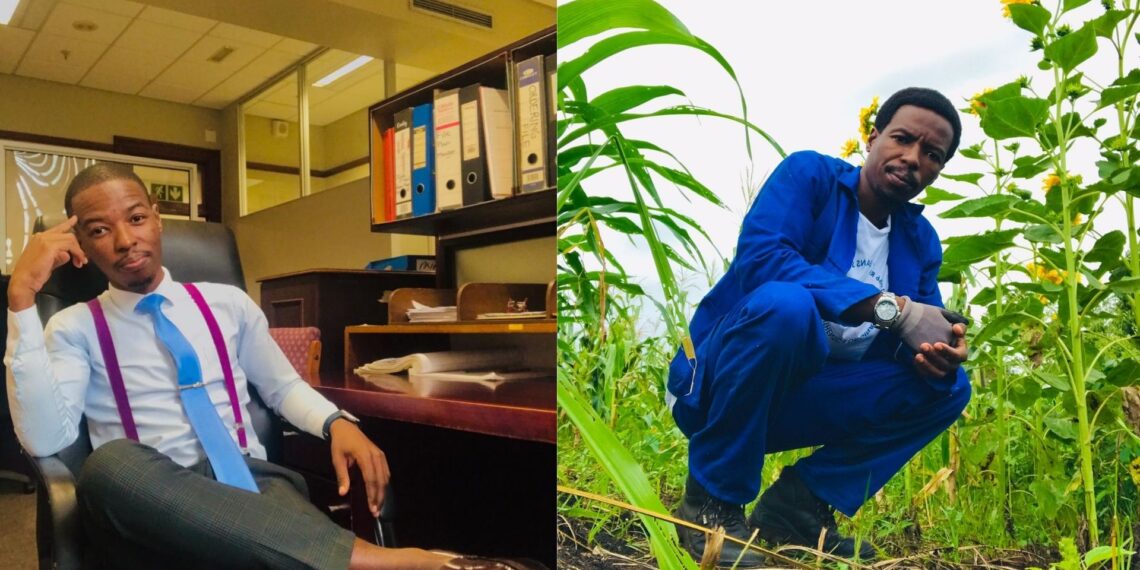
Raised by his grandmother in rural KwaZulu-Natal, Simphiwe Ngema learned that resilience grows just like crops – with patience and care. Now, his agribusiness supplies retail stores, and despite challenges, he continues to rise.
Ngema grew up helping in his family garden in Mtubatuba, in northeastern KZN. After school, he worked the land alongside his household, not as a chore, but as a means to help support the family. The garden paid for schoolbooks, fees, trips, and Christmas clothes.
That early responsibility stayed with him. When unemployment later became a reality, Ngema returned to what he knew. Today, that foundation has grown into Ikusasa Plant Health and Farming.
Background that built him
After completing a diploma in public management at Mangosuthu University of Technology between 2014 and 2017, Ngema struggled to find work.
In 2019, he returned to his studies and completed a BTech in public management and economics at the Durban University of Technology. An internship at eThekwini Municipality City Hall in the archives department followed.
When the contract ended, he realised that the corporate space was not for him.
“Even though I wanted to help people from disadvantaged backgrounds, the way employment is structured made it difficult to truly do that,” he says.
“My goal has always been to bring change where I was born and raised.”
Simphiwe Ngema
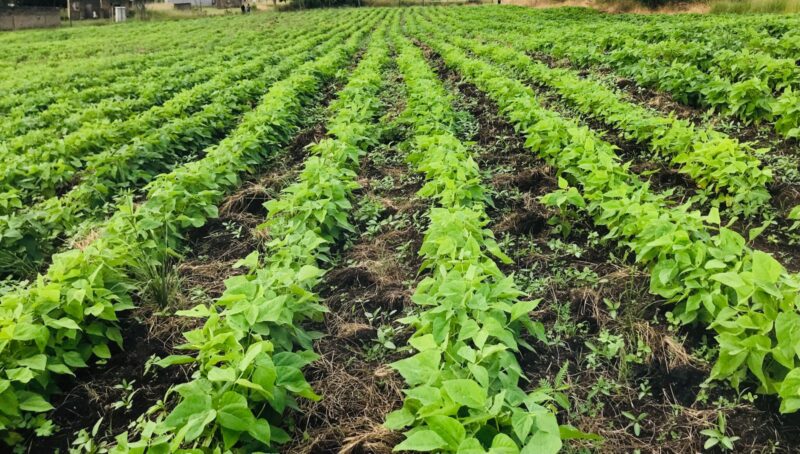
That same year, Ngema began farming during university holidays on a small piece of land. What started as a trial slowly grew.
By 2023, using money he saved from selling vegetables and some borrowed funds, he was able to purchase land and formally start farming. To build his skills, he also trained in hydroponics at Cedara College.
Ngema owns four hectares of land, but he has only been farming on half a hectare due to the cost of fencing and irrigation.
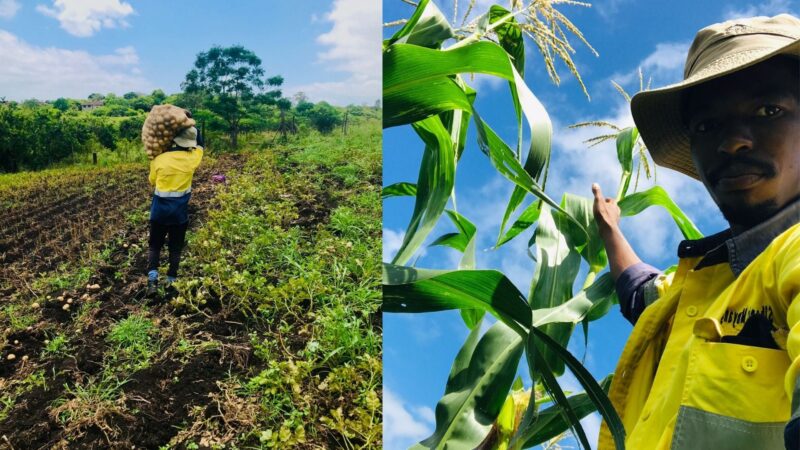
He grows potatoes, spinach, dry beans, sweet chilli, and cabbage, while also offering farming consultancy services. Support from KwaNkombose community and the surrounding areas has been key to his growth.
Related stories
- Taking chances pays off for NW livestock farmer
- Jobless EC graduates strike gold with peanut butter co-op
- Small-scale to big retail: Petrus proves the power of smart farming
- HR graduate ditches desk for piggery: Zintle builds thriving farm
Farming takes root
Ngema says his maternal grandmother, Ngaso Nteta, who raised him, was a strict woman and still is at 96 years old. Everything she taught was rooted in values, and many of the lessons she passed on to her grandchildren were meant to guide them from childhood into adulthood.
“At the time, I hated farming, but over time, I grew to love eating the food I had grown myself. My grandmother taught me so much, especially how to survive and stay persistent.”
In 2025, wanting to learn from others and attract funding, Ngema tried restructuring his business as a cooperative. It didn’t work out, and he later deregistered to operate as a sole trader.
“One of the lessons I’ve learned in farming is that what works for one person might not work for the next,” he explains.
“My day usually starts early, around 5 a.m. I walk the farm, scouting and delegating tasks to the labourers, depending on the season and planting schedule. This helps me prioritise what needs to be done and how urgent it is.”
Lessons from the land
Ngema tells Food For Mzansi that starting a farming business without capital is frustrating, but he has learned to work within the limits of what his business has, even as he aims to grow further.
“I borrowed some money from my sister and my grandmother when I started, hoping to pay them back immediately after harvest,” he says. Unfortunately, this never happened. When he harvested, he didn’t have a market to supply.
“Another challenge came when we formed the co-op to penetrate the market and access funding. We planted almost two hectares of dry beans in different areas, but heavy rains damaged 60 per cent of the produce.”
He adds, “While we promised a supplier four tons of beans, my associates sold what was left behind my back, so I had to deal with the supplier alone.”
Ngema also points out that getting a water licence and approval from the local government agricultural board to supply big retailers is a major barrier.
“These processes become gatekeepers for young black farmers. Many of the forms and paperwork require money, which makes it even harder.”
Making a breakthrough
Despite the challenges Ngema has faced, he has made some progress with Ikusasa Plant Health and Farming. In 2023, he secured a market with Boxer Super Store in Mtubatuba, followed by Spar in 2024.
The Mtubatuba local municipality also supported him with fertilisers and herbicides, and he recently signed a contract with Hello Choice to supply dry beans.
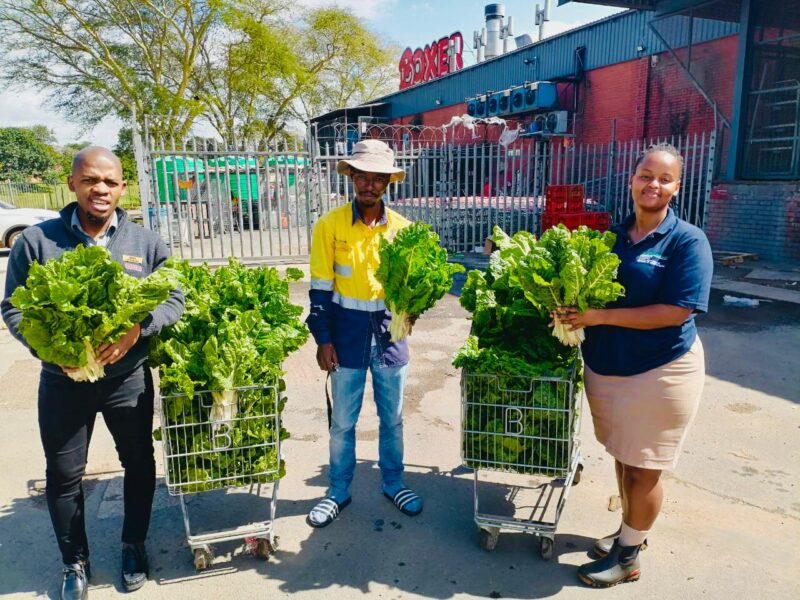
“I’ve also created a platform for local farmers in Mtubatuba to trade through a website and an app where people can purchase our produce,” Ngema says.
Looking ahead, he hopes to grow his business and expand commercially, helping improve food security in his community.
He adds that, since he started farming, no family in his community goes to bed hungry. Ngema believes in giving back, equipping others, promoting healthy lifestyles, and producing affordable, organic products.
READ NEXT: When life gave Biyela lemons, she made lemonade