In the heart of South Africa’s bean belt, a quiet revolution is unfolding, where agriculture meets innovation, community meets opportunity, and every can of KOO beans tells a story of resilience, collaboration, and flavour. This was the message delivered as Tiger Brands revealed a new project.
As the organisation reaches the culmination of the 2025 harvest season, a media tour was recently conducted in Johannesburg to showcase a homegrown small white beans project supply chain.
Sipho Modiba, procurement manager for vegetables and crops at Tiger Brands, said the project is already bearing fruit, with 19 000 tonnes of beans contracted for 2025, and a vision to scale up to 28 000 tonnes by 2030.
“The brand is not just growing beans. It’s growing hope, livelihoods, and partnerships,” he said.
Tackling climate realities
In a country increasingly vulnerable to drought and erratic weather patterns, the company is calling on farmers to work closely with them to beat the impact of climate change.
“In between, we know we’re going to have El Niño seasons where there’s not enough rainfall. Part of the future development in this area would be strictly around the development of irrigation systems for this country. Otherwise, it would be disastrous,” said Modiba.
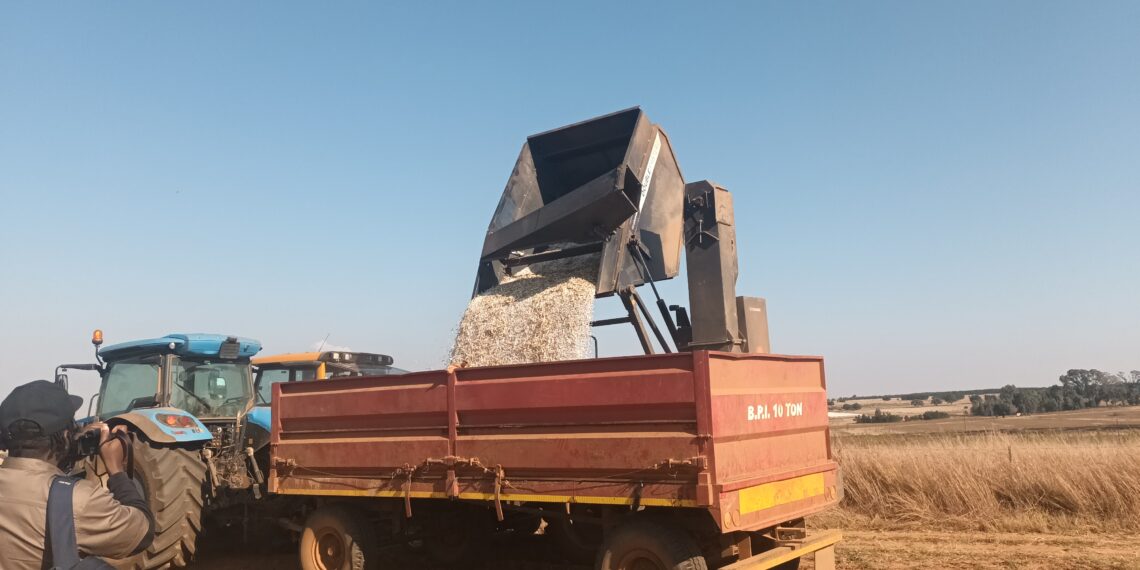
He highlighted that bean farming remains highly water-sensitive. Even short periods of moisture stress can significantly impact yields and quality. “Any little stress, you lose your flowers, you lose your growth. We’ve invested in drones specifically on this particular project to fertilise, spray, and do oversight. We’ve also procured some harvesters for mechanisation as well.”
Related stories
- How agriculture can grow through policy, tech and partnerships
- SA agriculture thrives, but households go hungry
- SA soybean industry fights back after drought
From farm to plate
Fefe Maqubele, a farmer from Bronkhorstspruit in Pretoria who is a beneficiary of the project, said collaborations between her farm and Tiger Brands have been transformative to her farming operations.
“With the support, I think we’ll go miles and miles and miles. This land was exactly like that land. We had to start it from scratch,” she said.
She extended heartfelt gratitude to SE Holdings and the Small Enterprise Development and Finance Agency for their guidance and financial backing, noting how these partnerships have laid the foundation for meaningful progress.
A key part of the farm-to-plate journey is demonstrating the versatility of pantry staples. Colour Your Plate, a cooking show by Tiger Brands with 2.3 million weekly viewers, showcases how products like KOO beans can elevate everyday meals.
Sandanathi Mashita, the season four winner and brand ambassador, said the show is centred around elevating a can of product in ways you wouldn’t think of.
Mashita, trained in Switzerland but passionate about African cuisine, impressed guests with a miso and ginger braised short rib, risotto with KOO sweetcorn, and pâtés made from butter beans and chickpeas.
Iconic brands rooted in agriculture
Dumo Mfini, managing director of culinary at Tiger Brands, explained that this year’s event forms part of the company’s annual Heritage Day tradition, where each iconic brand is traced back to its agricultural roots. Last year, it was All Gold tomatoes in Musina. This year, KOO baked beans took centre stage.
“We want to live the truth and say, look at how we’ve supported farmers. It has been a collaborative effort between different stakeholders,” he said.
According to Mfini, Tiger Brands incorporates local sourcing, sustainable practices, and community partnerships into its operations, a reflection of a broader, values-driven approach to food production in South Africa.
Mfini also shared that the entire company was deeply disappointed last season when they had to import beans due to local supply shortages. “It was heartbreaking for us. That moment really drove home how important it is to invest meaningfully in local bean production, not just for business, but for the country and its farmers.”
According to Mfini, Tiger Brands incorporates local sourcing, sustainable practices, and community partnerships into its operations, a reflection of a broader, values-driven approach to food production in South Africa.
READ NEXT: ‘We’re just surviving’: Water woes & land limits cripple NC farmers
Sign up for Mzansi Today: Your daily take on the news and happenings from the agriculture value chain.