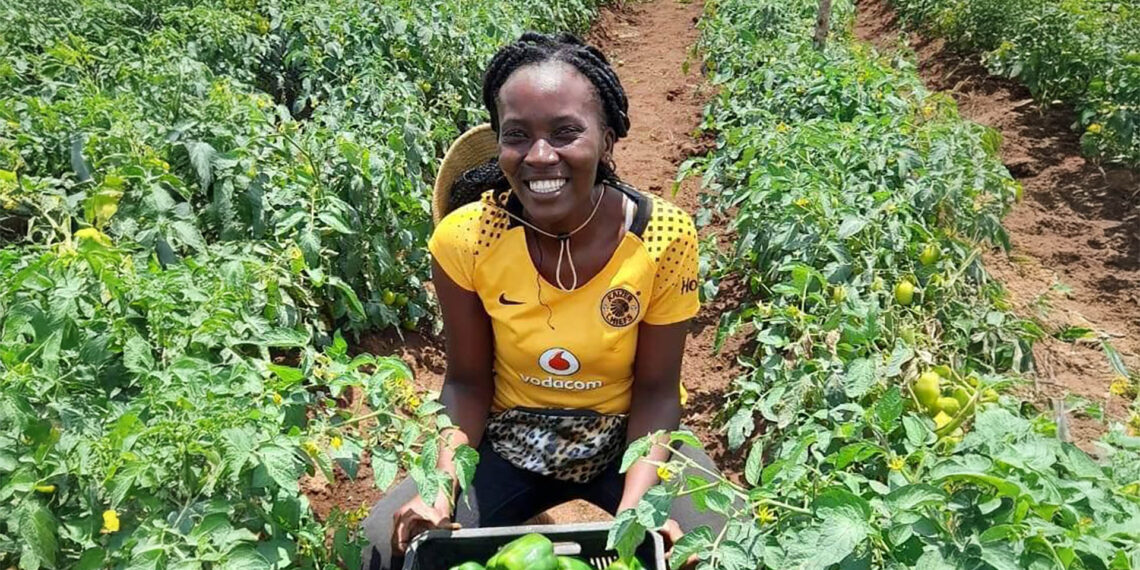
Busisiwe Ngomane’s journey into agriculture was neither planned nor conventional. The sudden loss of employment due to retrenchment in 2020 sent her into a period of deep depression. She returned to her home village in Mpumalanga, unsure of what to do next. However, fate had other plans.
Ngomane initially pursued a path in electrical engineering, earning her certificate at Tshwane South College after completing her matric in 2005. However, employment opportunities were scarce, and it wasn’t until 2016 that she secured a position.
She worked as an intern for three years before landing a permanent role as an executive assistant. But just three months after her promotion, the Covid-19 pandemic led to her retrenchment, turning her life upside down.
“When you’ve been struggling and then you finally get a job, you start thinking, ‘Okay, now I can change my life,’” Ngomane recalls. “And then, just as you’re celebrating, everything is taken away.”

A fated encounter
One day, she encountered a woman from the department of agriculture who was looking for a local farmer. This chance meeting sparked something in her.
“I asked her how they assist farmers, and she told me they help those who already have land and have started farming,” she recalls.
While the department could not assist her immediately, their conversation planted a seed in Ngomane’s mind. Inspired by a neighbour who was growing vegetables in a small backyard, she decided to try it herself.
“At first, I thought, ‘From being an executive assistant to ploughing? No, this is not for me.’ But one day, I just woke up and started removing weeds. Something happened when I began working with the soil. It was healing. Even my family noticed a change in me.”
Related stories
- Love lives here: Farming couple embraces technology and thrives
- Farming smarter: Livestock, crops & game, Dwayne does it all
Farming therapy turns into profits
Ngomane’s first harvests of lettuce, spinach, and beetroot were initially meant for household consumption. However, neighbours passing by her home near the main road started asking if they could buy her vegetables. She quickly realised that farming could be more than just therapy, it could be a business.
As demand for her produce grew, she moved from her backyard to a larger plot, expanding to five hectares. To further her knowledge, she enrolled in a learnership programme with the department of agriculture and rural development, working as a verification officer for other farmers while saving her stipend to invest in farming infrastructure.
“I was visiting farmers every day, and I realised there was so much more to agriculture than just planting. It all started coming together.”
With her earnings, she purchased irrigation pipes and began planting chillies on one hectare. However, the journey was far from easy. Without transportation, she walked three kilometres daily to her farm. Harvesting was done manually, and deliveries were even more challenging.
“I didn’t have transport, so I used a wheelbarrow to take my vegetables to a taxi, then couriered them to my customers,” she recalls. “It was tough, but I kept going.”

Today, Ngomane’s perseverance has paid off. She has two permanent employees and hires seasonal workers during peak planting and harvesting seasons. Her main produce includes chillies and okra, which she supplies to a major private company in Johannesburg, Milnex, under a contract. Additionally, she works with an agent who connects her to broader markets.
“I’ve learned that to succeed, you must understand your market. I initially grew different crops, but now I focus on what sells best,” she says.
For those looking to enter the agricultural sector, Ngomane shares some valuable advice. “Farming is tough. There will be setbacks, but you have to keep going, learn from your challenges, and adapt.”
She encourages new farmers to understand their market by doing market research and focusing on crops that are in demand.
READ NEXT: Engineering change: Dibesho’s fruitful transformation
Sign up for Mzansi Today: Your daily take on the news and happenings from the agriculture value chain.