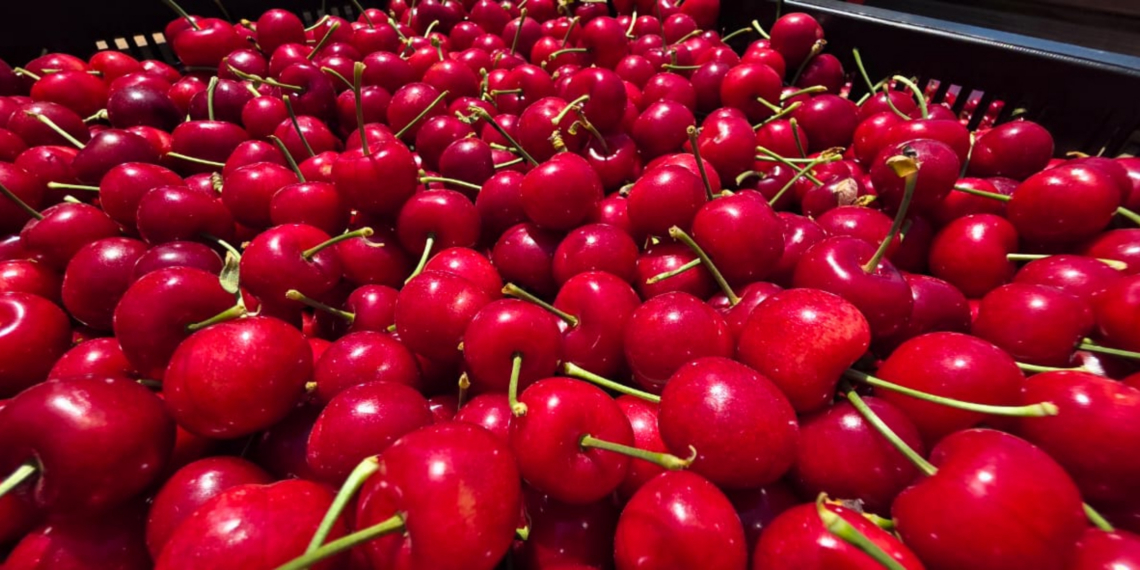
South African cherry growers are set to enter one of the world’s most lucrative fresh produce arenas following the official signing of a landmark trade protocol with China.
South Africa’s minister of agriculture, Willie Aucamp, and Sun Meijun of the General Administration of Chinese Customs (GACC) signed the deal on 8 September 2026 in Beijing during the ninth Sanitary and Phytosanitary Ministerial Meeting. The agreement grants South African cherry producers direct access to the Chinese market for the first time.
The opening of this market comes at a pivotal moment. China imported roughly 586 900 tonnes of cherries in 2025, valued at US$3.3 billion (approx. R60 billion), cementing its position as the world’s largest cherry importer. The South African department of agriculture expects this new market access to boost domestic investment in cherry production and generate approximately 600 new jobs.
A new frontier for exporters
Leading export house Tru-Cape Fruit Marketing has warmly embraced the decision, highlighting the immense commercial potential for local farmers.
“We welcome this development wholeheartedly because it creates another market opportunity for South African cherries,” said Roelf Pienaar, managing director of Tru-Cape Fruit Marketing.
“There is clearly strong demand for cherries in China, and the market presents an exciting opportunity for South African growers, particularly because our season gives us the potential to supply fruit early, before Chilean volumes reach the market in significant quantities.”
Related stories
- SA secures landmark stone fruit deal with China
- China opens doors to five South African stone fruits
- Tru-Cape cherries target China amid bumper 2025 crop
- Flash Gala growers celebrate breakthrough season
Currently, around 80% of Tru-Cape’s cherries are sold domestically, with the remaining 20% exported primarily to Middle Eastern destinations. China offers a vital chance to diversify these export channels.
Navigating the size preference
Entering the Chinese market is not without its hurdles. Local exporters will need to adapt to strict consumer preferences, particularly around fruit sizing.
Chinese consumers display a strong preference for larger cherries, with fruit measuring 28mm and above commanding significant interest, notes Johan Brink, sales director at Tru-Cape. However, the company believes size is only part of the equation, pointing to South Africa’s superior eating quality as a distinct competitive edge.
“While size is undoubtedly important in China, we believe South African eating quality can count strongly in our favour,” explained Lawrence Killian, Tru-Cape’s marketing manager for the Far East. “South African fresh produce is already associated with quality among Chinese buyers. That gives us a platform from which to introduce our cherries to the market.”
The early-season window
Timing will play a decisive role in South Africa’s success. South African cherries are expected to arrive in China from around week 44, whereas massive production volumes from main competitor Chile typically start around week 49.
“Although we don’t initially anticipate large volumes to be exported to China, we do see a real opportunity in that short, early window,” said Killian. “China is a major cherry-consuming market, and the larger fruit is often purchased as gifts, which explains the premium attached to bigger sizes. But being able to arrive early gives us another potential point of difference.”
Market timing remains critical, as high early-season premiums tend to soften rapidly once heavy Chilean shipments hit the shelves.
To capitalise on this narrow timeframe, Tru-Cape is already engaging potential Chinese customers and plans to utilise airfreight for initial consignments.
“It makes more sense for us to export the cherries via airfreight,” said Brink. “Shipping introduces a greater risk that we could miss that early market opportunity.”
Ultimately, Tru-Cape aims to find the optimal balance of fruit size, premium timing, eating quality, and pricing to establish a permanent footprint in East Asia.
“It is about understanding what Chinese consumers want and identifying where South African cherries can compete successfully,” Pienaar concluded. “Size is a challenge, but it is not the whole story. Our eating quality, the reputation of South African produce, and our early-season timing all give us reasons to be optimistic.”
READ NEXT: Grain markets slide: Temporary pause or start of a downturn?