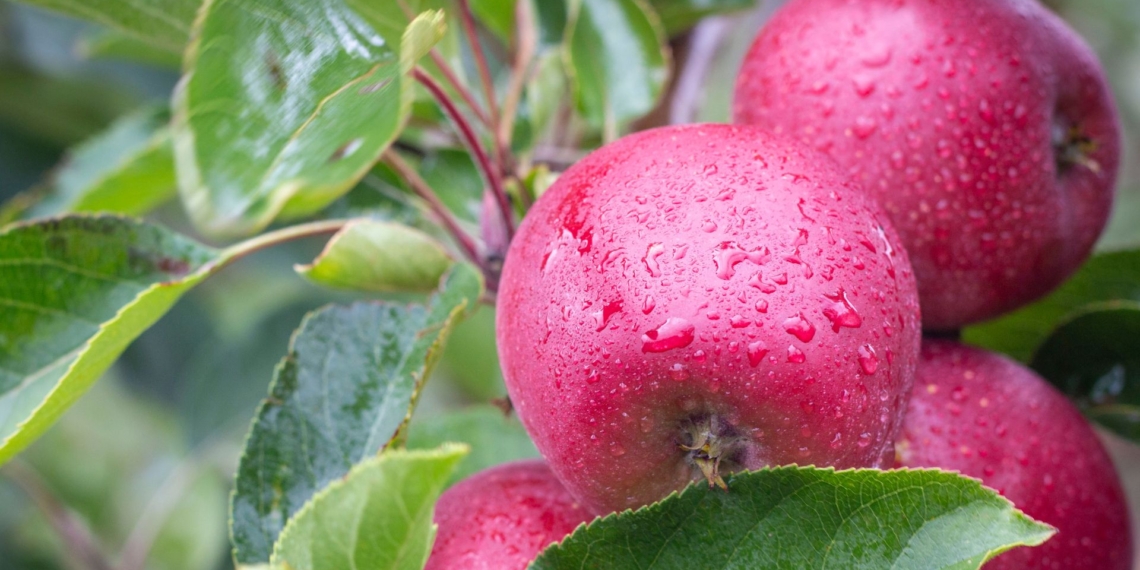
Flash Gala growers are celebrating an exceptional 2025 season, with many of the challenges that once hampered the variety, from uneven maturity to quality inconsistencies, now largely resolved.
The turnaround marks a significant milestone for the variety and positions Flash Gala for continued growth in both local and international markets.
Production increased from approximately 1.9 million MK6-equivalent cartons in 2024 to 2.2 million cartons in 2025, driven by expanding plantings and improved orchard performance. Of this volume, 68% met the premium Flash Gala specification — a 53% increase year-on-year. At the same time, volumes of standard BigBucks Gala declined by 50%, reflecting a shift towards higher-quality fruit production.
BigBucks Gala plantings now cover 1 301 hectares, with an estimated 81% of orchards having reached maturity. This has largely resolved earlier issues associated with young trees, particularly uneven ripening, resulting in more consistent fruit quality.
Calla du Toit, procurement director at Tru-Cape and chairman of the BigBucks Growers Association, said, “The 2025 season was the first in which the industry received consistently positive feedback across all major markets.”
Related stories
- SA’s apple industry marks 364 years with rare tree planting
- Tru-Cape partners with Harvard on premium apple strategy
- Tru-Cape cherries target China amid bumper 2025 crop
- Beyond inflation: Why millions of South Africans can’t afford food
Technical focus drives improvement
The strong performance follows a sustained and coordinated effort across the value chain.
“The year’s success was attributed to a committed team effort, ongoing input and guidance from the technical committee, generally good colour development across Gala types, favourable global market conditions, a strong focus on quality, and the benefit of growing global brand awareness,” Du Toit said.
A sharper focus on technical discipline has played a central role in improving fruit quality. With 36 licensed packhouses and 34 marketers involved, maintaining alignment on standards has been critical.
Regular technical meetings, field days, orchard inspections, and the use of digital communication platforms have strengthened knowledge sharing and improved execution at the orchard and packhouse levels.
Significant progress has also been made in addressing sunburn and heat-related damage, long-standing concerns for Gala producers. While traditional Gala varieties have often struggled with heat damage masked by red colouration, Flash Gala’s deeper red finish has proven more resilient.
Updated handling protocols, including holding fruit in cold storage for two weeks before packing, have further improved the detection of latent damage, reducing the risk of post-shipping losses.
Better harvesting practices boost quality
Harvesting practices have evolved alongside these improvements. Industry experience now shows that a minimum of two picks is necessary to achieve optimal maturity and uniform quality, particularly for fruit growing in shaded canopy areas.
These combined interventions have translated into strong pack-out results, with Flash Gala consistently achieving rates exceeding 80%, outperforming standard Gala varieties.
“Fruit is our true currency,” Du Toit said. “Significant work has gone into ensuring that maturity protocols are followed and that our customers consistently receive good quality fruit. When rules and protocols are followed, the likelihood of success increases substantially.”
Positive outlook for 2026
Looking ahead, the outlook for 2026 remains positive. A larger crop is expected, supporting further expansion into new markets and strengthening the variety’s global footprint.
The technical committee will continue to prioritise quality through ongoing grower engagement, expanded technical resources and early alignment on packing standards.
“With strong foundations now in place, Flash Gala is well positioned to deliver improved returns to growers while reinforcing its reputation as a premium apple offering in both local and export markets,” Du Toit said.
READ NEXT: Limpopo grain farmer combines business brains with farming brawn