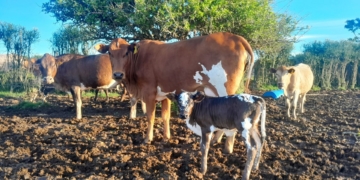
Calving season is a make-or-break time for cattle farmers, significantly influencing herd productivity and profitability. The success of this period affects everything from calf survival rates to the future fertility of cows.
Healthy calves born without complications grow faster, reach market weight sooner, and improve overall returns, while cows that recover quickly are more likely to breed back on schedule, maintaining annual calving intervals.
On the other hand, challenges like difficult births, poor calf health, or delayed recovery in cows can lead to increased veterinary costs, reduced milk production, and extended breeding gaps – all of which hurt the bottom line. By prioritising proper preparation and management during calving season, farmers can optimise herd performance and secure financial success.
Thapelo Ramokala, an animal health specialist at the Beefmaster Group, shares some practical strategies to enhance success during this important time.
Focus on body condition
Ensuring your cows are in optimal condition is key. Ramokala emphasises the importance of maintaining an ideal body condition score (BCS).
“Maintaining an optimal body condition score is crucial. If the cow is undernourished, she may have insufficient energy reserves, leading to difficulties during calving [dystocia] and prolonged recovery. On the other hand, if she’s over-conditioned, this can also increase the risk of calving difficulties,” he explains.
Key tips:
- Aim for a BCS of 3.5, where 1 is very thin and 5 is very fat. “A body condition score of 3.5 is generally considered ideal,” says Ramokala.
- Manage BCS to influence postpartum recovery, lactation, and the newborn calf’s health. “The condition of cows at calving is associated with the length of postpartum anoestrus [temporary infertility], subsequent lactation performance, as well as the health and vigour of the newborn calf,” he notes.
- Prevent body condition loss between calving and breeding to maintain fertility. “After calving, it’s important for the cow to return to oestrus after 50 days to be able to calve every year,” Ramokala advises.

Related stories
- Tips for cattle farmers: Pregnancy detection & calving management
- Boost profits with smart cattle marketing strategies
- Prodigal farmer returns home to rebuild cattle herd
Prioritise proper nutrition
Good nutrition is essential during the last two months before calving. “During pregnancy, the cow’s energy needs rise significantly to support both the growing calf and her own body’s preparation for calving,” Ramokala asserts.
- Provide a balanced diet to support milk production and high-quality colostrum – the antibody and nutrient-dense milk that is released during first lactations. “Colostrum protects the newborn calf from infections in the early weeks of life. It kickstarts the calf’s immune system and improves its chance of survival,” he explains.
- Use trace mineral supplements, such as calcium and magnesium, to enhance colostrum quality. “This is measured by the amount of immunoglobulins (antibodies) in the colostrum,” says Ramokala.
- Start supplementation early if the BCS is below 3.5. “Conditions cannot be increased overnight,” he stresses. Adjust feeding with quality hay, silage, and production licks as needed.
Ensure healthy weaning
Healthy calves depend on the mother’s milk and condition. “In the first two months, calves are exclusively dependent on their mothers’ milk before their intake of grazing becomes significant,” Ramokala states.
- Monitor milk production to support optimal early growth. “At this time, their feed conversion ratio is also the best (1:1 to 2:1), and an optimal growth rate at this early stage can have a positive effect on weaning mass,” he explains.
- Administer vaccines in late pregnancy to protect calves from diseases. “Late pregnancy is the last chance before calving to administer specific vaccines,” advises Ramokala. He notes that vaccination is most effective when paired with proper nutrition and supplementation.
Collaborate with experts
Work with professionals to optimise your calving outcomes. Ramokala recommends engaging with a veterinarian, nutritionist, and grazing management advisor. “By taking these proactive steps, cattle farmers can improve the success rate of calving, promote the health of both cows and calves and maximise their overall herd productivity,” he concludes.
READ NEXT: Animal technology graduates step up to secure SA’s biosecurity
Sign up for Farmer’s Inside Track: Join our exclusive platform for new entrants into farming and agri-business, with newsletters and podcasts.