At the age of 16, Maungo Mokgoje from Kuruman in the Northern Cape was given a calf by his uncle, Tiroyaone Mokgoje. It became his duty to oversee the calf’s development, ensuring its healthy growth by providing adequate nourishment, sufficient hydration, and consistent care. Occasionally, he would also spend time playing with or grooming the calf.
For a young boy his age, still in school, this was a lot of responsibility, but Mokgoje did not mind at all. He had enough uncles—also farmers—around him to advise him. “Everything my grandparents’ livelihood relied on was farming, including crops and livestock such as cattle, goats, sheep, and horses. My passion for farming developed from being involved in it.”
However, not long after being gifted with a calf, Mokgoje left the village to live with his mother, so he instructed his uncle to look after his animal for him. Feeling quite in charge, he told his uncle to take care of his calf while he was away.

Returning to farming
He returned years later, having completed his matric and earned a national diploma in business administration from Richfield Graduate Institute of Technology, along with gaining work experience as an intern at Edcon in Johannesburg. By the time he had returned home, Mokgoje’s calf had give birth consistently over a period of six years, producing six calves.
With a bigger herd, he started his own kraal and both his uncles, Tiroyaone and Onkokame, supported him with farming guidance. This marked the beginning of The Cruise Ranch Farming and Projects.
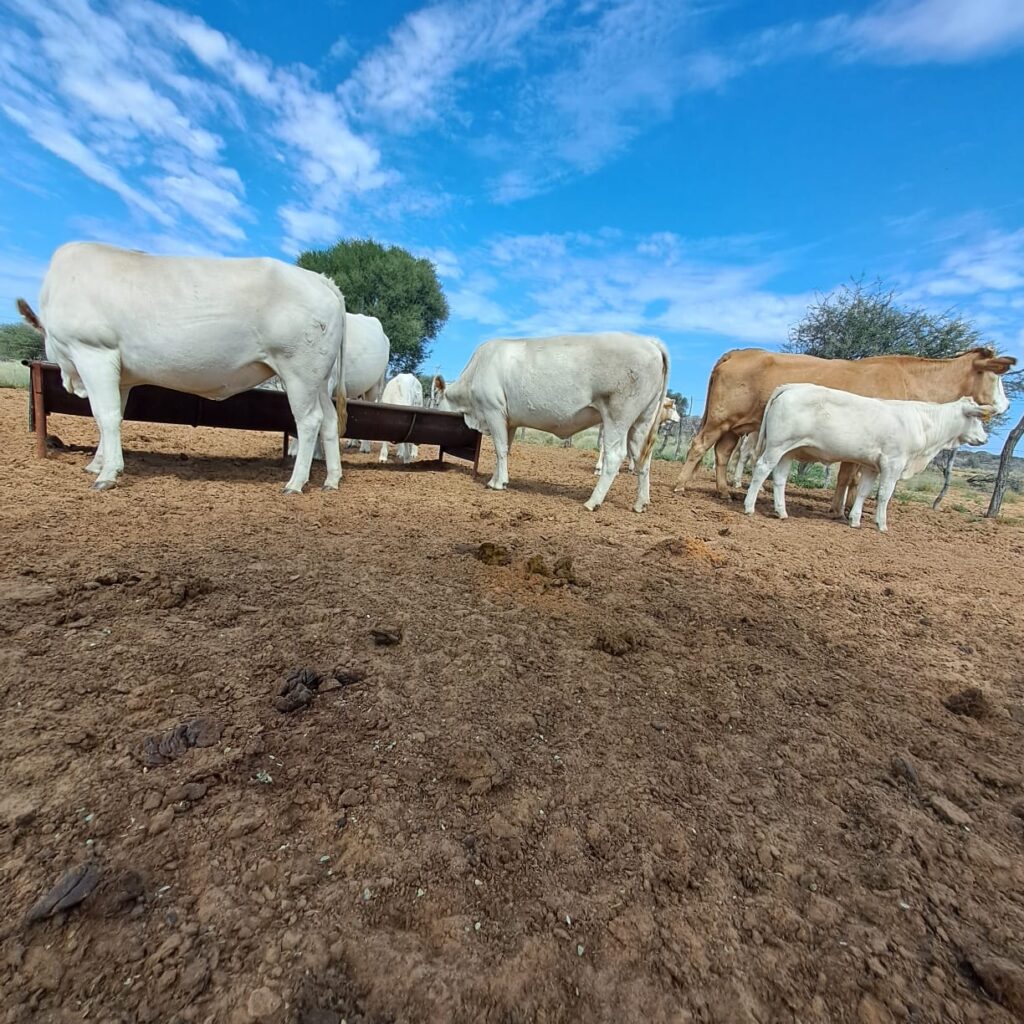
Today, he owns 14 cattle, which are a mixture of Simbra and Charolais cattle. The family farms on a 1262-hectare camp inherited from his late grandparents, Kgotlaitsile and Johanna Mokgoje.
However, it is divided into various camps for different farming enterprises. Mokgoje says his grandparents also bred Simbra and Charolais cattle because they believed in the characteristics of these animals.
“Simbra is known for its resilience and physical characteristics, making it well-suited to farming under harsh climate conditions,” explains Mokgoje.
“Meanwhile, Charolais is the best breed for producing heavyweight calves, which command higher prices. They also produce heavy calves with easy calving for the mothers,” he adds.
Mokgoje says he is hard at work to grow his herd even bigger.
“For any male calves born from this cow since she began breeding, I would ask my uncle to exchange them with me for females. I have vaccination programmes which I use to prevent disease, and there are various antibiotics available for all diseases.”
Diversifying income
To support his farming business, he started a cleaning company called The Cruise Hygiene and Cleaning Services.
“To avoid financial instability, I started a small cleaning business in addition to farming to have multiple sources of income,” Mokgoje says.
He borrowed a car from his uncle Matshidiso Mokgoje and a vacuum cleaner from his aunt Ontlametse Mosielele. “I realised that starting out with no financial support makes it almost impossible.”
Since the beginning of this year, Mokgoje has started planting green maize on a small plot of land to help supplement his livestock feed. He also owns four horses, which he uses for transportation.

Related stories
Challenges and future plans
Mokgoje explains that his main challenge is not having his own bull, which is hindering the progress of his business.
He adds, “If I had my own bull, I believe I could have expanded more than where I’m at now.” Mokgoje says he sells most of his cattle at auctions and also through individual sales to people who want to slaughter for events.
Mokgoje wishes to expand his livestock holdings and believes that his qualifications have been helpful in managing his business, particularly with paperwork.


READ NEXT: Old and new MECs gear up for next era in agriculture
Get Stories of Change: Inspirational stories from the people that feed Mzansi.