As the agricultural landscape continues to evolve, many farmers are exploring new opportunities to diversify their production and tap into lucrative markets. One such avenue gaining attention is the essential oils industry, which offers farmers the chance to produce high-demand products for both local and international markets.
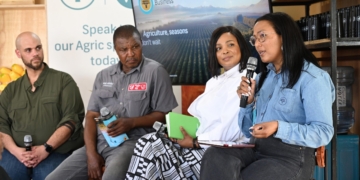
Karen Swanepoel, CEO of the Southern African Essential Oil Producers Association (SAEOPA), shared insights into the potential and challenges of this growing sector.
South Africa’s essential oil industry is small but growing, producing around 3 000 tonnes annually, primarily eucalyptus and citrus oils. According to SAEOPA, in 2017, exports were valued at R7.6 million, though this decreased in 2018. Globally, the essential oil market is valued at $6.5 billion and is expected to reach up to $15.8 billion by 2025, with major producers like Brazil, China, and the USA.
South Africa’s local fragrance market is expanding due to a growing middle class, though it remains dominated by imports, with a trade deficit in essential oils and cosmetics. South Africa exported R658,206 worth of essential oils and imported R330,209 in recent years.
Growing demand for essential oils in SA
The essential oils industry in South Africa has experienced periods of growth and contraction but is now recovering and poised for expansion.
“It was very small; it became larger and it shrunk again. And now it’s growing back again to where it should be,” Swanepoel explained. She added that South African producers are known for their quality, which gives them a competitive edge, even though they may not produce the same volumes as larger countries.
“We cannot compete with volumes. There are countries that really produce a lot of volumes of oil, therefore, they are able to sell it at a much lower price than us. But we are very good, and our reputation is for quality,” Swanepoel emphasised.
South Africa’s reputation for producing high-quality oils is similar to its standing in the wine industry, she noted, “If it’s South Africa, it’s got to be good.”
Primary essential oils
South Africa is well-positioned to produce a variety of essential oils, including both indigenous and non-indigenous crops.
“We are very well positioned with citrus, and our second biggest export product is also eucalyptus,” Swanepoel said. While these two crops are not native to South Africa, they perform well and have significant export potential.
Other key crops include tea trees, kakiebos (also known as tagetes in French), buchu, and rosemary. In the past, South Africa has been a strong producer of rose geranium, lavender, lemongrass, and mint, all of which are still grown in various regions.
“South Africa is actually a country that can do everything that anybody else does. We also do things that they can’t do.”
Farmers are producing macadamia oil, grapeseed oil, pumpkin seed oil, and cactus seed oil, further expanding the country’s portfolio of high-value products.
One of the key opportunities lies in organic certification, which can command higher prices in the global market. “If people look at organic certification, they are able to negotiate a better competitive price,” she said.
The global undersupply of essential oils has led to an influx of artificial and adulterated products. This shortage creates even greater opportunities to produce high-quality, authentic oils.
Intercropping benefits
Essential oils are not only valuable for their end-products but also serve as excellent intercropping options. “Combating insects and even fungal problems is easier if you intercrop with essential oils because of the strong aroma that they give off; it deters insects,” Swanepoel explained.
This means farmers can plant essential oils alongside their traditional crops, enhancing pest control naturally while diversifying their income streams.

Production methods and processes
The production of essential oils in South Africa is based on traditional methods, ensuring high-quality output.
Swanepoel said the most common methods are:
- Steam distillation: A preferred method because it involves no contact with chemicals. “It is simply a process where you put steam through the material, you condense it, and then you separate the water and the oil.”
- The by-product of steam distillation, called hydrosol: “The water that’s actually a by-product, called the hydrolyte, has also got a market.” This product further enhances the economic viability of essential oil production.
- The cold-pressing method for seed oils: More sensitive crops like rose and jasmine undergo hydro-distillation. South African engineers have become renowned for designing world-class equipment used in these processes, which is often exported to other countries.
Meeting the demand for green consumerism
In recent years, there has been a growing shift towards green consumerism, which has positively impacted the essential oils industry. “We have to remember that most of the time, the people that are growing it are going organic because of the premium advantage there,” Swanepoel explained.
The entire production process of essential oils is typically circular, with waste materials being recycled back into the farm for composting, further aligning with sustainable farming practices.
“There’s nothing wasted. They make use of the spent material. It goes into composting.” This appeals to environmentally conscious consumers who are seeking natural and sustainable products.
Related stories
- Eco-friendly farming fuels essential oils in Mzansi
- Agripreneur 101: Meet an essential oils distributor
Ensuring quality and navigating regulations
Quality is a key differentiator for South African essential oils in the global market. “That is how we can compete – it’s with quality,” Swanepoel asserted. To maintain this high standard, producers must use South African National Accreditation System (SANAS)-accredited laboratories for testing, ensuring international acceptance of their oils without the need for retesting.
In terms of regulations, South African producers must comply with both local and international laws. For exports to the EU, for example, producers may need to undergo Registration, Evaluation, Authorisation and Restriction of Chemicals (REACH), if they produce over a tonne of essential oil. Indigenous plant species also require permits from the department of environmental affairs, and there are strict access and benefit-sharing agreements that must be in place.
ALSO READ: How to start or expand a profitable pig farming operation
Sign up for Farmer’s Inside Track: Join our exclusive platform for new entrants into farming and agri-business, with newsletters and podcasts.