Tuesday, October 20, 2026
SUBSCRIBE
22 GLOBAL MEDIA AWARDS
Food For Mzansi
  • News
  • Changemakers
  • Lifestyle
  • Farmer’s Inside Track
  • Food for Thought
No Result
View All Result
  • News
  • Changemakers
  • Lifestyle
  • Farmer’s Inside Track
  • Food for Thought
No Result
View All Result
Food For Mzansi
No Result
View All Result
in Advertorial

The South African red meat story consumers need to know

by Duncan Masiwa
12th March 2025
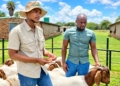
Rustin Shawe, a cattle breeder from KwaZulu-Natal, focuses on producing premium-quality meat cuts. Photo: Supplied/Food For Mzansi

Rustin Shawe, a cattle breeder from KwaZulu-Natal, focuses on producing premium-quality meat cuts. Photo: Supplied/Food For Mzansi

Share on FacebookShare on TwitterShare on WhatsApp

This article, in partnership with the Red Meat Producers’ Organisation (RPO), features Rustin Shawe, a cattle breeder from KwaZulu-Natal, who shares his approach to ensuring top-quality meat cuts.


In every tender cut of South African red meat lies a story of sacrifice, patience, and devotion. The journey from farm to table is a long and intricate one. At the heart of this journey are farmers like Rustin Shawe, a KwaZulu-Natal-based cattle and maize farmer whose respect for the land and his animals shapes every aspect of his work.

Shawe is one of thousands of farmers who pour their hearts into every step of the process, ensuring the meat you enjoy is not only high quality but a true reflection of their passion and respect for the land.

Every day on his farm begins with purpose. “We start early. I begin my day reading my Bible and having a quiet time before getting to work. Then we check the weather and plan the day. 

“The health status of our animals is always our first priority – we count them, ensure the grazing is good, the water is clean, and their supplements are sufficient.

“Once we know everything’s in order, we tackle the day’s tasks, whether it’s fencing, baling, fertilising, or maintaining the farm.”

This commitment to animal welfare goes beyond routine checks. Caring for the animals means following a strict inoculation and deworming programme and constantly monitoring their condition and health.

For Shawe, this approach is simple: when you take good care of your animals, they take good care of you.

“It’s about compassion. I hate seeing them in any kind of stress, so I do everything I can to keep them healthy and happy,” he explains. 

Healthy land and livestock

Farming runs in Shawe’s blood. As a fourth-generation farmer, he comes from a long line of agriculturalists. His great-grandfather settled in northern KwaZulu-Natal in the 1820s, bought a piece of land, and their family has been farming it ever since.

That legacy continues today, with sustainability at the core of their farming practices. Shaw has embraced innovative methods to protect the land and ensure its long-term productivity.

“We moved from traditional seasonal grazing to a rotational system. By rotating cattle through four to five paddocks, each gets a 30- to 40-day rest period, which improves both grazing quality and carrying capacity. 

“We’ve also implemented water management systems, like creating dams and using water troughs to provide clean, uncontaminated water without the cattle walking directly into the dams,” he shares. 


Related stories

  • Red meat industry launches game-changing traceability tool
  • Red meat industry battles stock theft, disease, and high costs

Genetics and health 

Shawe’s commitment to sustainable practices goes hand-in-hand with his focus on producing top-quality livestock. As a breeder of high-quality weaners for feedlots, his attention to genetics and animal health ensures that only the best animals enter the supply chain.

“We weigh our bull calves at weaning, 300 days, and 600 days to select those with the best growth and fertility,” he explains. 

In addition, Shawe’s farm incorporates advanced techniques like embryo programmes and DNA testing to improve the herd. These innovations help identify animals with desirable traits, such as double muscling for lean beef or better fat layering.

“These innovations help us provide predictable, high-quality meat for the market,” he shares. 

While the effort farmers like Shawe put into their work often goes unnoticed, the impact is felt at every meal.

Beyond profit 

So, the next time you enjoy a tender, flavourful cut of South African red meat, remember the dedication behind it – the early mornings, the careful planning, and the unwavering care for both the animals and the environment.

Looking to the future, Shawe is excited about the potential of even more innovations in breeding and sustainability.

“We’re constantly striving to produce better-quality meat while preserving the land and caring for our animals. It’s not just about profitability – it’s about passion and responsibility. And that’s what keeps us going.”

  • This story is part of a special series in partnership with the Red Meat Producers’ Organisation (RPO) – a tribute to the farmers feeding our nation, one meal at a time.

READ NEXT: Farming vs. housing: Rising demand for land in former homelands

Sign up for Mzansi Today: Your daily take on the news and happenings from the agriculture value chain.
Duncan Masiwa

DUNCAN MASIWA is the assistant editor at Food For Mzansi, South Africa’s leading digital agriculture news publication. He cut his teeth in community newspapers, writing columns for Helderberg Gazette, a Media24 publication. Today, he leads a team of journalists who strive to set the agricultural news agenda. Besides being a journalist, he is also a television presenter, podcaster and performance poet who has shared stages with leading gospel artists.

Tags: Future-focused farmerInform meRed meat industryRed Meat Producers Organisation
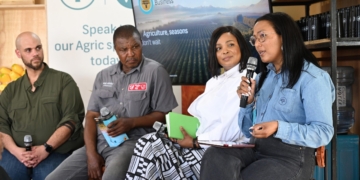
The panellists at FNB Business’s “Farming together” discussion at the Royal Show explored how market access, mentorship, financial discipline and strong commercial relationships can help farmers build sustainable businesses. Featured from the left are Bertram July (FNB’s distribution sales lead), commercial farmer Shakes Shabalala; Sandy Gumede (co-founder of Zulu Girl Wines), and Janis Robson (FNB’s head of development and SME business development). Photo: Food For Mzansi
News

FNB puts relationships at the heart of commercial farming

by Staff Reporter
17th October 2026

From buying a farm with cattle to building a wine brand from scratch, entrepreneurs shared how strong relationships, market access...

Read moreDetails
Agri Skills Transfer students gain hands-on experience at the institution’s Cullinan Farm Training Centre, where agricultural theory meets the realities of commercial production. Photo: Supplied/Food For Mzansi

Build your future in agriculture with Agri Skills Transfer

17th October 2026
Durbanville Hills tastes sweet success at Michelangelo Awards

Promising early conditions predicted for 2027 SA wine harvest

17th October 2026

Reclaiming the kraal: Cultural heritage sparks a farming dream

16th October 2026

How animal welfare and human rights shape food security

16th October 2026

Smart soil and strong networks drive Kopana Holdings’ success

AgriSETA sets the stage for the SAAA’s big night

Farmers urged to tap into recycled human waste as fertiliser

Mpumalanga agripreneur bottles family wisdom one chilli at a time

How animal welfare and human rights shape food security

Join Food For Mzansi's WhatsApp channel for the latest updates!

JOIN NOW!
Next Post
Govt gives Land Bank money for blended finance

Godongwana increases VAT as state's pockets run dry

THE NEW FACE OF SOUTH AFRICAN AGRICULTURE

With 21 global awards in the first six years of its existence, Food For Mzansi is much more than an agriculture publication. It is a movement, unashamedly saluting the unsung heroes of South African agriculture. We believe in the power of agriculture to promote nation building and social cohesion by telling stories that are often overlooked by broader society.

Fixing SA’s agricultural visa system to protect seasonal harvests

SA and Namibia reevaluate livestock trade after FMD outbreak

Agda conference to tackle finance, market access and agri growth

Reluctant farmer scales EC cabbage enterprise to supply Spar

Reality check: What SA agri interns really experience on the farm

This week’s agri events: 19 – 23 October

  • Awards & Global Impact
  • Our Story
  • Contact Us
  • Cookie Policy
  • Privacy Policy
  • Copyright

Contact us
Office: +27 21 879 1824
News: info@foodformzansi.co.za
Advertising: sales@foodformzansi.co.za

Contact us
Office: +27 21 879 1824
News: info@foodformzansi.co.za
Advertising: sales@foodformzansi.co.za

  • Awards & Global Impact
  • Our Story
  • Contact Us
  • Cookie Policy
  • Privacy Policy
  • Copyright

Chat Options

About this assistant

This feature generates automated answers summarised from Food For Mzansi articles. By using it, you are interacting with an AI system (provided by Google), not a human. AI can make mistakes. Please refer to the source articles for verification and citation purposes.

Our staff do not check or moderate Lerato’s answers in advance, but may review some later. Our journalists continue to write and edit all the articles Lerato uses as sources.

To estimate unique and returning web users, we store a random browser ID in this browser. WhatsApp users are counted by phone number. The same person using both channels may be counted twice.

I'm Lerato, your AI assistant!
No Result
View All Result
  • News
  • Changemakers
  • Lifestyle
  • Farmer’s Inside Track
  • Food for Thought

Copyright © 2026 Food for Mzansi