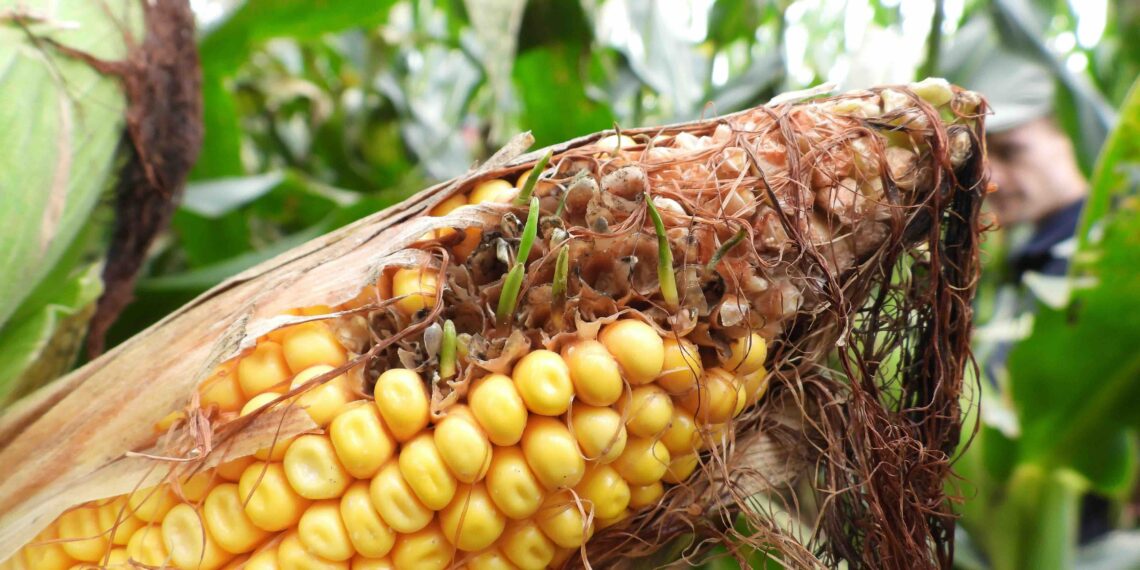
The 2024/25 summer row-crop season in South Africa will be remembered as one of the most unpredictable in recent years. Farmers across the country faced a rollercoaster of extremes: too much rain in some regions, not enough in others, and an unusual influx of pests and diseases that left many scrambling for solutions.
“It was indeed a strange season,” reflects Hanlie Geldenhuys, agronomist at Syngenta South Africa.
Despite the chaos, the national crop estimate remains broadly positive. Yet concerns persist about hidden impacts, especially from drought conditions that struck maize fields during the critical pollination stage.
Issues such as silk jamming, incomplete pollination, tip die-back, and grain quality problems are already being reported by growers. To complicate matters, wet harvesting conditions have led to an uptick in ear rots like Diplodia and Fusarium, as well as premature germination of kernels on the cob.
At the heart of the season’s challenges was erratic rainfall. Farmers planted into dry soils, only for rain to arrive in December. But a hot, dry spell stretching from early January for eight to ten weeks stressed crops at a pivotal time.
In March, torrential rains returned, flooding areas as unexpected as Thabazimbi. “La Niña arrived as predicted,” Geldenhuys explains, “but unfortunately not synchronised with the maize crop’s water requirements.”

More pests, more pressure
This weather pattern created ideal conditions for grey leaf spot to flourish late in the season. Many growers, caught off guard, were unable to spray fungicides early enough.
Looking ahead, disease pressure will be high going into the new season, as pathogens like grey leaf spot and northern corn leaf blight survive on crop residue.
Weed management also proved challenging. Early-season drought reduced the efficacy of pre-emergence herbicides, while the current waterlogged soils have made post-emergence weeding difficult.
Related stories
- Hybrid seeds: Tips for optimising maize yields
- Goss’s wilt hits SA maize: Up to 50% yield loss feared
- Macadamia prices soar: Stronger demand fuels 2025 harvest
This leaves many farmers heading into the next planting season with fields that are neither clean nor weed-free, raising concerns about increased pest habitats and a greater seed bank for weeds.
Insect problems this season were equally unusual. While commando worm and locust outbreaks were expected, unexpected pests like spring beetles and opportunistic fruit chafers also emerged, feeding on maize plants.
Meanwhile, in KwaZulu-Natal, Limpopo, and North West, maize streak virus surged to levels that forced growers to actively manage leafhopper populations.
Planning for an unpredictable future
As farmers turn their eyes to 2025/26, lessons from this unpredictable season loom large. One silver lining is that thanks to the late rains, soil profiles are well replenished, providing a strong moisture base for the next planting.
But this benefit comes with a trade-off: increased disease and insect pressure from the outset.

A further surprise from the season was the prominence of anthracnose in soybeans, a disease rarely seen at problematic levels. Some growers blamed it for poor grain quality, although prolonged wet conditions likely played a role.
Above all, the season underscored a familiar but vital truth: risk management is the backbone of sustainable farming. Weather variability once again tipped the scales in favour of crop enemies – whether pathogens, pests, or weeds – forcing growers to adapt and re-evaluate their strategies.
For Geldenhuys, proactive planning is key. Prevention, she says, remains the best defence. This includes selecting cultivars with built-in disease resistance, even if they carry a slight yield penalty, and taking care to balance other agronomic traits like sunburn tolerance.
Disease prevention through early fungicide applications is preferable to reactive treatment. Likewise, weed management must follow a long-term strategy aimed at reducing the seed bank through a combination of pre- and post-emergence herbicides, tillage, crop rotation, and other agronomic practices.
Growers are also urged to consider biosecurity risks when moving machinery between farms to avoid spreading resistant weeds.
Perhaps the most crucial takeaway for farmers heading into the next season is the need for vigilance.
“We always say that growers’ footprints must be in their fields,” Geldenhuys advises.
With unpredictable weather and shifting conditions, she stresses that frequent, hands-on monitoring is non-negotiable. And when uncertainty arises, seeking expert advice should be the first step, not the last.
READ NEXT: Maize: Choosing the right varieties for local conditions
Sign up for Mzansi Today: Your daily take on the news and happenings from the agriculture value chain