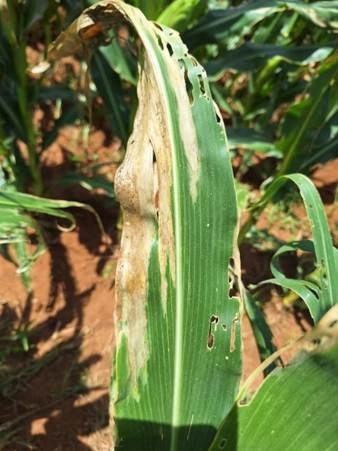
Goss’s wilt and leaf blight is wreaking havoc on South African maize farms, and farmers are on high alert. This aggressive disease, caused by the bacterium Clavibacter nebraskensis, was first spotted in Nebraska in 1969, but now, it’s here.
Officially confirmed in early 2024, the disease is spreading fast. Pannar South Africa reports that it first surfaced in North West, with alarming unconfirmed cases in Gauteng and the eastern Highveld.
“It is possible that Goss’s wilt has been in South Africa since the early 2000s but remained undetected due to its symptoms being similar to other diseases or stress conditions,” said Dr Rikus Kloppers, speaking on behalf of Pannar South Africa.
Despite early confirmations in February 2024, the department of agriculture officially declared the disease’s presence only at the end of the year. “The delay was due to phytosanitary concerns around international trade in seed and commodities,” Kloppers explained.
Related stories
These concerns materialised when Botswana and Namibia imposed immediate bans on maize, sorghum, and wheat imports following an official statement from the International Plant Protection Convention (IPPC) on 14 January 2025.
Fortunately, the South African grain industry successfully lobbied for a reversal of the grain import ban, but seed exports remain subject to strict regulations.
“The department of agriculture still considers Clavibacter nebraskensis a regulated organism under its control, and ongoing surveys are assessing the disease’s distribution and extent,” Kloppers added. Growers are encouraged to report any occurrences to their representatives, with no risk of farm quarantines or delivery restrictions on grain.

Understanding Goss’s wilt and its impact
Goss’s wilt is primarily spread via infected crop residue rather than insects.
“The bacterium is carried by seed across continents but spreads locally when infected crops are harvested, releasing bacteria into the air,” Kloppers noted. Once settled in plant debris, it can infect susceptible maize hybrids in the next growing season under ideal conditions.
“Grain harvested from infected fields remains safe for human and animal consumption and can be delivered without grading issues,” Kloppers reassured farmers.
However, severe infections can lead to significant yield losses. “Under ideal conditions, highly susceptible hybrids can experience yield losses of up to 50%, especially if hail or wind damage creates entry points for the bacteria,” he warned.
Goss’s wilt progresses through a leaf blight phase, which reduces photosynthetic efficiency and can cause premature plant death.
“Over multiple seasons, the disease intensifies as inoculum accumulates in crop residues and alternative host plants like grasses,” Kloppers explained. “Early infections are the most damaging, while late-season infections generally have minimal impact.”
Identifying Goss’s wilt symptoms
Farmers should be vigilant in identifying symptoms, which include:
- Oblong or elongated dead, white lesions.
- Water-soaked, greyish-green tissue.
- Dark green or black spots near lesion edges.
- Sticky, shiny bacterial exudate that dries into a varnish-like residue.
- Coalescing lesions leading to complete foliar death.
- Stunted, wilting plants with slimy bacterial exudate in the stalk.
“The symptoms can easily be confused with northern leaf blight or environmental stressors like sunburn and drought,” Kloppers warned. “It’s essential to consult plant pathologists or conduct laboratory tests if there is any doubt.”
Prevention is the only cure
Since no chemical treatments exist for Goss’s wilt, prevention is crucial. Kloppers outlined several management strategies:
- Use resistant hybrids: “Planting high-quality, uncontaminated seed from resistant hybrids is the most effective defense.”
- Crop rotation and residue management: “Reducing maize residue through rotation with soybean or sunflower and tillage can help bury infected debris.”
- Weed control: “Managing grassy weeds that serve as alternative hosts can reduce bacterial reservoirs.”
- Equipment sanitation: “Cleaning machinery can prevent the spread of bacteria to uninfected fields.”
According to Kloppers, breeding programmes in South Africa are actively working to enhance hybrid resistance.
“Corteva’s U.S. breeders, who have extensive experience with Goss’s wilt resistance, are collaborating with South African teams to develop locally adapted resistant hybrids,” he said. “Trials in highly infected areas are underway, and Pannar South Africa will share results with growers soon.”
Despite the concern over Goss’s wilt, Kloppers urged farmers not to fixate on a single disease. “Northern leaf blight, grey leaf spot, rust, and stalk diseases remain major threats. A holistic approach to disease management is necessary to mitigate risks effectively,” he concluded.
READ NEXT: EC teen farmer balances school and piggery business
Sign up for Mzansi Today: Your daily take on the news and happenings from the agriculture value chain.