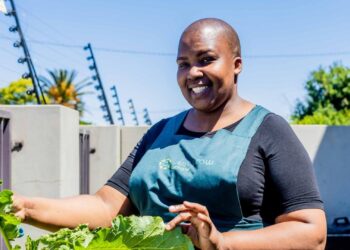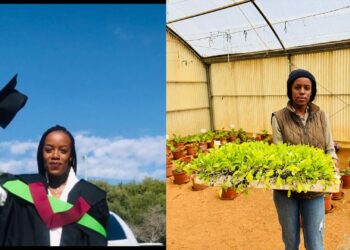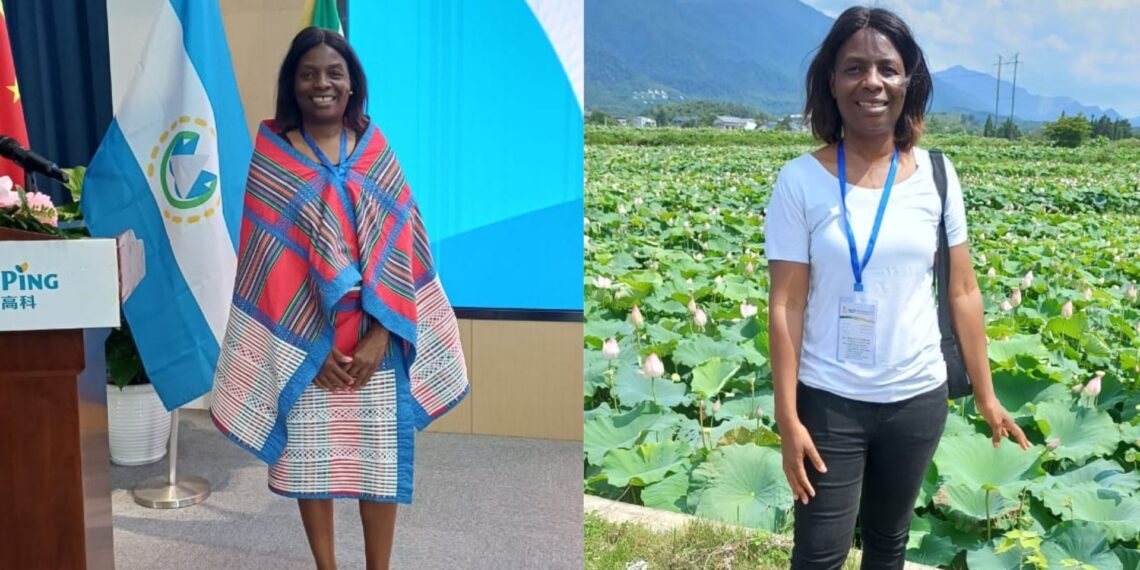
When something does not work out the way you hoped, having a plan B could become your destiny. Ngeletshedzo Makhaga from Ha-Mashau village in Limpopo once dreamed of becoming a medical doctor or a chemical engineer. However, life took her in a different direction, and today she is a crop scientist with the Eastern Cape department of agriculture.
Even though she grew up surrounded by home gardens full of different crops, she never thought it would become her career.
Makhaga was raised by her single mother, Kone Sophie Mashau, but she spent time between families, mainly at her late uncle Griffith Mashau’s home.
She says life at her uncle’s home was more stable because of farming, and this early exposure made her develop a love for it.
Nurturing a love for science and plants
During secondary school, they were taken for career guidance at various universities and schools. “I was exposed to different science-related careers, and I fell in love with science then,” she recalls.
With her dream of becoming a doctor, she applied to Medunsa, but her maths and science results were below the requirements for admission to the MBChB programme.
She adds that her mother, though uneducated, always instilled the value of education in them and wanted the best for her children.
“Seeing how she worked hard to make ends meet as a farmworker, a teller, and finally as a domestic worker gave me the zeal to pursue education and work hard.”
Ngeletshedzo Makhaga

At one point in her life, Makhaga lived at her uncle’s home, a family of teachers. She says, “He would have us plant mango seeds and fetch water every day to irrigate the trees after school.”
Every summer, her uncle would have them work in the garden planting maize, groundnuts, and pumpkins in neat rows.
“I believe this experience planted the seed of my love for agriculture, though I did not realise it at the time,” she says. “It also instilled in us determination, hard work, and responsibility.”
Her uncle’s love for agriculture led to the establishment of Plantmore Nursery, which sells both fruit and flowering trees in Limpopo.
Related stories
- Science meets soil: Agronomist turns manure into climate solution
- Sibongile’s plant passion: Healing crops and feeding Mzansi
- From an apricot tree, a career in agronomy blooms
- Meat inspector Sangcozi’s career is a calling, not justa job
A journey into agriculture
Makhaga landed in agriculture almost by default. She had originally registered for a BSc pre-med programme, planning to pursue an MBChB afterwards. In 1998, she met a friend who introduced her to a BSc degree in soil science at the University of Venda.
Upon completing her undergraduate degree, she applied for a job at the Limpopo department of agriculture but was unsuccessful.
She was then offered an internship programme at the University of Venda, funded by the NRF, under Professor JJO Odhiambo, who was then a lecturer and later became her promoter.
Following this, she decided to pursue a master’s degree and was accepted at Stellenbosch University. However, when she was preparing to leave for Stellenbosch, she received an offer to work as a laboratory technician at the University of Venda and later completed her master’s there.
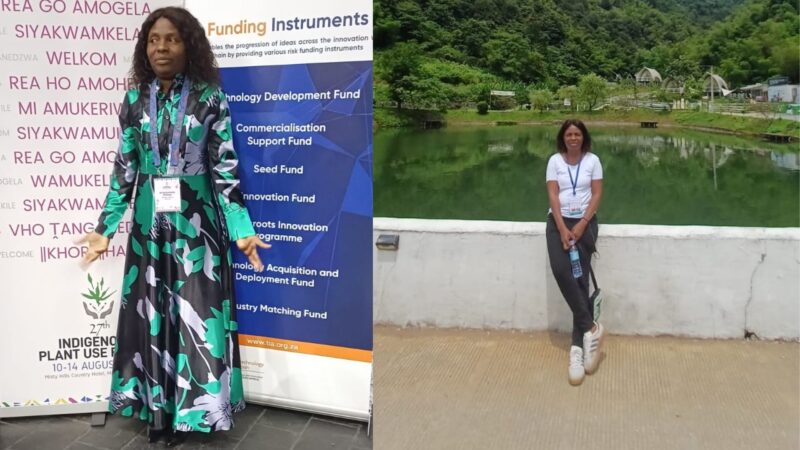
After working at the University of Venda, she lectured at Fort Cox College in the Eastern Cape. Her adventurous nature helped her adapt, though navigating language and working in multiple areas was challenging.
Living in the Eastern Cape since 2006 has allowed her to grow professionally and socially, attending scientific conferences that have built lasting networks and collaborations.
Fertile ground for learning
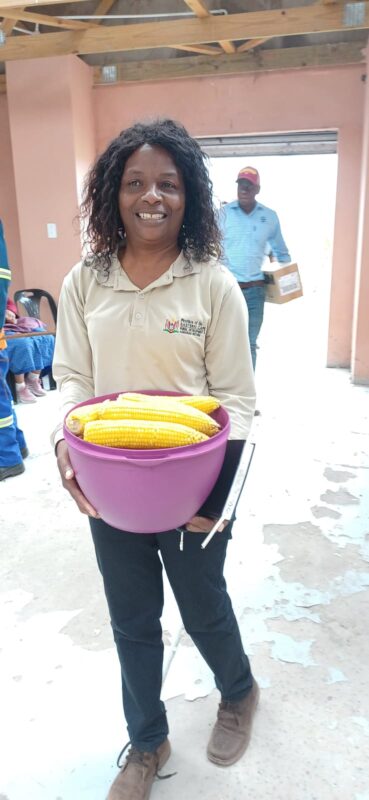
As a soil scientist, Makhaga says her days at work are full of observation and analysis. Field surveys form the core of her work, where she describes soil types, assesses their potentials and limitations, and then writes reports with recommendations for farmers.
She explains that carrying the soil auger and geology hammer, and interpreting soil properties in the field while interacting with farmers, makes her work enjoyable.
“When I give recommendations to farmers and present possible uses, it adds a sense of fulfilment in my heart.”
To young people who are unsure about which career path to follow, Makhaga advises, “Agriculture is a lifelong career, and it will always be a valuable skill. There is wealth behind the dirt, and there are different agricultural skills that one can attain, some of which are indoor-based in laboratories.”
Above all, she explains that the soil and the work in the field require a brain that can contribute to technology that grows every day.
Someone who can relate culturally and linguistically with rural communities is needed, she adds, so that they can translate science in a way that makes sense to farmers.


Photos: Supplied/Food For Mzansi
ALSO READ: Young Limpopo scientist unlocks peperboom’s healing power