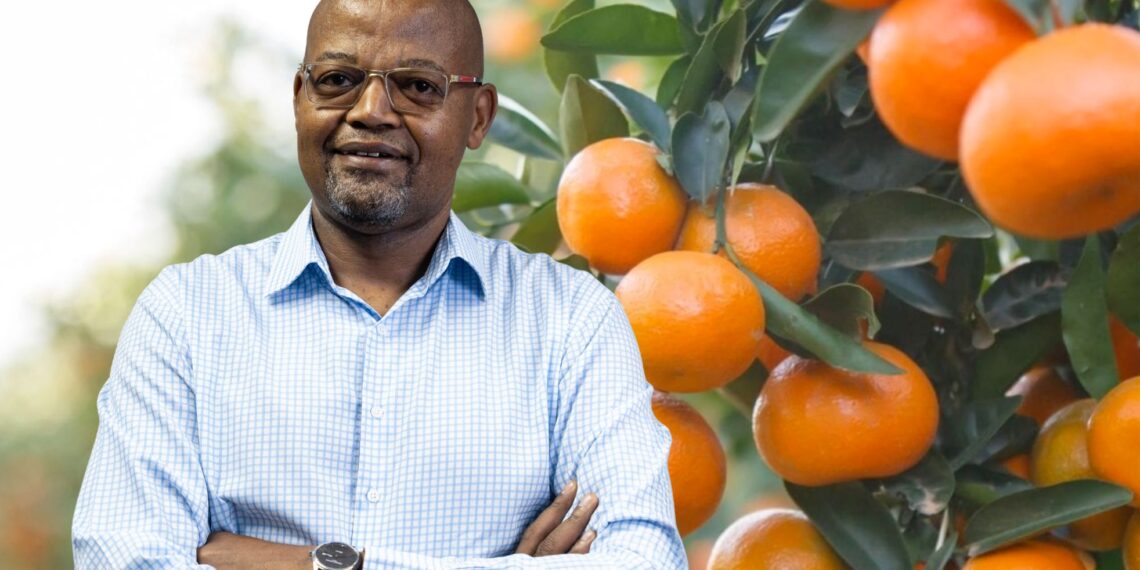
As the US prepares to hold a public hearing on proposed tariffs on Tuesday, 7 July, Dr Boitshoko Ntshabele, CEO of the Citrus Growers’ Association of Southern Africa (CGA), argues that citrus deserves special consideration. He explains why tariff-free trade benefits both South African growers and American consumers.
At a time of heightened global trade uncertainty, the evolving tariff environment between South Africa and the United States is understandably drawing attention.
For the citrus industry, stability in this relationship is central to long-term planning and the livelihoods of tens of thousands of people, and their families, in rural South Africa. But also, greater certainty within this trade environment will better safeguard both producers and consumers.
Current tariff landscape
It is worth taking a look at where US tariffs stand currently. Following a February 2026 ruling by the US Supreme Court, the 30% tariffs previously imposed under emergency powers fell away.
However, these were replaced by a temporary global tariff framework, which currently applies a 10% rate on most imports into the United States until 25 July.
Importantly for citrus, oranges remain exempt from these tariffs and continue to enjoy duty-free access to the US market.
This provided great relief to our growers and to the US consumer market. But, all other citrus categories, including mandarins, grapefruit and lemons, are currently subject to the tariff, with no exemption yet in place.
Currently, a further “Section 301” investigation – focussing on markets who purportedly trade with countries guilty of forced labour – has introduced the possibility of a 12.5% tariff. South Africa is one of the 54 economies being considered for this tariff.
This proposal remains subject to public consultation. The United States Trade Representative will hold public hearings on the proposed measures on 7 July 2026.
A unique trade partnership
In this complex political landscape, one point deserves emphasis: fresh seasonal produce, such as citrus, occupies a unique position in global trade. Its value to the US market should not be underestimated.
South African citrus does not compete with the American season. It complements it. Our export season runs counter to that of the northern hemisphere, meaning that when US orchards are out of production, South African citrus helps keep supermarket shelves stocked.
This continuity plays a measurable role in stabilising supply and reducing price volatility. In this sense, tariff-free trade in fresh produce actively supports US consumers and retailers.
It helps sustain demand for citrus as a category, prevents seasonal supply shocks, and contributes to food security. It is also perfectly aligned with broader public health objectives, given the well-known nutritional value of citrus.
This is particularly important at a time when inflationary pressures remain a concern in many markets. Restricting access to counter-seasonal supply risks creating avoidable price increases for consumers, without generating meaningful benefits for domestic production or employment.
South African citrus exports to the US support thousands of jobs across the American supply chain, from port operations and logistics to distribution and retail.
The same principles that underpin the exemption of oranges should, in logic, be extended to other citrus categories, including mandarins.
South African mandarins are well-received in the US market, with exports having more than doubled in this category, having more than tripled in the past decade.
Why market access matters
At the same time, from a South African perspective, the US will always remain an important market. Exports reflect strong consumer demand and well-established supply chains.
Citrus production in South Africa is projected to continue expanding in the coming years, driven by long-term investment in orchards and farming infrastructure.
This growth will require improved access to a broad range of international markets, including the US, Europe, Asia and the Middle East. No single market can absorb the increase on its own.
South African citrus growers remain focused on the core fundamentals of their business: producing high-quality fruit, sustaining livelihoods, and contributing to the development of rural communities. Increased exports directly enable job creation and economic growth across the regions in which they operate.
For this reason, maintaining and expanding access is essential to our country’s agricultural economy. The US plays a valuable role within this portfolio.
It is also important to acknowledge the context in which global citrus growers are currently operating. The 2026 season has presented a number of challenges, placing additional pressure on the industry.
Rising input costs, linked to ongoing geopolitical tensions in the Middle East, have affected fuel, fertiliser and shipping expenses.
Logistics costs, already elevated in recent years, have increased. In addition, parts of South Africa have experienced severe flooding this winter, impacting production and operations in key growing regions.
These factors combine to create a difficult environment, even as growers continue to deliver high-quality fruit to international markets. This underscores the need for all stakeholders in the global citrus industry to take steps, where possible, to minimise or avoid additional trade-related pressures.
A pragmatic approach to trade in fresh seasonal produce between South Africa and the United States is clearly mutually beneficial. For policymakers in both countries, this presents an opportunity.
By preserving and expanding tariff-free access for fresh citrus, it is possible to support farmers in South Africa, protect jobs across the value chain, and deliver real, tangible benefits to American consumers and retailers.
It is a rare example of trade alignment, where the interests of producers and consumers across borders are not in conflict, but in harmony.
In a time of global trade disruption, partnerships that deliver clear mutual value are more important than ever. Tariff-free trade in fresh seasonal citrus is one such partnership.
- Dr Boitshoko Ntshabele is the CEO of the Citrus Growers’ Association of Southern Africa. The views and opinions expressed in this article are those of the author and do not necessarily reflect the views or positions of Food For Mzansi.
READ NEXT: Cape entrepreneur turns hair struggles into agro-processing gold