Post-harvest management is one of the most critical yet often overlooked aspects of tomato production. Even when farmers plant high-quality seed and achieve excellent yields in the field, poor handling after harvest can quickly reduce quality, shorten shelf life, and lead to financial losses at the market.
Commercial vegetable farmer and agriculturalist Lesego Mohube unpacks the importance of farmers treating post-harvest management as a core part of their production strategy, not simply an activity that happens after harvesting.
“Post-harvest handling is part of the farming business. It is part of management. This is where the farm owner or manager must become involved because it directly affects quality, shelf life, food safety and consistency,” she says.
Proper post-harvest management
According to Mohube, the way tomatoes are handled after harvest can determine whether a farmer makes a profit or incurs losses.
“You may plant an open-pollinated variety while another farmer plants an F1 hybrid. But if your handling is better, your tomatoes might sell faster at the market while the other farmer’s crop struggles.”
Key areas affected by post-harvest handling include:
- Product quality
- Shelf life
- Food safety
- Market consistency
Related stories
- Tomato leaf miner control: Essential tips for farmers
- Termites to tomatoes: Boima’s bold innovations take off
- Strong harvests drive continued demand for farm machinery
- Rising oil prices squeeze SA grain growers ahead of planting season
Food safety is particularly important for farmers selling into formal markets. “Even if you are not certified, try to follow the rules used by farmers who are certified. Remember that people consume the food we produce, so hygiene and safety are extremely important,” Mohube advises.
Follow good agricultural practices
Mohube encourages farmers to familiarise themselves with the standards used in food safety certification programmes such as SA-Gap and QSCert, a management system certification body and training provider specialising in food safety and quality management systems.
These systems help ensure crops are produced, handled and packaged safely. SA-Gap or GlobalGap is a certification that shows you are producing safe and healthy food. It focuses on hygiene, chemical safety and environmental management. Retailers usually require it, but even if you are not certified, you can still follow the guidelines.
Harvest at the right time
The first few hours after harvest are the most critical. “Immediately after harvesting is the most important window. Those first few hours determine the quality and shelf life of the crop,” she says.
Farmers should focus on:
- Harvesting at the correct maturity – Tomatoes should be harvested when they are market-ready to maintain quality and avoid unnecessary handling damage.
- Harvesting during cool hours – Hot temperatures increase water loss and reduce shelf life. “Harvest early in the morning, from about 06:00 until around 08:30. After that, it becomes hot. The afternoon is also suitable because it helps reduce field heat and slows respiration and water loss,” Mohube says.

Handle tomatoes gently
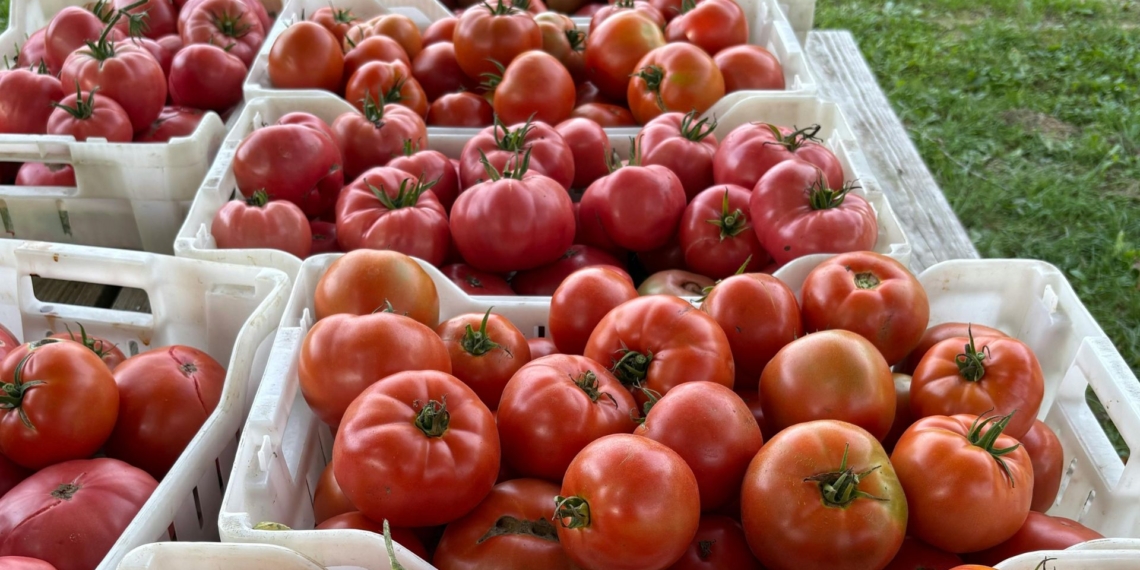
Mechanical damage is one of the biggest causes of post-harvest losses. Mohube advises farmers to train workers to handle crops carefully. “Wear gloves, use scissors and never throw tomatoes into crates. Rather, place them gently into the container.”
She also recommends:
- Using smooth crates to prevent bruising.
- Avoid using rough or damaged containers.
- Increasing labour during harvest, if necessary, to speed up the process.
“If you are in a rush, rather increase the number of workers so that harvesting can be done quickly and the crop can be removed from the field faster.”
Once harvested, tomatoes should be moved out of direct sunlight as quickly as possible. At Mohube’s previous operation in an agri-park, harvested tomatoes were moved directly from the tunnel into a packhouse, where cooling and ventilation helped preserve quality before the produce was sorted and packed.
Manage humidity to prevent wilting
Humidity plays an important role in maintaining freshness. “Humidity is one of the most important aspects when farming vegetables, especially fruiting crops like tomatoes,” she says.
High humidity helps:
- Prevent wilting
- Reduce water loss
- Maintain firmness and freshness
In many crops, optimal humidity ranges between 85% and 95%. “High humidity prevents water loss and keeps the produce firm and fresh, which is very important when the crop will be packaged and transported.”
Sort carefully during packing
Sorting is a crucial step that prevents damaged fruit from affecting healthy produce. Tomatoes should be separated into categories such as:
- Size (small, medium, large)
- Quality
- Disease-affected fruit
- Mechanically damaged fruit
Mohube warns that damaged fruit can quickly lead to decay in a crate. She explains that when a tomato cracks and the crate is not clean, microbial problems can develop. If that damaged fruit is packed together with fresh tomatoes, it can quickly affect the rest of the produce.
She compares this to a familiar saying. “That is why people say one rotten potato can spoil the whole bag. Microbial decay spreads very quickly,” she says.
Reduce post-harvest losses
Mohube shares the following practices to minimise losses:
- Train workers properly – Workers must understand how to handle produce carefully.
- Avoid overpacking – Overfilled crates increase the risk of bruising during transport.
- Do not stack crates too high – Excessive stacking can crush tomatoes at the bottom.
- Prevent workers from sitting on crates – Instead, provide stools or resting areas.
“Workers sometimes sit on crates when they are tired, but that can damage the produce. It is better to provide stools so they can rest without damaging the harvest.”
Clean tomatoes correctly
Not all vegetables should be washed after harvest. Tomatoes, green peppers, and cucumbers, for example, should not be washed, as exposure to water can reduce their shelf life.
Instead, farmers should:
- Use a damp cloth to wipe the produce
- Maintain strict hygiene in the packhouse
“Wash only crops that require it, such as potatoes or butternut, which must be cleaned and dried before storage,” Mohube advises.
Packaging for transport
Packaging depends on market demand, but Mohube often alternates between crates and boxes depending on prices. When using crates, farmers should ensure they are suitable for transporting delicate crops like tomatoes.
“Make sure the crate is smooth at the bottom. If it is rough, place thick plastic at the base to reduce mechanical damage during transport.”
Another important step is monitoring the produce during offloading. “Always watch when your produce is offloaded at the market. You should be part of the process so that you avoid problems later.”
Plan transport carefully
Transport distance plays a major role in maintaining quality. For nearby markets (two to three hours away), normal transport may be sufficient. However, longer distances require extra precautions.
For distant markets, it is important to harvest during the cooler hours, remove the crop from the field immediately, and handle it carefully to avoid bruising, as longer journeys increase the risk of damage. Road conditions can also contribute to post-harvest losses.
“Farm roads are often gravel, not tar. That means the trip may take longer and the produce may move around more,” she says. For journeys exceeding four hours, Mohube recommends using refrigerated transport, as it helps maintain the quality of the tomatoes throughout the trip.
Mohube believes farmers must view post-harvest management as a key part of profitability. The farmer’s responsibility does not end at harvest. Every step, from handling to transport and marketing, affects whether the produce sells well. By carefully managing harvesting times, handling, packaging, and transport, farmers can significantly reduce losses and increase their chances of securing higher market prices.
“At the end of the day, good post-harvest handling supports profitability. It protects the quality of your crop and helps ensure your farming business remains sustainable,” Mohube says.
READ NEXT: Agro-processing: Farmer’s guide to turning crops into cash