Tucked away in the heart of Limpopo’s Mopani District, far from the spotlight and city infrastructure, Martin Boima runs a highly diversified farming operation that includes crops, livestock, and agro-processing.
After completing matric in 2017, Boima, like many young people in rural South Africa, was under pressure to start earning an income.
“I was struggling to generate income, and I was staying with my father. He passed away in 2017 while I was at school. I wanted to go further to study, but I looked at myself and thought, ‘Let me just start something.”
That “something” turned out to be farming. At first, it was simply a means of survival with just one hectare of land, and then he gradually scaled up. “My father left me with 12 hectares. Now I’m on five hectares of the farm, where I’m only doing cash crop farming.”
Although he briefly took on other jobs to raise capital, Boima always returned to the land. “My inspiration was from suffering. I was looking for money. No one taught me how to farm. I just started it myself.”
He never pursued a formal agricultural degree, but his knowledge is grounded in practical experience and short courses he continues to apply in building his agribusiness.

Related stories
- Patience pays off for Limpopo pecan nut farmer
- Fruit farmer times her 124-hectare orchard to perfection
- Former Soweto DJ finds rhythm in sustainable farming
Poultry, livestock, and market-driven crops
Boima’s crop choices are shaped by local market demand. He focuses on fast-growing vegetables like cabbage, spinach, and tomatoes, crops that offer quick returns.
He also runs a stable poultry and livestock operation, raising broilers, layers, goats, rabbits, ducks, and various chicken breeds. He cycles about 500 broilers at a time, increasing to 700 during high-demand periods like Easter. His poultry operation includes a consistent cycle of 2 000 layer hens.
However, rising input costs and difficulty sourcing quality point-of-lay hens present ongoing challenges. On the livestock side, Boima keeps a herd of 40 mixed-breed goats.
While others dream of overseas markets, his focus remains rooted in the local economy, supplying fresh produce to the surrounding communities. He supplies fruit and vegetables to markets and establishments in nearby towns such as Tzaneen, including local hotels.
He recognises the sustainability of serving nearby communities over transporting produce to far-off cities like Pretoria, where additional logistics and transport costs can cut into profits. Local customers, he notes, particularly appreciate the freshness of his produce, especially his eggs.
Boima deliberately steers clear of low-demand crops like okra and prioritises those that will sell. “With the market now, I’m not struggling because things from the farm are high in demand,” he says.
Indigenous innovation with agro-processing
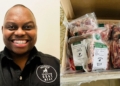
Boima’s agro-processing venture is operated under his brand, Martin’s Nature Care. His product range includes Termite Delight Granola, Marula Crunch Granola, Peanut Powder, and home-baked biscuits, all crafted to empower local communities and promote sustainability.
One of his standout products, Termite Delight Granola, is made from soldier termites blended with honey, oats, and cereal mass. “Termites are high in protein, fibre, and energy,” Boima explains.
His innovation isn’t superficial. Boima has taken his products through rigorous nutritional and microbiological testing with the South African Bureau of Standards (SABS), focusing on food safety, shelf-life, and consumer health.
The Marula Crunch Granola features the nutrient-rich marula nut. His innovative products are sold at the local Spar, fruit and veg shops, and Indian-owned supermarkets.
“These small retailers are doing well. They sell more than the big chains sometimes, because that’s where people shop daily. That’s where the community is,” he says.
Termites and marula nuts are sourced from neighbouring communities, with harvesters trained in food safety and handling.
“I’ve trained over 20 people from around my area – and 15 of them are my core seasonal team,” Boima says.
Termites are most abundant in December and preserved for year-round use, while marula nut processing occurs as supply allows. “The marula team is smaller, about six people. I’ve trained them on hygiene and safety standards, too.”
Since 2022, Boima has partnered with Tshwane University of Technology (TUT) and local TVET colleges to host 20 students annually for year-long practical training on his farm.
Students gain hands-on experience in farming, agro-processing, and quality control, valuable skills for entering South Africa’s competitive agriculture sector. Alongside the students, Boima employs four full-time staff members who manage different areas of the business.

From setbacks to solutions
Boima’s journey has been shaped by trial and error, particularly in navigating the complexities of sourcing appropriate equipment for food production.
In the early stages, he experimented with materials like plastic and wood, only to realise later that stainless steel was required to meet food safety standards.
“Some of it didn’t work due to a lack of knowledge, not knowing what to do, what to use,” he explains. Even when machinery is available, affordability remains a major obstacle; specialised equipment like full packaging machines can cost as much as R250 000.
His solution? Innovate with what’s available and build slowly towards long-term goals.
Boima has received support from several government entities, including the department of agriculture, NYDA, and Seda. “I was also one of the best agro-processors of the year in Limpopo last year,” he shares proudly.
NYDA helped fund equipment purchases, while Seda covered product testing, an essential step for market readiness. “For you to test one product, it’s going to cost you at least R40 000 to R50 000.”
He has also showcased his products at government-supported exhibitions.
He’s in the process of setting up an agricultural school in his community, aimed at teaching learners from nearby schools more about farming. In addition to that, Boima is expanding his biscuit range, and says it is already gaining traction in local markets.
His encouragement to young farmers is, “Farming is good money, even though there are some challenges. We fall, and when you do, just stand up and try again.”


READ NEXT: Agri leaders demand stronger policing in rural communities
Sign up for Mzansi Today: Your daily take on the news and happenings from the agriculture value chain