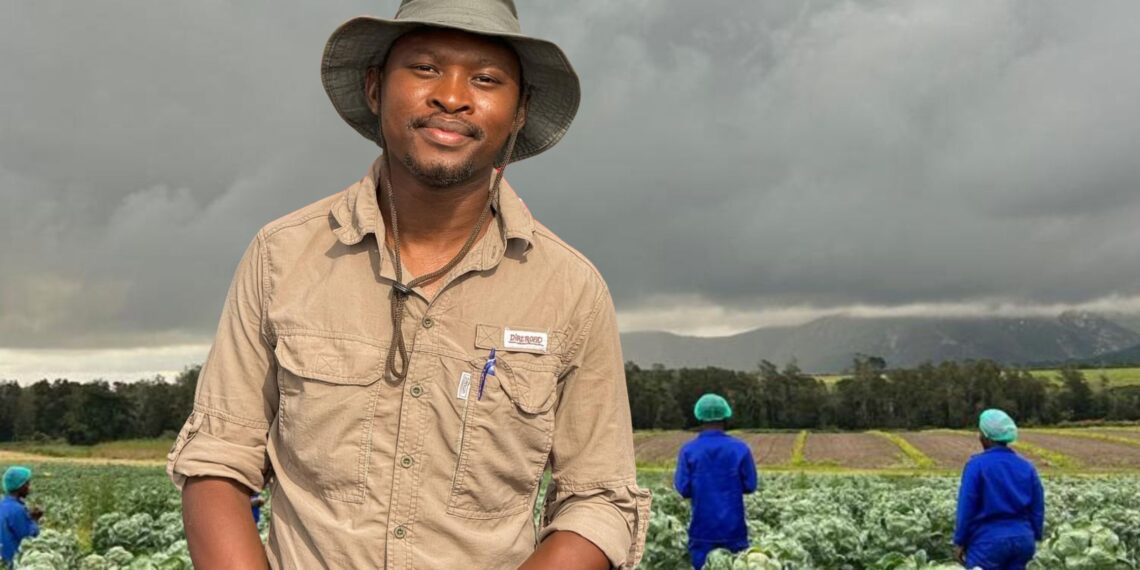
Farmer Andile Ngcobo, invited by Woolworths to experience their Farming for the Future initiative, shares how visiting a cutting-edge farm in the Western Cape transformed his outlook on sustainable farming.
Good farmers don’t just grow food, they grow the future. That’s exactly what Andile Ngcobo, a KwaZulu-Natal farmer and consultant, discovered through Woolworths’ Farming for the Future initiative.
The sustainable agriculture programme launched by Woolworths in 2009, helps farmers grow high-quality produce while protecting natural resources.
As part of the initiative, Ngcobo recently visited Mandalay Farm in George, Western Cape, to explore firsthand sustainable farming practices that prioritise soil health, natural resource management, and long-term agricultural sustainability.
Reflecting on his experience, Ngcobo described it as an eye-opening journey.
A journey of discovery
“Being a part of the Farming for the Future initiative has been such a massive eye-opener for me, more specifically because I’ve always had so many questions around how one can achieve the goal of being able to produce sustainably but also be able to produce at scale on a sustainable level,” he explains.
For a long time, he believed it was nearly impossible due to the challenge of accessing natural resources necessary for using sustainable products in farming.
Ngcobo explains that the initiative has expanded his perspective. He acknowledges that there are moments when one feels confident in having a well-functioning system that ensures consistent production.
However, this experience has inspired him to aim for more by exploring and implementing different practices.
One of the most practical takeaways for him was the significance of building and focusing on a proper compost bank instead of relying solely on fertilisers.
Lessons from Mandalay Farm
Touring Mandalay Farm in George also reinforced key lessons for Ngcobo, particularly the value of producing food naturally. He was struck by the fact that every product on the farm could be eaten straight from the ground without washing, as no chemicals were used in production.
“One of the biggest take-home lessons for me was that as human beings we have to eat in order to sustain ourselves. But there also comes a time of illness that we must cure. Curing an issue is different from creating a system that prevents an issue through chemical treatment,” he notes.
He now sees that the key to sustainability is prevention rather than reactive chemical intervention.
“It’s not to say that you can’t use chemicals, but use them only when it is necessary to cure a problem. But if you prevent the problem by starting out having a sustainable or a regenerative way of doing things in the first place, it’s highly unlikely that you may even have any illness on the farm.”
For Ngcobo, soil health is at the core of sustainable farming. One of the most surprising insights he gained was the importance of measuring oxygen levels in the soil.
“Taking care of your soils means focusing on the water in the soil, but more than anything, measuring the oxygen in the soil. That’s what healthy roots need for plants to grow in a good way. It was a lesson for me because measuring oxygen wasn’t something I previously considered.”
Related stories
- Young manager dreams of owning the whole chain, from farm to fork
- Conservation farming: Dirk embraces ‘freedom to experiment’
The role of soil health
Ngcobo keeps it real about soil health, saying it’s the backbone of farming. Without healthy soil, there’s no food and it is as simple as that. Everything we eat starts from the ground up.
He further explains, “You need to look after the biodiversity below the soil. In fact, there’s more life below the ground than there is above the ground. And the whole ecosystem below plays a vital role in ensuring that we as humans can get food.”
“So you’re just trying your best not to infiltrate that ecosystem with poison, basically. Because, I mean, that’s what chemicals and preventative agricultural methods become. They become poison to the ground.”
Ngcobo now advocates for regenerative practices that preserve soil biodiversity, ensuring long-term sustainability. “The most important thing when it comes to soil health is the fact that it’s the one commodity or natural resource that basically gives life to the food that we eat.”
The future of sustainable farming in South Africa
Ngcobo believes that initiatives like Farming for the Future are essential in driving positive change in South Africa’s agricultural sector. His visit to Mandalay Farm deepened his understanding of how regenerative farming contributes to food security and environmental preservation.
“The conversation that has been ongoing for me for as long as I can remember is: where does our food come from?” he says.
“As consumers, we often take for granted the intricate processes behind food production. But behind every Brussels sprout or celery stalk on the shelf, there’s a long value chain that involves careful planning, sustainable practices, and a commitment to environmental stewardship.”
Ngcobo warns that neglecting soil and water puts the future food supply at risk. He believes farmers must adopt a forward-thinking mindset that integrates sustainable practices into everyday farming.
“It takes a lot of compassion and careful thinking around the practices that ensure we can consistently get products onto the shelf. It’s about ensuring that the farming methods we use today can sustain future generations.”
Ngcobo is committed to spreading awareness about sustainable farming through his social media platforms and professional work. “I’ve tried for a long time to create a platform where I don’t just show the holistic lifestyle I live but actually highlight the work that goes into farming,” he explains.
He urges more farmers to embrace regenerative practices, reminding them that every decision made today impacts the agricultural landscape of tomorrow.
“There are so many ways to get educated about where our food comes from, how it’s produced, and how we can protect our environment while feeding our people.”
READ NEXT: Farming smarter: Livestock, crops & game, Dwayne does it all
Sign up for Mzansi Today: Your daily take on the news and happenings from the agriculture value chain.