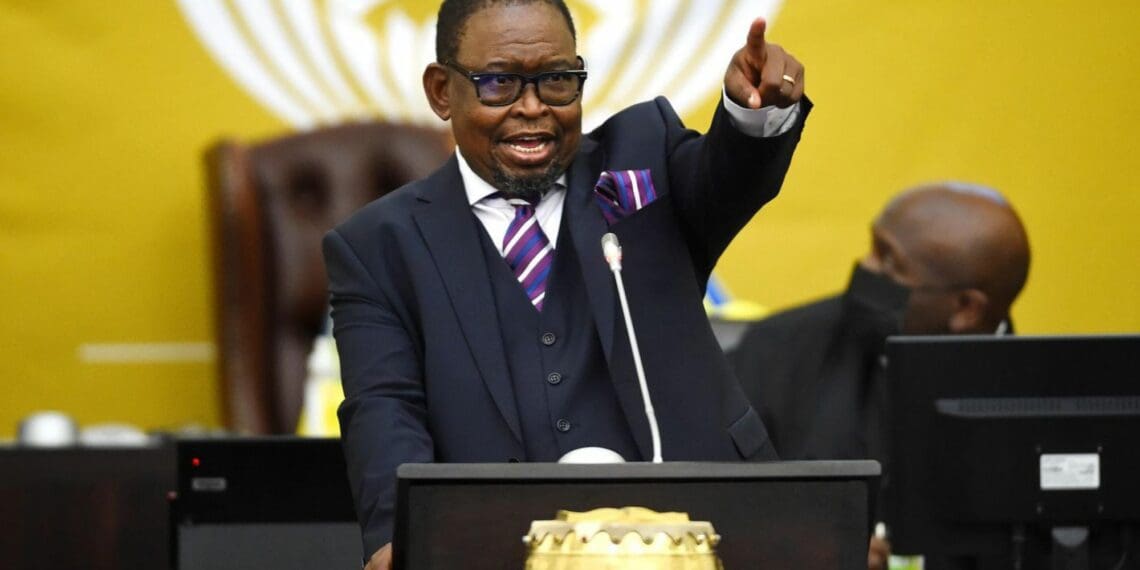
In a much-anticipated third budget speech by the minister of finance, Enoch Godongwana, he reaffirmed his department’s commitment to sustainable economic growth, job creation, and infrastructure investment, offering several notable developments to South Africa’s farming community.
Acknowledging the public debate sparked by a proposed VAT increase earlier this year, the government has backtracked, confirming the rate will remain at 15%.
“This decision reflects our commitment to listen to South Africans and to all the political parties represented in this house. While the reversal leaves a funding gap for new programmes, the budget still supports critical investments,” he said.
The most direct impact on farm operations may come from fuel prices. The minister confirmed the first general fuel levy increase in three years, “From the fourth of June this year, the general fuel levy will increase by 16 cents per litre for petrol, and by 15 cents per litre for diesel,” he said.
Energy, water, and logistics
Godongwana revealed that non-interest expenditure will grow by an average of 5.4% over the next three years, 0.8% in real terms. Notably, 61 cents of every rand of consolidated, non-interest expenditure is allocated to the social wage, funding essential services such as electricity, water, education, healthcare, housing, and social grants.
“This budget invests over R1 trillion in critical infrastructure to lift economic growth prospects and improve access to basic services. To achieve this, government plans to reduce additional spending by R68 billion over the medium term, mostly by trimming unallocated provisional funds. Baseline allocations across departments and spheres of government will remain largely unchanged,” he said.
Related stories
- Limpopo targets agricultural growth in bold R1.9-billion budget
- ‘Tell the truth’: Ramaphosa heads to US for critical Trump meeting
Despite the constrained fiscal environment, the Treasury has outlined a path towards stability, projecting a primary surplus and aiming to contain government debt, which is expected to peak at 77.4% of GDP in 2025/26.
The second phase of Operation Vulindlela will continue focusing on reforms in energy, water, and logistics, all key to agricultural productivity.
These reforms are also aimed at addressing spatial inequality, a concern in rural land development, with plans to accelerate the release of state-owned land, clear housing title deed backlogs, and reform low-cost housing regulations.
No increase in sugar tax
The chairperson of the South African Canegrowers Association, Higgins Mdluli, welcomed the decision by the finance minister not to enact any further increases in the health promotion levy, or sugar tax, in his budget.
“The sugar tax has been nothing but destructive for South Africa. While the Nedlac study demonstrated concrete proof of job losses, no evidence has been provided to show the tax has reduced obesity or improved the health of South Africans in any way.
“Agricultural jobs are critically important to the stability of South Africa and to making sure that we reduce rural poverty and hunger. SA Canegrowers will continue to strive for an end to this job-killing tax, calling on the government to prioritise desperately needed economic growth and jobs instead,” he said.
READ NEXT: SA leads G20 agricultural sustainability reforms
Sign up for Mzansi Today: Your daily take on the news and happenings from the agriculture value chain.