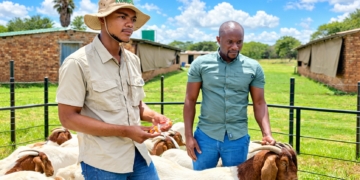
The future of farming demands embracing technology while prioritising human relationships and collaborations. This was the key message from speakers during the Cape Agritech Connect 2025.
Hosted by the Stellenbosch Network and Stellenbosch University’s Launch Lab, the event brought together leading voices in agriculture, technology, and policy to explore the future of food production and rural innovation within the Western Cape.
A packed programme of panel discussions, tech showcases, and collaborative dialogues painted a clear picture: the future of farming lies at the intersection of innovation, cooperation, and systemic transformation.
Daniel Maritz of FutureFit Agri Africa Ltd. opened with a strong message during a panel on precision agriculture, underscoring the urgency of technological adoption.
“Technology is no longer a future consideration, it’s a present imperative,” Maritz said, emphasising that AI alone is expected to attract $7 trillion in investment over the next five years. His message was blunt: farmers who fail to evolve risk becoming obsolete.
“Technology is a big disruptor at this point… If we stand still and don’t take notice, it’s going to fundamentally change how we farm, and we’ll be left behind,” he said.
Maritz warned that by 2030, there will be two types of businesses, possibly even two types of farms. “Those that run as traditional operations, and those that integrate technology, new business models, and artificial intelligence.”
He explained that agriculture is on the verge of a major change in how ecosystem-based business models are viewed. “It’s no longer just about producing more. It’s about producing smarter, and ensuring that agri-businesses are tech-enabled from soil to shelf.”


Technology alone not the silver bullet
Tara Southey, the founder and CEO of Terraclim, reminded the audience during a discussion on digital platforms and data integration about the future of farming.
“The future of agriculture isn’t just about data and AI. It’s about trust, collaboration, and relationships,” Southey said.
With a background in research and entrepreneurship, she stressed that while a wealth of agricultural data exists, especially in open-source environments, the missing link is effective partnership.
“The real challenge is not access, but how we build the right partnerships to put that data to work.”
Southey highlighted the importance of cultivating trust, particularly with farmers who remain hesitant to share data due to concerns over misuse.
“Farmers are still very resistant to sharing their data, and understandably so. There’s real concern around how that data will be used. But for farmers to feel secure enough to share, we need to build strong, transparent partnerships that guarantee both data security and value,” she said.
Related stories
- Biotechnology offers hope for Africa, but politics hold it back
- How drip technology solves irrigation challenges and boosts yields
- Tech & trade: Youth urged to redefine farming in Africa
Local government as an enabler
Local governance was also a key topic, with Mynard Slabbert, deputy mayor of Stellenbosch Municipality, offering a clear-eyed view of the government’s role in agricultural innovation. “If you look at how local governments should interact with agriculture and technology, it is important to consider the legal framework in which local government operates,” Slabbert explained.
Citing constitutional and legislative mandates, he emphasised that while municipalities are not tasked with managing agriculture directly, they play a crucial enabling role.
“Our core mandate is to deliver services. From there, our responsibility is to regulate where needed and to create an environment where agriculture and technology can thrive.”
The conference culminated in a forward-looking session with Hanli Brink from the Stellenbosch Network, who unveiled the Cape AgriFuture Cluster.
Drawing on international best practices, Brink described the cluster model as a way to drive sector-wide innovation through collaboration between companies, research institutions, investors, and government.
“What we’d love to achieve is the creation of an agri-cluster, a health cluster, and potentially a clean-tech cluster.
“By working collaboratively, clusters help turn ideas into real-world solutions quicker. They support the commercialisation of agri-innovation, build visibility for emerging ventures, attract investment, and strengthen both local food systems and export capacity.”
The Cape AgriFuture initiative plans to host a dynamic calendar of events across the Western Cape, from Stellenbosch to Ceres, including AI-in-agriculture showcases, matchmaking events for agribusinesses, and co-design workshops that bring together farmers and technologists.
“Why do clusters and networks work?” Brink concluded. “Because they rely on shared ownership, strong leadership, professional management, relevance to industry needs, and above all, cross-sector collaboration.”
The event was made possible by the generous support of its sponsors: Capitec as the main sponsor, alongside Von Seidels, South Africa Wine, Finance Isle of Man, and Stellenbosch University Technology Transfer & Innovation.


READ NEXT: Protect your farm: Legal landmines you can’t afford to ignore
Sign up for Mzansi Today: Your daily take on the news and happenings from the agriculture value chain.