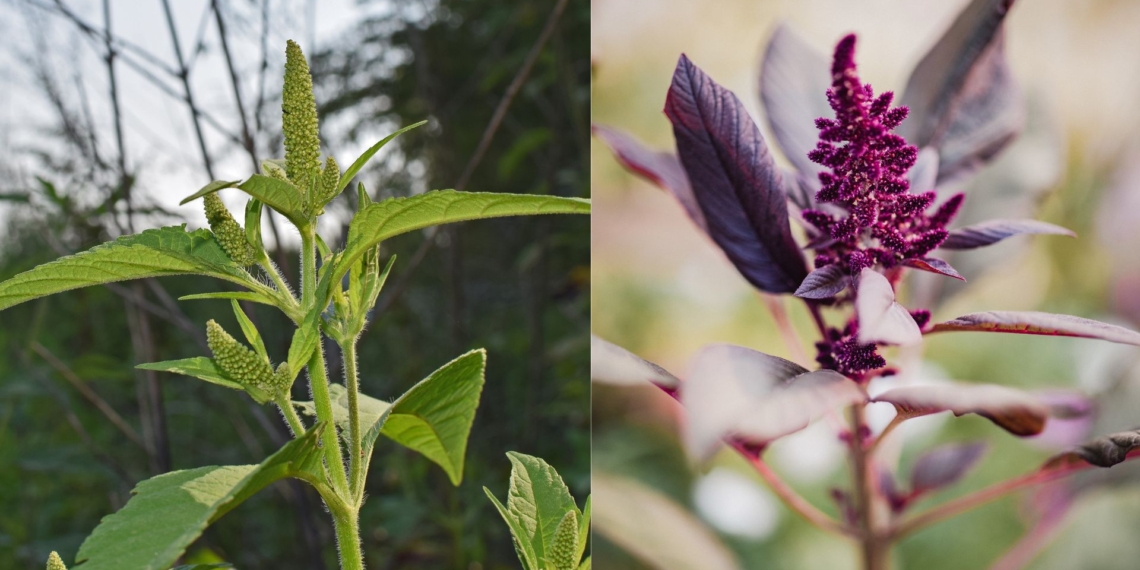
Amaranth is one of Mzansi’s indigenous crops with strong nutritional and agronomic potential, yet it remains on the margins of the market. It has not secured a meaningful retail presence, and production is still largely small-scale.
The real conversation here is not just about market access, it is about how we reintegrate indigenous crops into our food system and heritage. Because while people may know amaranth, its true value is still not fully recognised.
Farming with amaranth, Seniren Naidoo, the founder and director of Mandastone Farms in KwaZulu-Natal, says the biggest challenge is moving beyond the niche market and positioning amaranth as a mainstream product.
He explains that amaranth can be used as a leafy vegetable, similar to spinach, and as a staple with potentially higher nutritional value. However, because it is not widely known outside indigenous communities or those who grew up consuming it, it still lacks broader appeal.
READ NEXT: Amaranth ambitions: Naidoo builds empire on KZN hilltop
High value, low visibility crop
Naidoo says the market has largely been built through communities, where observing people consuming the crop created a starting point.
“Research then pointed out to the crop actually being a protein-rich grain, which has gained huge traction internationally.”
Furthermore, he says amaranth remains a niche market and requires a gradual approach to growth. Until more market opportunities are created and consumer confidence increases, significant expansion will remain limited.
“My advice is for farmers to consider amaranth grain opportunities, as this is also a viable market.”
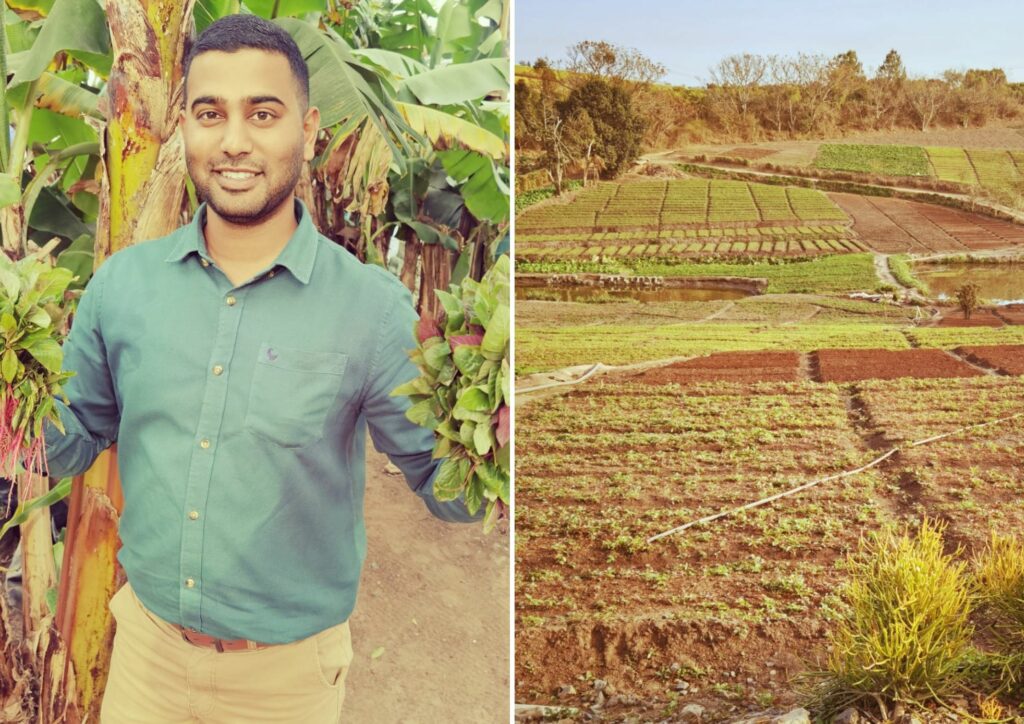
With a family history of farming amaranth for over 35 years, and his own experience of about 15 years, Naidoo says they have not yet been able to penetrate retail markets.
“Haven’t had that opportunity yet, as the awareness of amaranth for consumption is lacking in the non-traditional markets.”
Seniren Naidoo
He emphasises that awareness remains a key barrier. “How many people know amaranth as a substitute for spinach, or know how to prepare it?”
The answer, he says, is very few. Many are still unaware of its nutritional value.
“As a food item, there needs to be more awareness. Once consumption increases, stores will want to actively supply it to the public, and in turn, it creates market access.”
Naidoo tells Food For Mzansi that there is still no scaled supply chain for amaranth. At present, he relies on a personal value chain, which requires greater visibility and support to reach critical mass and enable growth.
Related stories
- Amaranth: Explore the farming potential of this indigenous crop
- E Cape entrepreneur takes amaranth to wider market
- Gqeberha agripreneur turns backyard into thriving medicinal hub
- Reviving indigenous crops in Mngeni: Smallholders grow food and hope
Urban demand grows, but awareness lags
With increasing migration from rural to urban areas, there is growing market potential for amaranth in urban spaces, says Simphiwe Mhlontlo, scientific manager of agronomy research at the Dohne Agricultural Development Institute in Stutterheim, Eastern Cape.
Mhlontlo says there exists a “lack of awareness campaigns promoting consumption of indigenous vegetables and making people aware of their nutritional benefits”.
He explains that amaranth is highly seasonal, performing best in summer when days are longer. As the season shifts into autumn and daylight hours shorten, the plant begins to flower, which affects its taste.
“This is why most people prefer to eat it whilst its leaves are still young and tender.
“It is highly perishable; therefore, innovative methods to keep it succulent for longer periods are needed.”
Simphiwe Mhlontlo
Not just a ‘women’s crop’
Furthermore, he notes that stigma remains a challenge, with the crop often associated with poverty or referred to as a “women’s crop”, as women traditionally gathered it from the wild.
“Some do not see the purpose of cultivating the crop as they perceive it will grow naturally.”

According to Mhlontlo, buyers prioritise tenderness, with taste also playing a key role.
For this reason, leaves should ideally be harvested between 30 and 60 days after emergence. Farmers who actively cultivate the crop are more likely to meet these quality expectations.
“Because of seasonality, the harvested leaves should be properly packaged into containers that will preserve them in their original state with the same taste in order for them to be available all year round.”
Mhlontlo says research has played a significant role in improving the crop, with better genetic material, such as seed, now available in the formal market. However, stronger awareness campaigns are still needed to promote and position the crop more effectively.
READ NEXT: Matcha mania: The green tea trend taking over Mzansi