Wednesday, April 22, 2026
SUBSCRIBE
21 GLOBAL MEDIA AWARDS
Food For Mzansi
  • News
  • Changemakers
  • Lifestyle
  • Farmer’s Inside Track
  • Food for Thought
No Result
View All Result
  • News
  • Changemakers
  • Lifestyle
  • Farmer’s Inside Track
  • Food for Thought
No Result
View All Result
Food For Mzansi
No Result
View All Result
in News

Global food crisis depends on next planting season

Food shortages are not the immediate threat, say agricultural experts. Rising fuel prices may hit households first by increasing transport and distribution costs. With farmers preparing for the next crop cycle, weather and planting decisions in 2026-27 will be critical to global food supplies

by Wandile Sihlobo
22nd April 2026
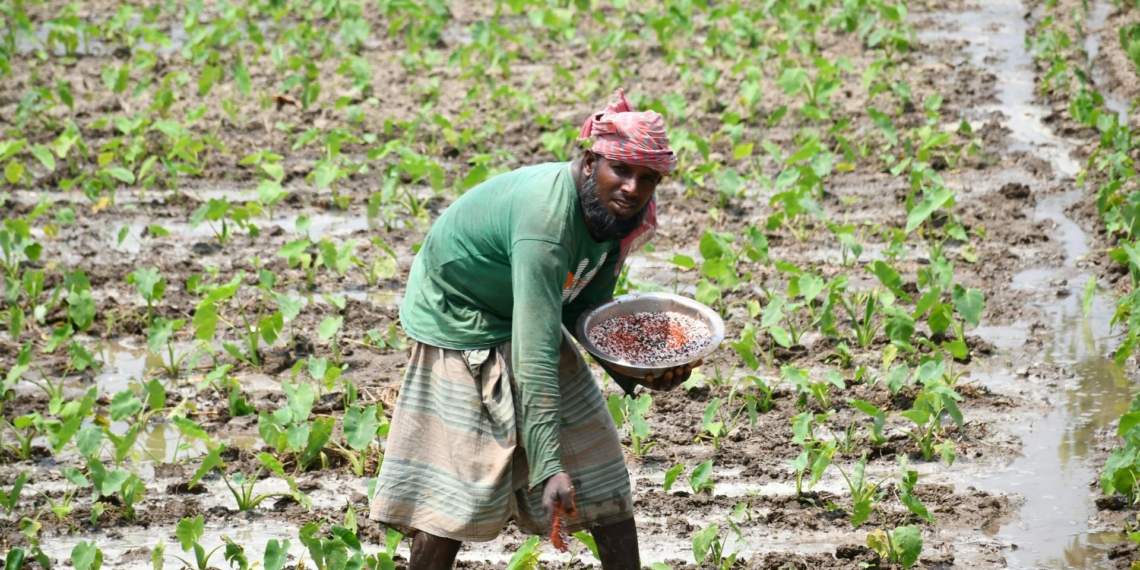
Global food supplies remain stable, but the 2026-27 planting season could determine future food security as El Niño, rising fertiliser costs and fuel prices threaten crop production worldwide. Photo: Pexels

Global food supplies remain stable, but the 2026-27 planting season could determine future food security as El Niño, rising fertiliser costs and fuel prices threaten crop production worldwide. Photo: Pexels

Share on FacebookShare on TwitterShare on WhatsApp

Farmers in most regions of the Northern Hemisphere will begin planting their 2026-27 crops in May, and in previous seasons, they enjoyed plentiful harvests due to favourable weather conditions and affordable inputs. Thus, the world is currently awash with affordable grains and oilseeds.

However, the 2026-27 season, which begins next month, may not be as favourable as the last one. Fears of El Niño, which could have varying effects on production across different areas, are among the risks.

Higher fertiliser and fuel prices due to the Middle East conflict are another concern. Additionally, generally lower global agricultural commodity prices amid rising input costs could also disincentivise planting in some regions.
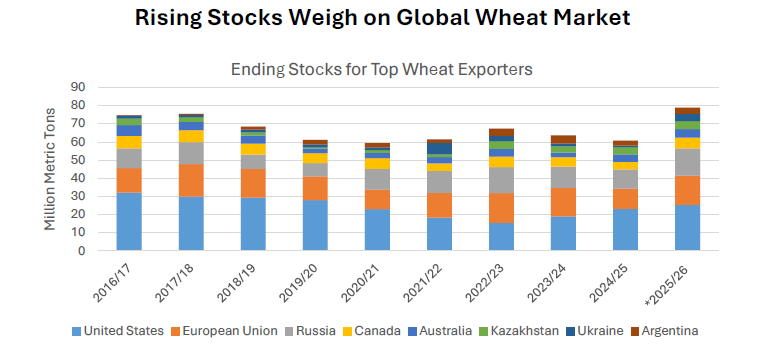
Still, it is too early to assess how much these factors will weigh on the 2026-27 crop. We do not know how these factors will influence farmers’ planting decisions and the final harvest for the 2026-27 crop in the Northern Hemisphere.

The outcome here will matter the most for global food supplies and will provide a key insight into whether the world is indeed heading towards a “global food crisis”, as others have suggested in their writings.


Related stories
  • Lesotho’s food crisis threatens SA’s border security
  • SAHRC urges action on EC food crisis amid rising malnutrition
  • Farmers urged to embrace agroprocessing for growth
  • Why insurance brokers must speak the ‘language of the farmer’

For those in the Southern Hemisphere, planting summer crops will only commence in October, with similar considerations as for farmers in the Northern Hemisphere. Whether the world is heading towards a “global food crisis” also depends on farmers’ planting decisions, weather conditions, and ultimately the season’s harvest.

In the near- to medium-term, food supplies are sufficient, and I think it is very early to make any bold statement about the path ahead until there is some clarity on the points we list above.

Policy consideration

  • In this uncertain environment, the main agricultural-producing countries should avoid imposing restrictions on product exports to ensure these food supplies reach key importing countries.
  • Equally important is the consideration by major fertiliser and agrochemical exporting countries to practise restraint and avoid imposing export bans on products due to rising prices.
  • Imposing export bans on agricultural inputs and on current agricultural supplies would be the catalyst that would lead the world into a “global food crisis”. But if countries avoid this practise, the world may be able to navigate this uncertain environment.

In essence, the real issue for households in the near term is higher fuel costs, not food supply shortages per se. Fuel significantly impacts the food supply chain through the distribution of raw materials (agricultural commodities) and processed goods to retailers.

Nonetheless, large price hikes should be avoided, as agricultural commodity prices are generally under pressure and may somewhat compensate for the rising fuel prices.

In essence, there are ample agricultural supplies for now, but from mid-2027, a lot depends on the planting seasons, which start next month in most Northern Hemisphere regions and in October in Southern Hemisphere regions. 

The outcome of the 2026-27 will be a main determinant of whether the world enters a period of food crisis. 

Still, poor countries that rely on imports may face challenges, especially with rising shipping costs. Still, the current environment is far better than if we encounter production difficulties in the season that is to start.

READ NEXT: Updated plant health protocols open doors for SA citrus in China

Sign-up for the latest agricultural news delivered straight to your inbox every day with Mzansi Today!

Wandile Sihlobo

Wandile Sihlobo is the chief economist of the Agricultural Business Chamber of South Africa (Agbiz). He is also a senior research fellow at the department of agricultural economics at Stellenbosch University. He wrote “A Country of Two Agricultures: The Disparities, the Challenges, the Solution” and “Finding Common Ground: Land, Equity and Agriculture”.

Tags: Commercialising farmerfood insecurityFood pricesInform meWandile Sihlobo

Related Posts

‘Our power, our planet’: Farmers innovate to protect soil and water

‘Our power, our planet’: Farmers innovate to protect soil and water

22nd April 2026
Clock ticks for Tongaat Hulett as April liquidation deadline looms

Tongaat R200m lifeline brings relief to KZN growers

21st April 2026

Backing women farmers can boost Africa’s agrifood systems

This week’s agri events: 20 – 24 April

Biosecurity is now a make-or-break for pork producers

Updated plant health protocols open doors for SA citrus in China
Why insurance brokers must speak the ‘language of the farmer’

SA’s apple industry marks 364 years with rare tree planting

The new nanobubble aquaponics pilot plant at De Grendel School of Skills, unveiled by the Technology Innovation Agency and Fine Bubble Technologies. Photo: Supplied/Food For Mzansi
News

This week’s agri events: 20 – 24 April

by Tiisetso Manoko
20th April 2026

Agricultural events to look out for include the Bloem Show, livestock auctions, an aquaponics course by Agri Skills Transfer, and...

Read moreDetails

Beyond the oil: How value addition saved a geranium farm

19th April 2026
Biosecurity is now a make-or-break for pork producers

Biosecurity is now a make-or-break for pork producers

18th April 2026
Updated plant health protocols open doors for SA citrus in China

Updated plant health protocols open doors for SA citrus in China

18th April 2026
Growing more than food: Ngxanga shapes future farmers

Growing more than food: Ngxanga shapes future farmers

17th April 2026

African organic brands shine at Cape Town expo

Idle farmland, hungry nation: A wake-up call for SA

SA’s apple industry marks 364 years with rare tree planting

This week’s agri events: 20 – 24 April

Updated plant health protocols open doors for SA citrus in China

Join Food For Mzansi's WhatsApp channel for the latest updates!

JOIN NOW!
Next Post
‘Our power, our planet’: Farmers innovate to protect soil and water

‘Our power, our planet’: Farmers innovate to protect soil and water

THE NEW FACE OF SOUTH AFRICAN AGRICULTURE

With 21 global awards in the first six years of its existence, Food For Mzansi is much more than an agriculture publication. It is a movement, unashamedly saluting the unsung heroes of South African agriculture. We believe in the power of agriculture to promote nation building and social cohesion by telling stories that are often overlooked by broader society.

‘Our power, our planet’: Farmers innovate to protect soil and water

Global food crisis depends on next planting season

PPECB explains ‘passports’ to export success for SA farmers

African organic brands shine at Cape Town expo

Idle farmland, hungry nation: A wake-up call for SA

Tongaat R200m lifeline brings relief to KZN growers

  • Awards & Global Impact
  • Our Story
  • Contact Us
  • Cookie Policy
  • Privacy Policy
  • Copyright

Contact us
Office: +27 21 879 1824
News: info@foodformzansi.co.za
Advertising: sales@foodformzansi.co.za

Contact us
Office: +27 21 879 1824
News: info@foodformzansi.co.za
Advertising: sales@foodformzansi.co.za

  • Awards & Global Impact
  • Our Story
  • Contact Us
  • Cookie Policy
  • Privacy Policy
  • Copyright
No Result
View All Result
  • News
  • Changemakers
  • Lifestyle
  • Farmer’s Inside Track
  • Food for Thought

Copyright © 2024 Food for Mzansi

This website uses cookies. By continuing to use this website you are giving consent to cookies being used. Visit our Privacy and Cookie Policy.