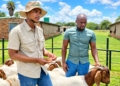
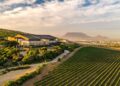
In the heart of the Mossel Bay region, a seventh-generation farmer, Johann Müller, is leading a revolution in agriculture. Returning to his family’s farm after 16 years away, he embarked on a journey of transformation through conservation agriculture that not only revitalised his farm but also brought hope to the entire district.
Müller passionately affirms, “You have to farm in harmony with nature, or she’s going to kick you off.” His realisation that conservation farming could work for the district fuelled his determination to make a change.
His farm serves as a testament to the power of conservation agriculture. The district had traditionally been focused on sheep farming and had struggled due to its marginal location in the Southern Cape. Müller reflects, “This is not an easy area, it is marginal, but if you follow the right practices we also have a place in the grain industry.”
Paying back the money from the soil
One of the key aspects of conservation agriculture is moisture retention during the summer months. Fields are covered with plant material, never grazed by animals, allowing the soil to maintain moisture levels. “This cover is what carries us through those difficult months,” he says.
He emphasises the importance of risk management in their farming practices, stating, “Every year I borrow a bunch of money and I put things in the soil. I trust and believe it will rain and that we’ll get a harvest to pay back the money.”
For Müller, sound farming practices are not just about profitability but also about sustainability. He believes, “If you don’t do your 10% right, that 90% is meaningless.” Through conservation agriculture, they don’t rely solely on record-breaking rainfall but can achieve sustainable yields even in challenging years.
Müller’s transition from livestock to conservation agriculture was not without challenges. It meant shifting from a profitable livestock operation to long-term, crop-based farming. He recalls, “Initially it was very difficult taking that cash flow out of the business and replacing it with something long-term that you have to wait for. It was difficult.”
Conservation equals long-term sustainability
Looking ahead, Müller envisions a future where conservation agriculture ensures the long-term sustainability of farming. He believes, “This contributes to the knowledge that in up to 100 years from now we’ll still be able to produce food for the people in our country.”
The impact of conservation agriculture goes beyond a single farm. It has breathed new life into the Mossel Bay district, offering hope and stability to the community. “Conservation agriculture gave this district a second wind. I think there is still huge potential in the district to do even better,” Müller says.
His journey in conservation agriculture serves as a beacon of hope for farming in South Africa. It shows that by working in harmony with nature, even the most challenging environments can thrive, and the future of agriculture can be both sustainable and prosperous.
- Tune in for Food For Mzansi and SSK’s brand-new Farming with nature television series, airing from Monday, 18 September to Sunday, 1 October at 19:30 on People°s Weather, DStv channel 180 and Openview channel 115. There is also a repeat broadcast at 21:00 on the same evening. For a comprehensive weekend catch-up, stay tuned for the omnibus edition airing on both Saturdays and Sundays.
READ NEXT: ‘The future of agriculture is already here’
Get Stories of Change: Inspirational stories from the people that feed Mzansi.