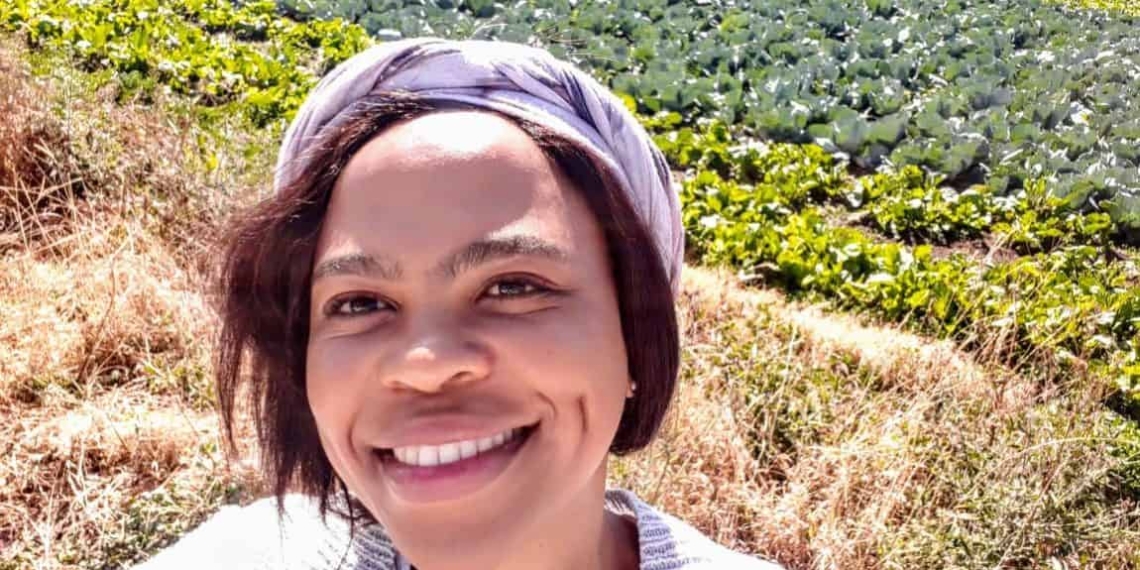
 Karabo Rampete’s name could be a synonym for perseverance. After being diagnosed with a liver disease, this feisty 32-year-old refused to sit back and watch her health deteriorate. Instead, she turned her illness into motivation to pursue her agricultural aspirations. Today she runs a successful farm in Rustenburg, Gauteng, growing indigenous vegetables that she believes saved her life.
Rampete was raised by a farmer, her dad, who longed for all three of his sons to get involved in the family business. Unfortunately, they weren’t interested, so he turned to Rampete, who is the third eldest in the group. But Rampete wasn’t keen on the idea either. “I’ve always had a deep appreciation for fresh produced foods, but even this wasn’t enough to get me digging in the soil on a fulltime basis,” she admits.
Rampete only started farming in May last year after resigning from her nine-to-five job at the Tshwane University of Technology (TUT). There, she worked as an innovation practitioner.
After being diagnosed with liver disease, Rampete started eating indigenous vegetables like Thepe (a wild edible plant also known as Amaranthus that is harvested for its high nutrients), beetroot morogo (green leafy tops of beetroot) and African nightshade (an erect plant growing around 60cm tall that is used as a food or medicinally). These indigenous vegetables, Rampete complemented with other produce.

“Because my immune system was compromised, I made the decision to incorporate indigenous vegetables into my diet. I calculated that because of the properties that are in these vegetables it would help fight the disease,” Rampete explains.
Rampete believes in the healing properties of indigenous vegetables and not conventional medicine. “If we look back on the era of our parents and grandparents, they were raised on these crops and they lived long. I chose to revert back to my ancestral roots and eat the food they ate,” she says.
Before being diagnosed, friends and family of the Rampetes noticed her skin colour changing and she was also experiencing unusual headaches and apatite loss.
“It was a scary time for me, and I would sometimes even dream of dying. Sometimes, the sight of a pimple would send me into a panic,” Rampete recalls.
Leading a healthy lifestyle can often have financial implications and she learned this the hard way. By growing her own vegetables, she was able to cut down on food expenses. “When doctors tell you to eat clean food without chemicals, you think of Woolworths,” she laughs. “I had to rethink my new diet because I would spend about R5 000,00 on food every month.”
With this in mind, Rampete then reverted to growing her own vegetables in her father’s garden. Initially, Rampete started with spinach for her own consumption, but when she started producing more than what she could consume, her instinct for business kicked in and she resigned from TUT.

One day, shortly after her resignation, Rampete approached the manager of a local Spar in her area with much zeal and determination. She was ready to talk business. “I walked in there with my bunch of spinach and asked if I could supply them,” she says,
And that was it. The birth of an agripreneur and managing director of African Food Holdings. She started off supplying Spar with 60 bunches but pushed them to take more. “Imagine, I was pushing them to increase their order without even having the capacity to supply more,” Rampete explains.
Today, the agripreneur supplies two Spar outlets with 500 bunches per week and two Food Lovers Markets with 4000 bunches per month. Weekly, Rampete also delivers 50 bunches to a local supermarket in Rustenburg.
In addition to spinach and indigenous morogos, Rampete also produces cabbage on two hectares.
Farming with cabbage has proven to be a challenge for Rampete, as she says these require very specific soil conditions. She warns that she only got it right this year and that they are not her favourite crop to grow. “They do however bring in a lot of money for me. At the moment these crops sustain me and will get me to where I want to be,” she explains.
Rampete says, people thinks she’s weird for believing in the healing properties of indigenous vegetables and not conventional medicine, but this does not faze her at all. “I want to be an advocate of clean, good food. I don’t see myself as a big producer, I see myself as a producer of food that has impact and it starts with indigenous vegetables,” she adds.
The agripreneur says she started small and encourages other young farmers to do the same. “Farmers should stop squealing about struggling to access markets. I’ve learnt that if I want access to markets, I need to make sure that it happens, not others. You need to open those doors. Knock first, and if it doesn’t work, kick it,” she says with laughter.