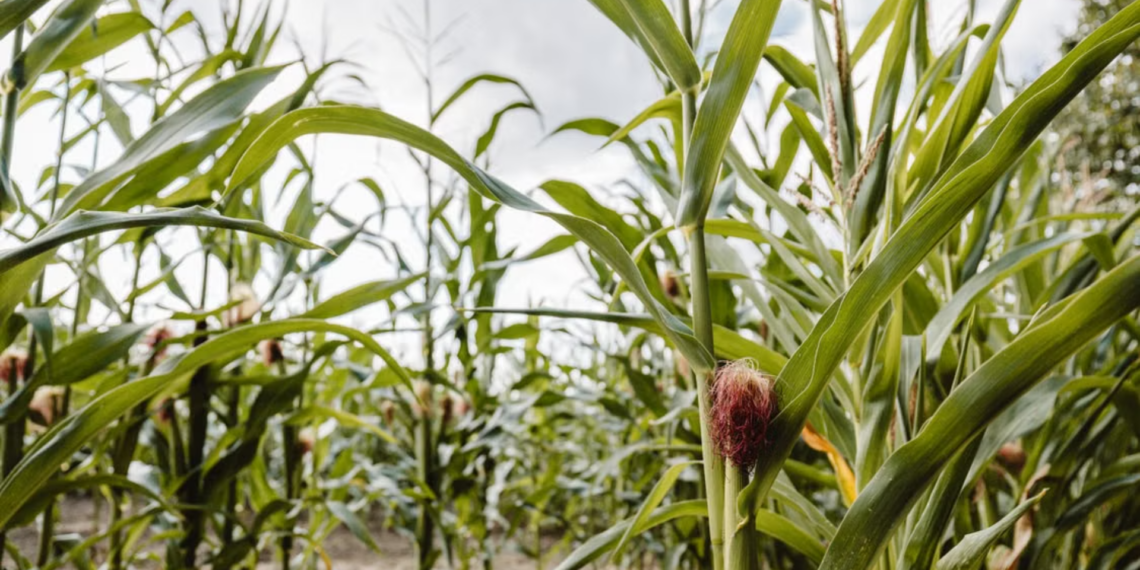
On World Maize Day, attention turns to the farmers, businesses and agricultural partnerships behind one of South Africa’s most important staple crops, and the interconnected value chain that brings maize from the field to the family table, feeding millions of households.
Free State maize farmer Reggie Ngcobo said that, as an industry, they were negatively affected by the war in the Middle East. Input costs skyrocketed before harvest, and market prices of maize were just stagnant.
“We are about to get into the new season of 2026-2027 with some of us not having planted because of low moisture content in the ground because of this heat.
“It is now predicted that we might have drought this coming season, and knowing January in the Southern Hemisphere is an extremely hot month, it is a worry for many of us. But we pin our hope, prayers and trust on God. This is the only thing farmers can do,” he said.
Supporting maize farmers, from small-scale to commercial
Grain SA vice chairperson Jeremia Mathebula said small-scale farmers have the least power in the market, and the least capacity to absorb deductions that reduce the prices they receive.
“Many black grain farmers operate in remote rural areas, including the former homeland areas of the Eastern Cape, KwaZulu-Natal, Mpumalanga and other developing regions. They often farm far from major commercial centres and face fewer commercial buyers, limited storage options and substantially less bargaining power.
“Our farmers feel powerless. They do not have the balance sheets, logistics networks, storage capacity or negotiating strength to counter the inefficiencies in these market structures,” Mathebula said.
According to him, the organisation will continue standing up for the small-scale farmer, the emerging farmer and the established black commercial farmer.
“These producers are working to build businesses, create jobs and contribute to South Africa’s food security,” he said.

Related stories
- Record maize, soybean harvests reshape export outlook
- Drought and heatwaves force SA maize farmers to adapt or switch
- White maize hybrid leads Croplan’s South African debut
- Eight-year harvest low threatens survival of SA wheat farms
For Ryan New, managing director of The Original Grain Company, Maize Day provides an opportunity to recognise the importance of the agricultural value chain and the many different role players who contribute to food production and security.
“We often think about food security in terms of whether food is available to consumers, but the process starts much earlier. It begins with farmers having access to the resources, finance, knowledge and support they need to produce a crop.
“From there, that crop needs to be harvested, transported, processed and connected to a reliable market. Every stage matters,” New said.
Entire value chain plays a significant role
New believes that supporting agricultural production requires an approach that considers the entire farming cycle, rather than focusing on individual interventions.
“Providing finance to plant a crop is an important starting point, but it cannot be viewed in isolation. Farmers need the right inputs, guidance and operational support throughout the growing season, as well as confidence that there will be a market for their produce when harvest time arrives,” New said.
As Maize Day recognises the importance of one of South Africa’s most widely consumed staple crops, it also provides an opportunity to consider the extensive network of people and businesses behind its production.
“Food production is a collective effort. The farmer who plants the maize, the people involved in harvesting it, the transporters moving it, the millers processing it and the businesses supplying the market are all part of the same value chain. Each plays an important role in getting food from the field to the table,” he said.
For New, strengthening food security means recognising that every stage of the agricultural value chain matters, from the resources farmers need to produce a crop to the infrastructure and market relationships that ensure it reaches consumers.
“If we are serious about growing Africa’s food future, we need to invest in the entire agricultural value chain, from seed to supply.
“When we strengthen the systems that support farmers, agricultural businesses and communities, we are also strengthening the connections that bring food from the field to the family table,” he said.
READ NEXT: Value chain collaboration key to building climate-resilient farming