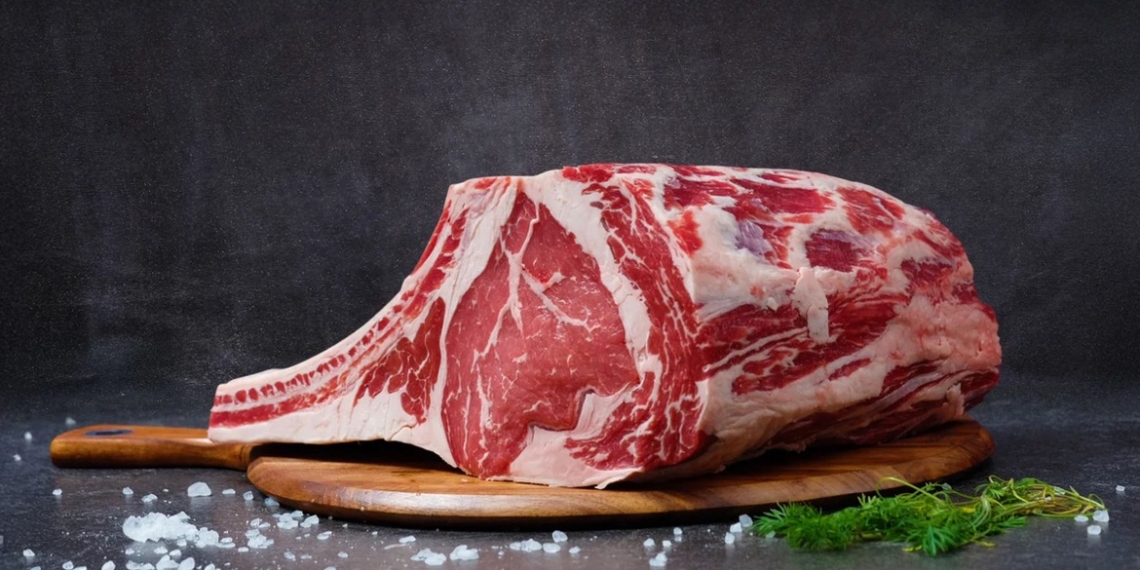
South African beef has enormous potential to capture a bigger share of the global red meat market. With advances in traceability, biosecurity and animal health, producers of all sizes can help unlock new export opportunities and access higher-value markets.
The world is hungry for red meat, and South African beef has the flavour, the price and the pedigree to compete. But as the industry has learnt the hard way, quality alone does not open a market. What keeps the door open is proof: proof that animals are healthy, that meat is safe, and that every carcass can be traced back to the farm it came from.
With foot-and-mouth disease (FMD) still squeezing trade and new markets such as Egypt coming into view, compliance and traceability have moved from back-office paperwork to the heart of South Africa’s export ambitions.
A record, then a setback
South Africa’s beef exports reached a record of almost 39 000 tonnes in 2024 as producers built markets across the Middle East and Asia. Then FMD intensified, and exports fell by about 26% to roughly 28 700 tonnes in 2025.
China, the third-biggest external market in 2024 after the United Arab Emirates and Jordan, suspended imports of products from cloven-hoofed animals in May 2025. Shipments there fell 69% to just 1 687 tonnes, according to Red Meat Industry Services (RMIS).
The Bureau for Food and Agricultural Policy (BFAP) estimates that more than R800 million in beef export revenue was lost during FMD waves between 2019 and 2025, with cumulative losses that could reach R2.6 billion by the end of this year.
When the China ban hit, Agbiz chief economist Wandile Sihlobo warned Food For Mzansi: “This will reverse the progress we have observed in South Africa’s beef export recovery.”
Yet the demand is still there. In 2025, the top destinations by value were the UAE (R494 million), Jordan (R445 million), Kuwait (R382 million), Qatar (R208 million) and Mozambique (R144 million).
And in September, Agriculture Minister Willie Aucamp confirmed that South Africa and Egypt had concluded negotiations on the veterinary health certificate for red meat, clearing the way for shipments to a large new consumer market once final signatures are in place.
Related stories
- The first 1000 days: How red meat fuels early child brain development
- Innovations in red meat industry: Technology shaping the future
- Red meat’s new story: Healing land through grazing
- Why red meat producers can’t afford to ignore sustainability
Quality is not enough
No importer buys South African beef simply because it tastes good and is competitively priced. Every market sets its own terms in a veterinary health certificate, negotiated government-to-government. These cover the country’s disease status, residue limits, slaughter and handling standards, and proof of where the animal came from.
Those rules also allow trade to continue under agreed conditions, even while a country fights disease. As David Wolpert, retired CEO of the Association of Meat Importers & Exporters of South Africa, argued in Business Day: “We do not have to wait 10 years before substantially expanding beef exports.”
The gap between meeting those terms and exceeding them shows up in the price. The Red Meat Industry Report by RMIS and BFAP found that in 2024 South Africa earned US$5 873 a tonne for beef in Saudi Arabia, against Australia’s US$17 692.
In the UAE, it was US$6 684 versus US$14 183. Qatar, which paid South Africa US$6 471 a tonne, later closed its doors over traceability shortcomings. The report credits Australia’s premium to its recognised freedom from FMD and BSE, and to an advanced grading system.
Behind the scenes, RMIS uses statutory levies to fund disease recording, residue and microbiological monitoring. Exporters also run private traceability under third-party oversight from the South African Meat Industry Company.
But as Beefmaster Group executive chairperson Louw van Reenen has pointed out, many buyers would rather see a national, government-run system.
From tag to plate
This is why traceability has become the industry’s rallying point. Australia and New Zealand legislated it years ago and used it to win the world’s best-paying markets. South Africa is now building its own, from the ground up.
“Unless [South African] producers take part in traceability, we simply won’t get those good opportunities,” Van Reenen said.
The industry-led RMIS Traceability Platform now has more than 15 000 production units registered and 17 digital livestock management systems connected, so carcasses at the abattoir can increasingly be traced back to their farm of origin.
Since April 2026, its free mobile app has also let farmers confirm FMD vaccine deliveries by scanning a QR code, log vaccinations for each animal and manage livestock movements. RMIS believes the red meat industry could grow more than 20% above a business-as-usual path, adding upwards of R12 billion a year to agricultural GDP by 2030.
The roll-out is reaching smaller herds too. With an estimated 40% of the country’s cattle owned by small-scale farmers, RMIS has ordered 130 000 industry traceability tags and is finalising private funding to scale to five million.
Animal health technicians in the provinces hardest hit by FMD register producers on the platform, then tag and vaccinate their animals. A new four-year statutory levy cycle, which took effect on 5 November and runs to 2030, will keep building on the platform.
The technology is the easy part. RMIS CEO Dewald Olivier has said that tagging animals and recording every movement will take a cultural shift across the livestock sector, where cattle often change hands informally long before they reach an abattoir.
He believes the effort will pay off. Olivier has said traceability could be the most impactful initiative the livestock industry has seen since South Africa became a net red meat exporter.
Every farmer’s business
Industry leaders warn of a two-tier market taking shape: compliant producers who can sell into export channels, and everyone else.
Keeping that gap from hardening means bringing smallholder and communal farmers into the system, not leaving them outside it. A pilot project in Bethulie in the Free State is already helping smallholder livestock farmers meet the new digital traceability standards.
For farmers of every size, the steps are practical:
- Tag and register animals, and record every movement on and off the farm.
- Keep vaccination and treatment records up to date, and respect withdrawal periods.
- Buy animals only with a known health history, and work closely with state and private vets.
- Report suspected disease early. One outbreak can close a market for everyone.
South African beef has already proved it can earn a place on the world’s plates. Winning back markets like China, and growing into new ones like Egypt, will depend less on what is in the box than on the paper trail that comes with it. Market access is earned at the farm gate, and kept by biosecurity.
READ NEXT: Veg prices crash ahead of festive season, squeezing SA farmers