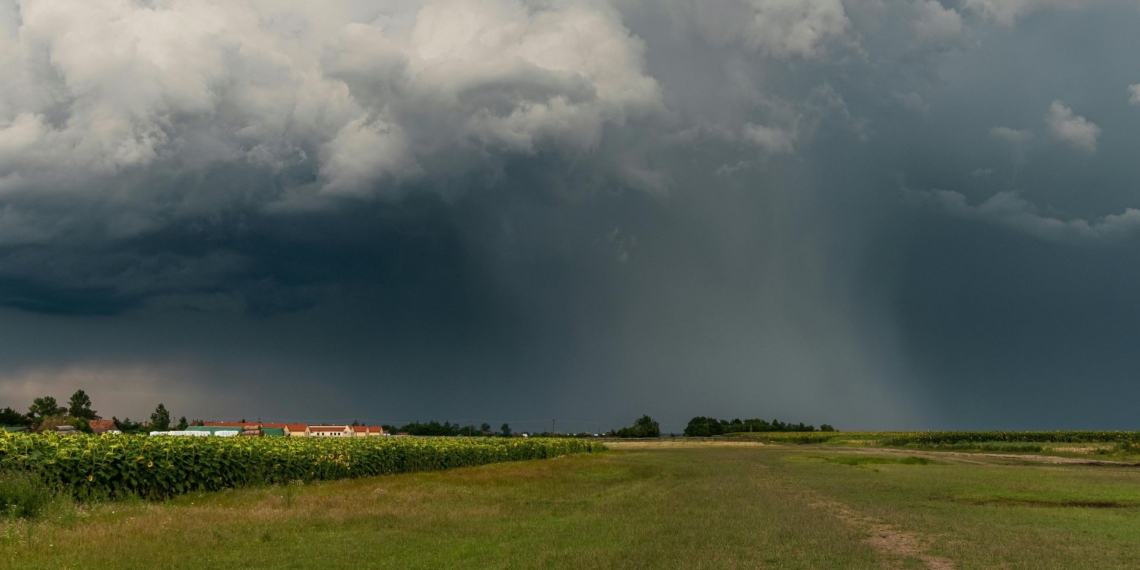
South African farmers are gearing up for a tricky summer as the weather keeps everyone guessing. With El Niño and La Niña taking a break, it’s hard to tell if we’ll see more rain or less, leaving the forecast wide open.
While it rains in some parts of the country, there could be dry spells later. Farmers are advised to stay flexible and be prepared for any changes.
Dr Peter Johnston, a climate scientist, told Food For Mzansi that the neutral phase of the El Niño and La Niña cycle makes it hard to predict rainfall accurately.
“We call the El Niño and La Niña the Enso index, and it’s sitting right in the neutral phase right now… For most of 2024, it was in the neutral stage, and it’s still in the neutral stage for 2025,” said Johnston.

This neutral phase complicates forecasts.
“Our forecasts are not very accurate or skilful during a neutral phase, so we can’t really say much about what the rain is going to be like for the summer season. We do know, though, that there’s no particular reason why it shouldn’t be around normal,” Johnston added.
While early signs show some rain in many regions, farmers are urged to be prepared for potential dry spells in January and February. “That doesn’t say that it’s not going to be,” Johnston cautioned. “It’s very possible that it might be drier than normal or wetter than normal.”
Though the likelihood of drought or excessive rainfall appears low, uncertainty remains as the neutral ENSO phase doesn’t guarantee optimal rainfall outcomes.
“The likelihood of it being wetter than normal is small, and the likelihood of there being drought is also small, but there are still possibilities,” Johnston said.
Related stories
- Livestock and Climate Solutions Hub launched at Cop29
- Action needed on Cop29 climate funding for agriculture
- Climate funds fail family farmers, study reveals
Rainfall uncertainty looms
Farmers are furthermore urged to be prepared for potential dry spells in January and February, although there is nothing that is indicating that the rainfall is going to be less or more than normal.
“That doesn’t say that it’s not going to be,” Johnston cautioned. “It’s very possible that it might be drier than normal or wetter than normal.”
While the likelihood of drought or excessive rainfall appears low, uncertainty remains a central theme adding that the neutral ENSO phase does not guarantee optimal rainfall outcomes.
“The likelihood of it being wetter than normal is small, and the likelihood of there being drought is also small, but there are still possibilities,” Johnston said.
Hope for recovery
According to the South African Weather Service, the summer rainfall areas of South Africa have been significantly impacted by heavy rainfall throughout December 2024, resulting in flooding and localised structural and infrastructural damage.

Agbiz chief economist Wandile Sihlobo said while farmers are emerging from a tough season of mid-summer drought, the season ahead promises to be a recovery period.
“There are prospects of a La Niña weather phenomenon, which, if it materialises, would bring above-normal rains and support agriculture in South Africa and the entire Southern Africa region.
“Admittedly, there remains some uncertainty about the La Niña occurrence, but most indications are optimistic,” he said.
According to Sihlobo, the mid-summer drought in 2024 led to significant crop losses in Southern Africa. This is why farmers needed these rains to recover the agricultural sector.
“In the coming days and months, we will closely watch the weather conditions and planting progress of summer crops in Southern Africa,” Sihlobo said.
READ NEXT: AgriSETA symposium: Shaping the future of agricultural education
Sign up for Mzansi Today: Your daily take on the news and happenings from the agriculture value chain