What happens when the power goes off on a farm? Sometimes, it is more than a few hours in the dark. An irrigation pump stops. A cold room starts warming up. Chickens are exposed to the cold or excessive heat. Produce sits waiting to be moved, while every minute adds to the cost of doing business.
For South African farmers already squeezed by rising input costs, unreliable electricity and a changing climate, energy is becoming a much bigger business question. Increasingly, farmers are looking beyond the national grid, turning to solar, batteries and even farm waste as possible sources of power.
The shift towards renewable energy is also becoming part of agriculture’s response to climate change. While farmers are looking for more reliable and affordable energy, moving away from fossil fuel-based energy sources can also help reduce greenhouse gas emissions from the sector.
But is renewable energy really cheaper in the long run? How much can a farmer actually save, and can it make a difference to the bottom line?
Across the agricultural sector, those questions are becoming harder to ignore.
Renewable energy with a farm-grown solution
For commercial poultry farmer Lerato Aliu, CEO of Roadgrass Investments in Katboschfontein, renewable energy is becoming part of the farm’s plans for cutting costs and improving energy resilience. Although the farm is not yet fully off-grid, Aliu says they are in the process of finalising a solar energy plan.
“What makes our approach a bit different is that we’re also looking to incorporate renewable energy generated from the chicken manure we already produce on-site, essentially turning what would otherwise be waste into a usable energy source.”
Lerato Aliu
Aliu says the idea of using a resource already available on the farm, instead of starting from scratch, is what drew them to the approach.
“Since we’re still finalising our setup, we can’t yet speak to results in hand, but our goal with this transition is to cut our electricity expenditure by at least 20% over the next few months.”
Beyond reducing costs, Aliu says the move is also about building resilience against load-shedding and unexpected power interruptions, with reliable energy becoming as important as affordability.
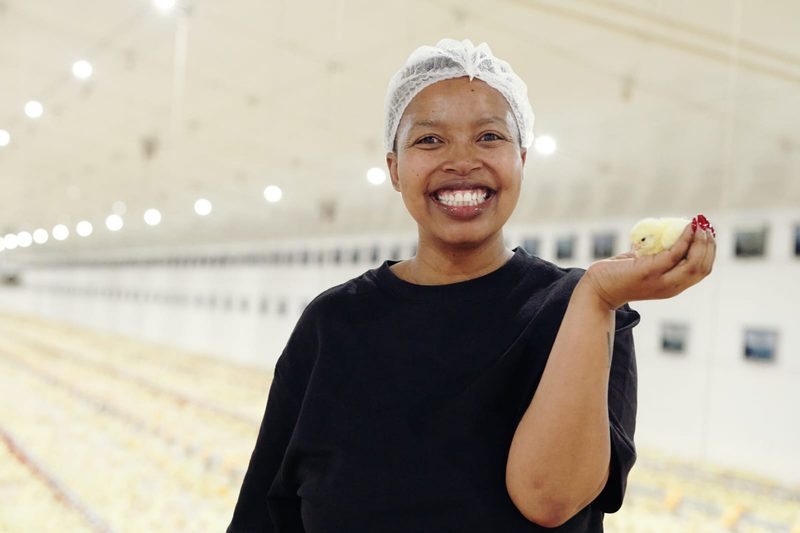
For her, one of the biggest lessons so far has been to look at what resources are already available on the farm before investing in new systems. In their case, chicken manure could become an untapped source of energy.
For Aliu, getting the right solar system takes planning. Farmers need to consider the upfront cost, how much energy they actually need and whether the system will work with what they already have on the farm.
Her advice to other farmers is simple: “Don’t rush the planning phase, and look closely at what waste or by-products you’re already producing that could be converted into energy.”
Related stories
- Smart energy puts Mzansi farms on a stronger footing
- Solar success: Poultry farmer turns setback into comeback
- Farmers could save up to 54% by switching to solar
- Carbon credits 101: A guide to regenerative farming & income
Renewables could give farmers more breathing room
Gauteng-based agricultural economist Dr Siphe Zantsi says energy already takes a sizeable chunk of farmers’ production costs, and rising electricity and fuel prices are putting even more pressure on already tight margins.
“Direct energy costs, diesel fuel and electricity combined, generally account for roughly 13% to 15% of total variable production costs in field crops and grain production.”
Dr Siphe Zantsi
For farmers who can afford the initial investment in solar and other renewable energy systems, the longer-term savings could make a meaningful difference to the bottom line. Once the installation has been paid off, a large portion of the money previously spent on energy could effectively remain within the business, with some costs still going towards maintenance.

This could be especially useful for smaller farmers, where margins are often much tighter. The challenge is the cost of getting started. Zantsi says smallholders could look at working together to share the cost of renewable energy installations.
He also points out that cheaper energy for farmers will not necessarily mean cheaper food. Farmers are largely price takers, with food prices determined by wider market forces.
“The renewables may likely have a reduction in food prices when used by food processors and distributors,” he says.
Renewables must build resilience, not shift the problem
Cape Town-based environmentalist and founder of Blackgirls Rising Xoli Fuyani says renewable energy could help South African agriculture respond to the growing pressure from climate change, while improving energy security on farms.
She says agriculture sits at the intersection of the country’s energy, water and climate challenges, with farmers already dealing with drought, unpredictable rainfall, flooding and rising temperatures.
For Fuyani, the value of renewable energy goes beyond reducing electricity bills. Solar power can support irrigation, refrigeration and processing while reducing farms’ reliance on coal-based electricity.

She believes it should form part of a wider move towards climate-smart farming, alongside better water management, healthier soils and protecting biodiversity. “Renewable does not automatically mean impact-free.”
Fuyani says farmers also need to consider where solar infrastructure is placed, its effect on productive land and ecosystems, as well as what happens to solar panels and batteries at the end of their useful lives.
She believes the transition must also reach smallholder and emerging farmers through affordable finance, technical support and shared infrastructure such as community-owned solar, cold storage and irrigation systems.
“The transition should solve environmental problems rather than simply moving those problems somewhere else.”
Xoli Fuyani
When renewable energy starts paying for itself
Prof Sampson Mamphweli, head of the DSTI Energy Secretariat at the South African National Energy Development Institute (SANEDI), says the decision to move away from full reliance on the national grid comes down largely to energy security and rising electricity costs.
For farmers, an unreliable power supply can have consequences far beyond an electricity bill. Cable theft, outages and load-shedding can disrupt irrigation, refrigeration, processing and livestock operations, potentially resulting in direct production losses.

Mamphweli says solar and other renewable systems can offer farmers a cheaper and more reliable alternative, with the potential for a relatively short payback period.
“With solar energy one can have a payback period of three to five years and then use free electricity for up to 15 to 20 years.”
Prof. Sampson Mamphweli
He says the size of the farm is not the deciding factor when designing a renewable energy system. What matters is the farm’s specific electricity demand, which should be assessed by a qualified engineer or electrician.
Beyond the savings, reliable electricity can also protect production. A power failure on a poultry farm during winter, for example, could result in birds dying from cold, while an interruption at a dairy farm could compromise milk stored in cold rooms.
Mamphweli says proper system sizing is key to ensuring the investment delivers the expected return.
“The system needs to be properly sized by a qualified engineer.”
READ NEXT: Electricity hikes add to SA farmers’ financial pain