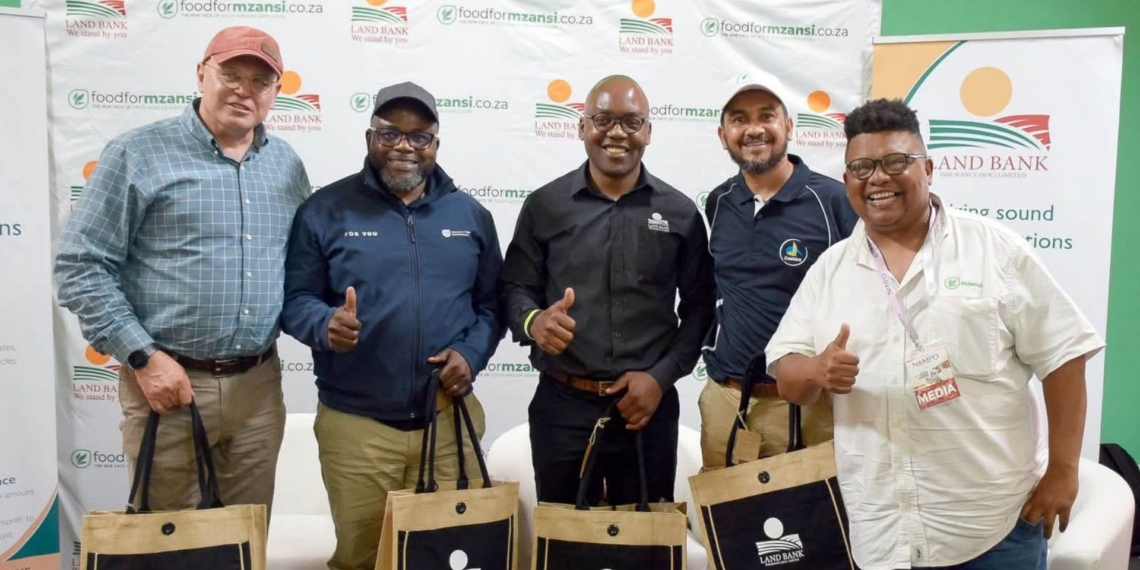
At Nampo Cape 2026 in Bredasdorp, Land Bank acting chief executive Jabu Mphambo joined government and organised agriculture leaders to tackle one of the sector’s most urgent priorities: building finance and support systems that help producers establish sustainable businesses rather than survive from one season to the next.
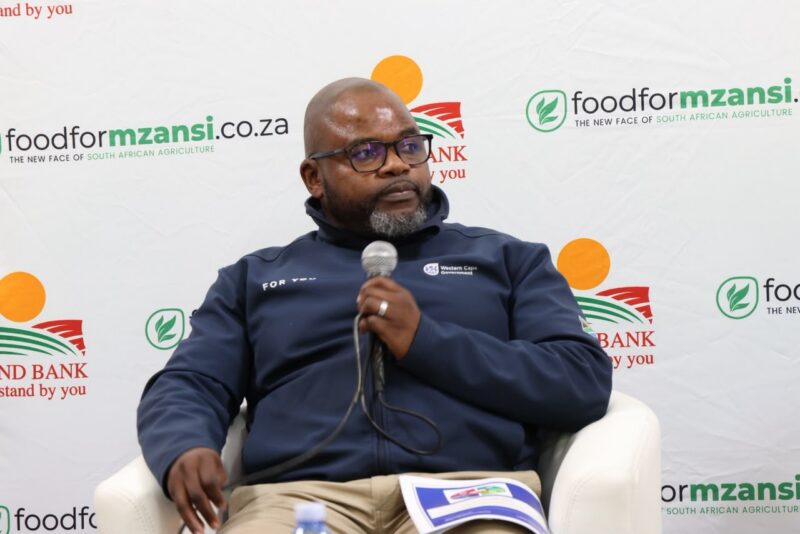
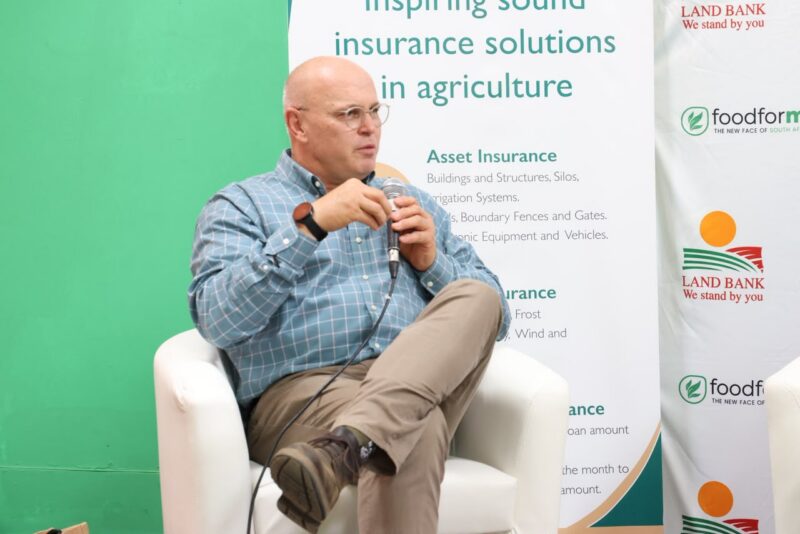
As part of the lunchtime conversation series presented by Food For Mzansi and Land Bank in Bredasdorp, a panel brought together Dr Mogale Sebopetsa, head of agriculture at the Western Cape government, AgriSA chief executive Johann Kotzé, and Casidra chief executive Dr Keith du Plessis.
They discussed the realities of farm debt, credit accessibility, public-private alignment, and the broader support systems essential for producer success.
Addressing the core needs of producers
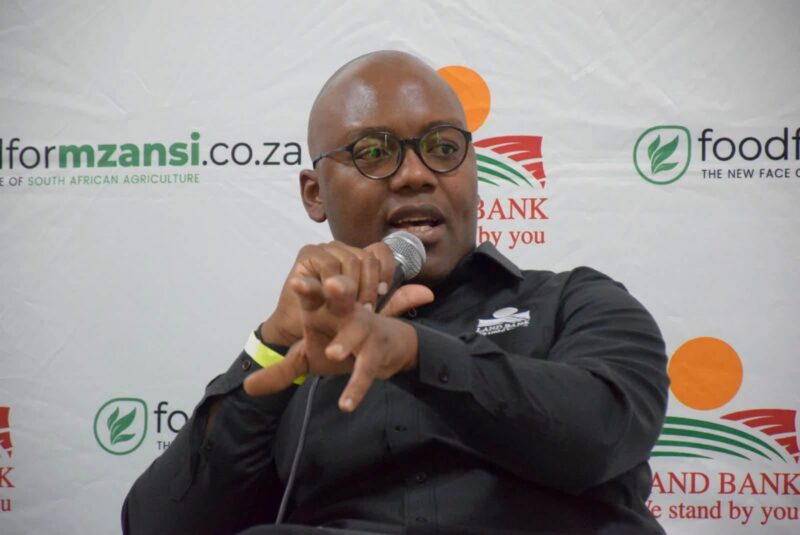
Mphambo highlighted that producers want financial institutions that act as true partners and understand farming’s cyclical nature.
“The farmers we are speaking to are looking for a financial partner that understands the business, who is able to provide structured and tailored solutions that meet the needs in their businesses,” Mphambo said.
He noted that affordability and quick turnarounds are critical when capital is urgently required on the ground. “Planting does not wait for anyone. If the season is here, a farmer needs to plant. They are looking for a partner who is aware of those realities and is able to respond on time.”
Related stories
- RSVP now: Emerging farmers’ programme at Nampo Cape
- New-era farmers get dedicated programme at Nampo Cape
- Plan your Nampo Cape around these lunchtime conversations
- Nampo Cape expands women’s programme at Bredasdorp Park
Looking beyond capital to broader enabling environments
While responsive banking is vital, Sebopetsa shifted the perspective by emphasising that financial access alone cannot fix agricultural challenges if the surrounding infrastructure and biosecurity fail the producer.
“Farming is a trade, but also as a farmer, you need water security. Without water, you definitely will not be able to farm, so we need a municipal government that prioritises water security for farmers.
“But we also need the roads because agriculture is a business; your products must move from the farm to the end point where you need to sell them. So you need a functional road network that allows you to be able to get to the market. But we also need electricity to be able to farm, and of course you also need compliance with bylaws,” Sebopetsa explained.
He cautioned that biosecurity risks and crumbling infrastructure pose a direct threat to export capabilities, warning that the broader economic footprint of agriculture is often underestimated by conventional metrics.
Replicating the support structures of commercial success
Echoing the call for comprehensive operational backing, Kotzé stressed that providing capital without proper technical support and mentorship leaves developing producers deeply vulnerable.
“We are actually not doing ourselves good in putting people into a space where we know they are going to fail, not because of them, but because of a lack of support, lack of systems, overwhelming risk that they need to face, which is not common.”
He highlighted the severe operational pressures farmers face when unpredictable crises hit, emphasising the need for structured support systems to back up financial investments from day one.

Du Plessis shared that lasting success across the sector relies ultimately on cross-institutional collaboration and shared expertise.
“In the end, we need to find an ecosystem to draw in the right people and help that guy to get finance and roll out that project,” Du Plessis said. “I think we have a good blueprint of that in the Western Cape; if we can build on that and expand on it more.”
READ NEXT: SA pork industry builds resilience following disease outbreaks